USAID DEC
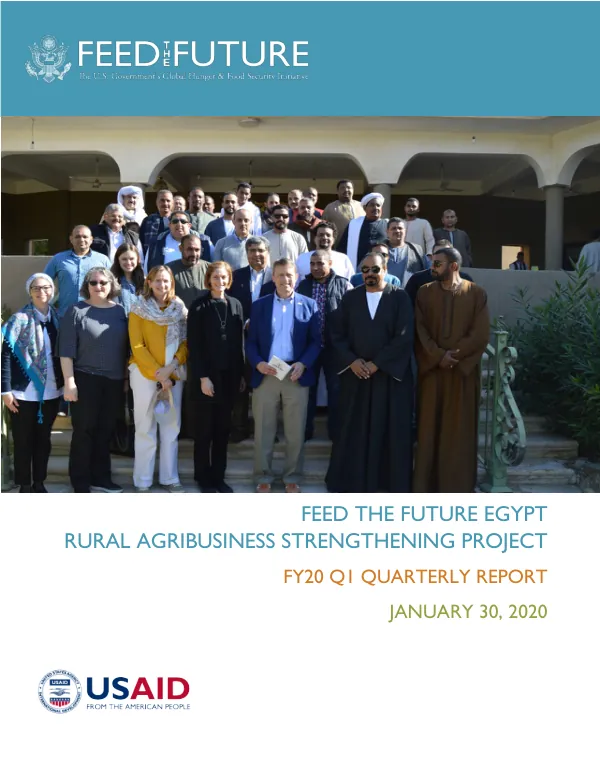
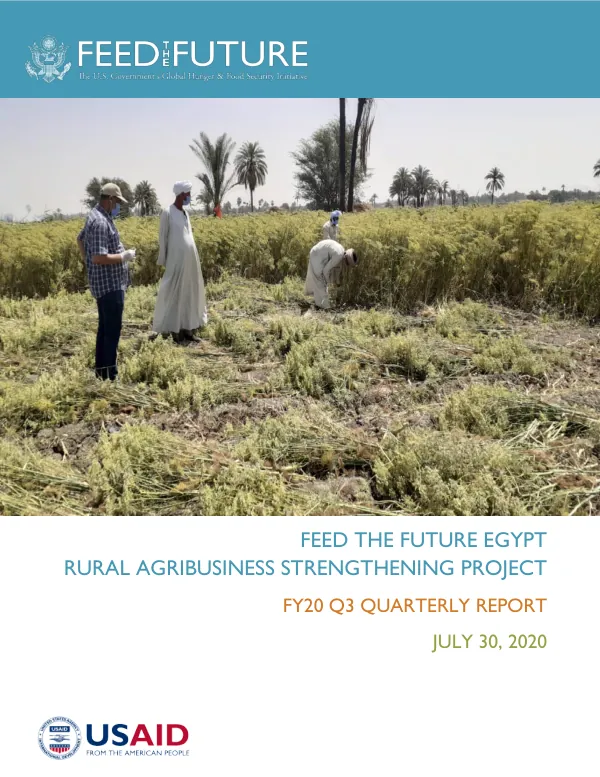
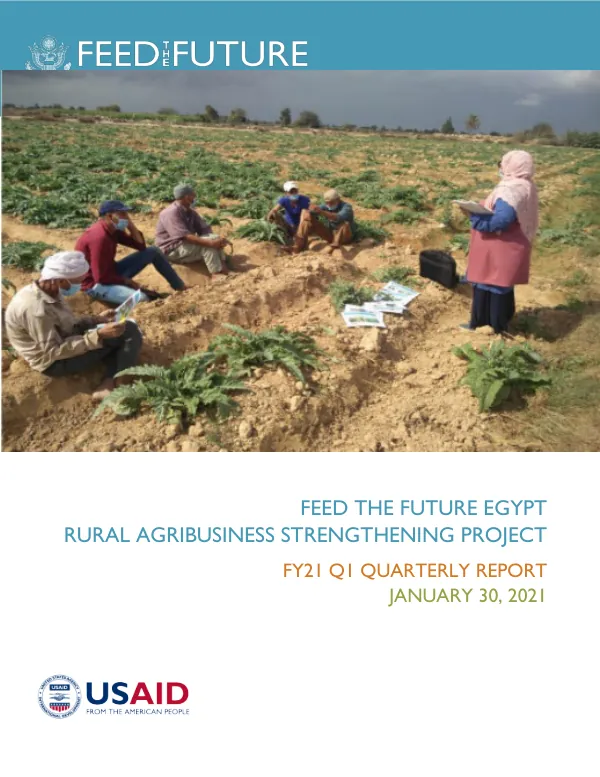
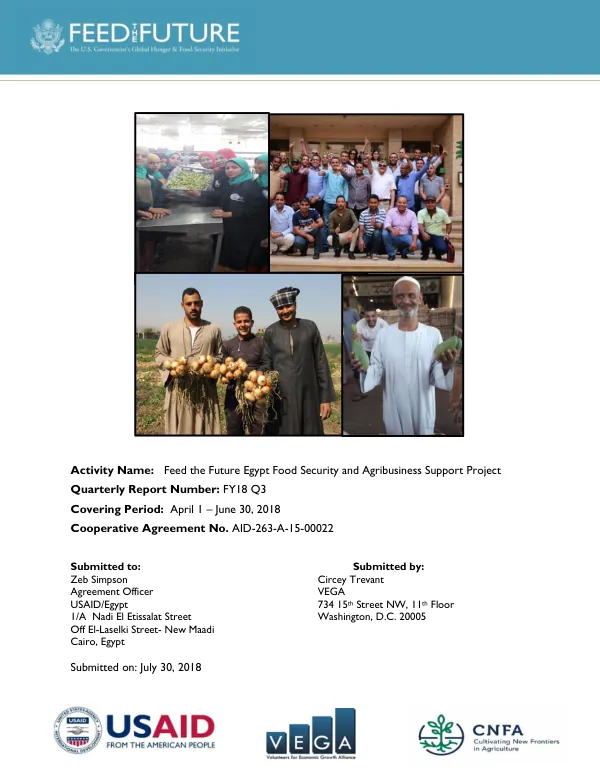
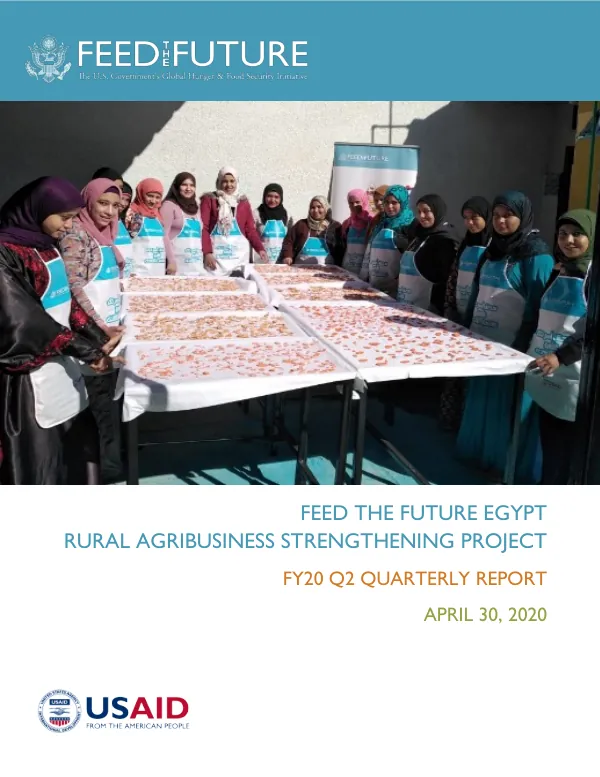
Feed the Future Egypt Rural Agribusiness Strengthening Project FY20 Q2 Quarterly Report
Sign inABT ASSOCIATES
Feed the Future Egypt Rural Agribusiness Strengthening Project FY20 Q2 Quarterly Report
The Feed the Future Egypt Rural Agribusiness Strengthening Project aims to develop the horticulture industry's ability to respond to domestic and international buyer demand and to improve the industry's competitiveness by applying a market-driven systems-strengthening approach.
2020 · 39 pages
Sign in to readA free account is required to download.
Abstract
The project directly contributes to USAID/Egypt's Development Objective of "a more competitive and inclusive Egyptian economy through growth in selected sectors," and to the sub-purpose of "increased agriculture-related incomes of smallholder farmers." The project is strengthening Egypt's horticulture market system and improving the capacity of smallholder farmers and processors, producer organizations (POs), and horticultural institutions through agricultural knowledge transfer and training. The project's goal is to create a more competitive and inclusive Egyptian economy through horticulture sector growth, with special focus on securing employment and increasing agriculture-related incomes of smallholder farmers in Upper Egypt and the Delta. Project activities aim to achieve four intermediate results: strengthened sustainable domestic and international market linkages, improved post-harvest handling and storage, increased productivity of smallholder farmers and food processors, and improved nutritional status of women and children. In FY20 Q2, the project achieved numerous milestones. Specifically, the project engaged 13,206 individuals in training and other activities, facilitated the signing of 10 forward contracts between POs and exporters, and three input supply contracts between input supply companies and POs. Cumulatively, the project has facilitated the signing of 27 contracts to date. The project also developed and launched eight agri-loan products to serve 182 smallholder farmers, totaling 3,214,000 Egyptian pounds (EGP), the equivalent of $205,564. The project conducted a potato harvest day ceremony in Dallas village, Beni Suef, to celebrate a partnership between USAID (through the project) and PepsiCo that will support the area's potato farmers in their efforts to grow higher-quality potatoes and increase productivity. Farmers participating in the pilot increased yields from an average six to eight tons per feddan in previous years to 14 tons per feddan. The project also began preparing to provide remote technical support to participants, including POs, lead farmers, and smallholder farmers, using SMS texts, WhatsApp messages, and supplementary videos, as well as a nutrition awareness campaign for women beneficiaries to fight COVID-19. The project's implementation is led by Abt Associates, with partners including Egyptian firm CID Consulting, U.S. small businesses J.E. Austin Associates (JAA) and 20/20 Development Company (DC), and the Global Cold Chain Alliance. The project's activities aim to improve the competitiveness of the horticulture industry and increase the incomes of smallholder farmers in Egypt. The project's achievements in FY20 Q2 demonstrate its progress towards achieving its goals and objectives. The project's focus on strengthening sustainable domestic and international market linkages, improving post-harvest handling and storage, increasing productivity of smallholder farmers and food processors, and improving nutritional status of women and children is critical to achieving its overall goal of creating a more competitive and inclusive Egyptian economy through horticulture sector growth. The project's activities and achievements in FY20 Q2 demonstrate its commitment to improving the lives of smallholder farmers and their families in Egypt.