USAID DEC
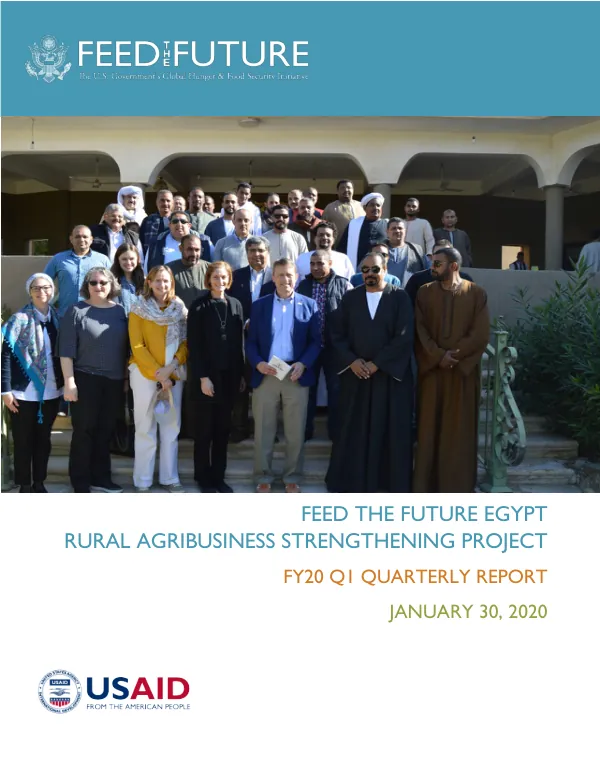
Feed the Future Egypt Rural Agribusiness Strengthening Project FY20 Q1 Quarterly Report
Sign inABT ASSOCIATES
Feed the Future Egypt Rural Agribusiness Strengthening Project FY20 Q1 Quarterly Report
The Feed the Future Egypt Rural Agribusiness Strengthening Project is a USAID-funded initiative aimed at developing the horticulture industry's ability to respond to domestic and international buyer demand.
2020 · 37 pages
Sign in to readA free account is required to download.
Abstract
The project applies a market-driven, systems-strengthening approach to build farmers' and processors' capacities to meet market requirements. The project directly contributes to USAID/Egypt's Development Objective of a more competitive and inclusive Egyptian economy through growth in selected sectors. The project is strengthening Egypt's horticulture market system and improving the capacity of smallholder farmers and processors, producer organizations, and horticultural institutions. Agricultural knowledge transfer and trainings are being provided to familiarize farmers with higher-value production of horticulture crops. Improvements to the value chain will raise employment and incomes for vulnerable Egyptians and enhance food security throughout the country. In FY20 Q1, the project achieved numerous milestones, including engaging 4,934 individuals in training and other activities. Of these participants, 30% were youth (ages 15-29) and 20% were women. The project conducted 972 trainings on production, post-harvest handling, marketing, food safety, nutrition, and gender, with a total number of days of 1,251. Eight forward contracts were facilitated between producer organizations and exporters, and three input supplier contracts were signed between companies and cooperatives. The project also developed and launched eight agri-loan products to serve 61 small farmers, with a total amount of EGP 1,598,000 ($100,000). Nine new MOUs were signed, including agreements with five producer organizations in Minya, Qena, and Aswan to provide technical assistance to smallholder farmers growing grapes, mangoes, and medical herbs. Additionally, MOUs were signed with two companies to help small farmers access higher quality inputs and irrigation systems. The project's intermediate results include strengthened sustainable domestic and international market linkages, improved post-harvest handling and storage, increased productivity of small farmers and food processors, and improved nutritional status of women and children. The project is expected to create a more competitive and inclusive Egyptian economy through horticulture sector growth, with special focus on securing employment and increasing agriculture-related incomes of smallholder farmers in Upper Egypt and the Delta.