LAND O'LAKES, INC. - INTERNATIONAL DEVELOPMENT
Feed the Future Ethiopia Growth through Nutrition Activity
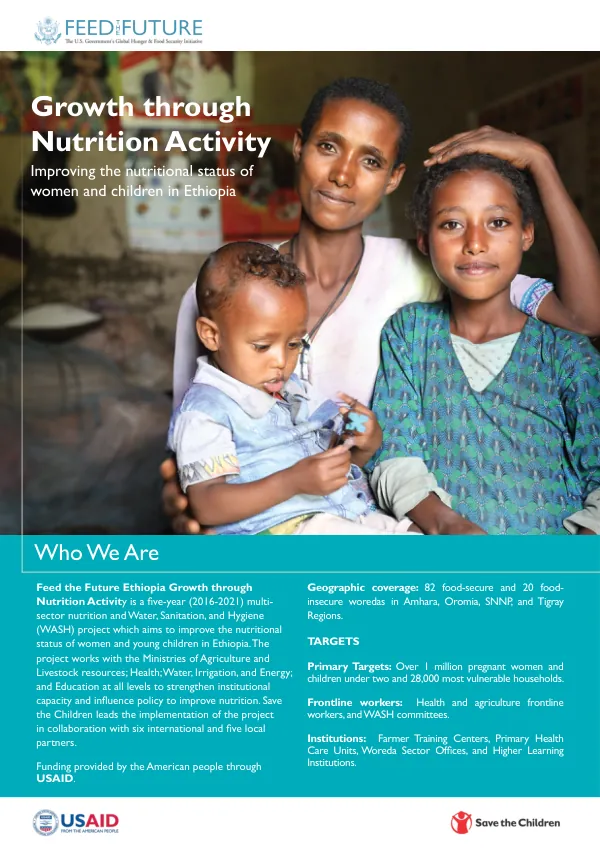
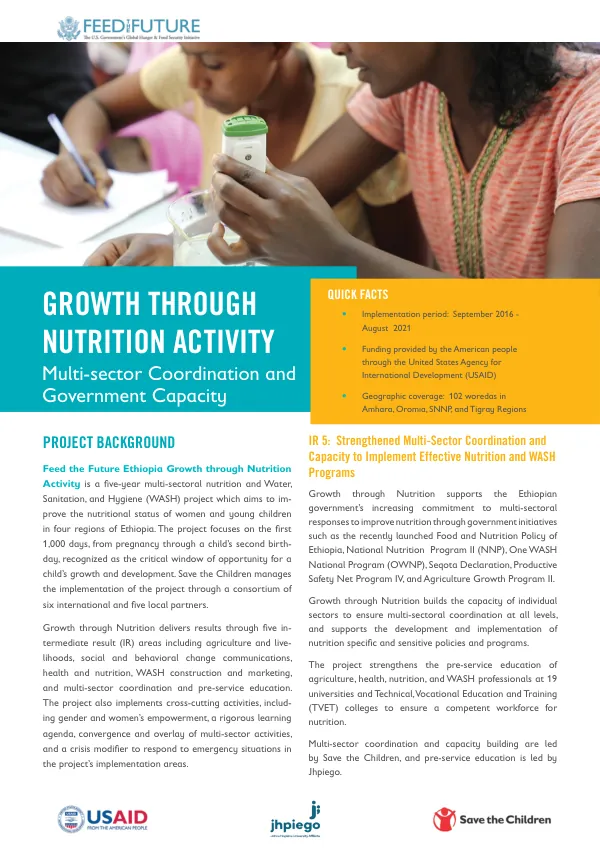
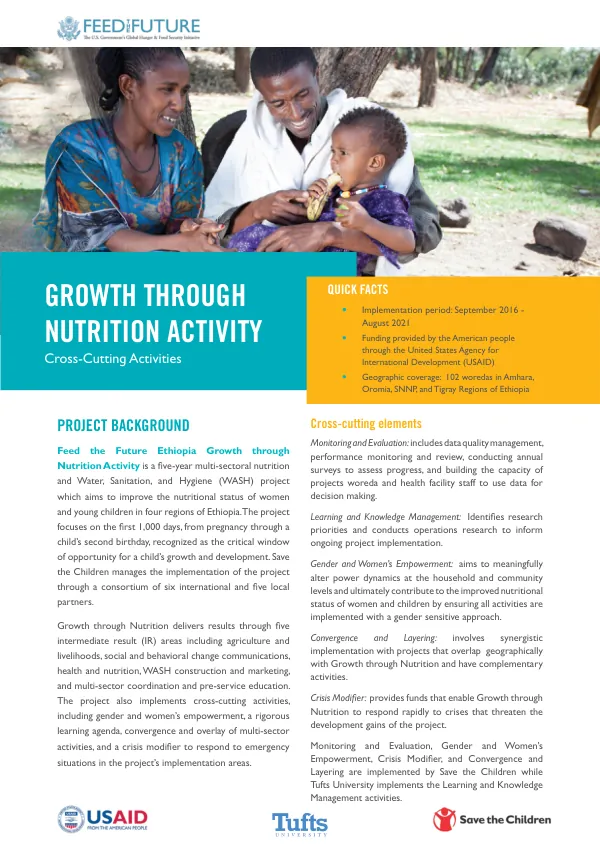
The Feed the Future Ethiopia Growth through Nutrition Activity is a five-year multi-sectoral nutrition and Water, Sanitation, and Hygiene (WASH) project implemented in four regions of Ethiopia.
2016 · 2 pages
Sign in to readA free account is required to download.
Abstract
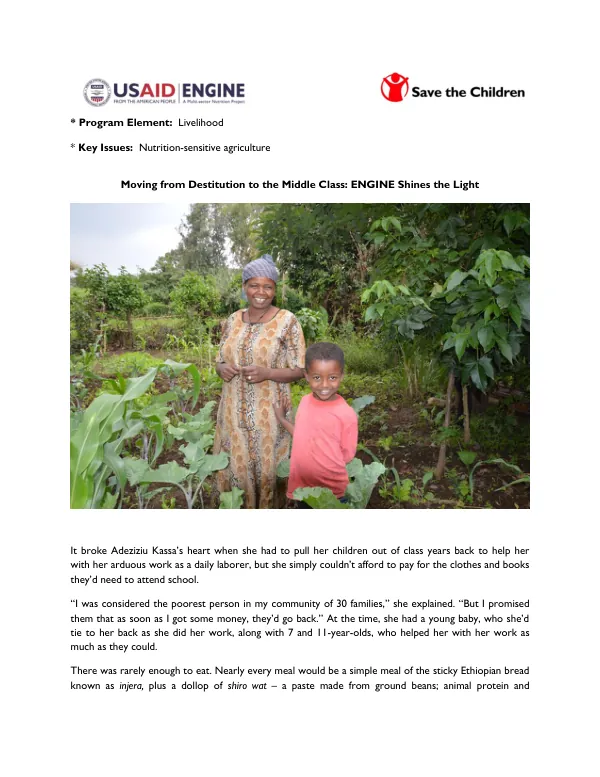
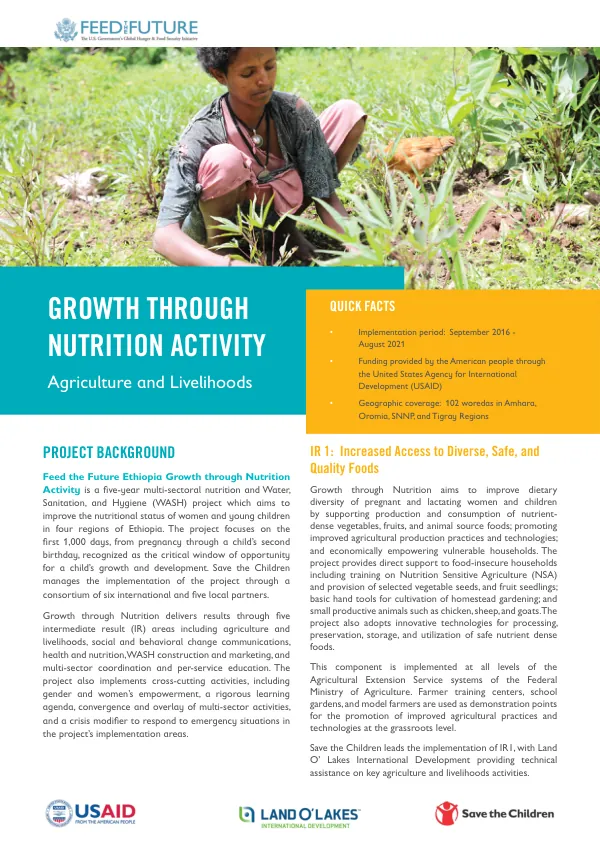
The project focuses on improving the nutritional status of women and young children during the critical window of opportunity for a child's growth and development, from pregnancy through a child's second birthday. The project is managed by Save the Children through a consortium of six international and five local partners. The project delivers results through five intermediate result areas, including agriculture and livelihoods, social and behavioral change communications, health and nutrition, WASH construction and marketing, and multi-sector coordination and per-service education. Additionally, the project implements cross-cutting activities, such as gender and women's empowerment, a rigorous learning agenda, convergence and overlay of multi-sector activities, and a crisis modifier to respond to emergency situations. The project aims to improve dietary diversity of pregnant and lactating women and children by supporting production and consumption of nutrient-dense foods, promoting improved agricultural production practices and technologies, and economically empowering vulnerable households. The project provides direct support to food-insecure households, including training on Nutrition Sensitive Agriculture (NSA) and provision of selected vegetable seeds, fruit seedlings, basic hand tools for homestead gardening, and small productive animals. The project also adopts innovative technologies for processing, preservation, storage, and utilization of safe nutrient-dense foods. Farmer training centers, school gardens, and model farmers are used as demonstration points for the promotion of improved agricultural practices and technologies at the grassroots level. Save the Children leads the implementation of the project, with Land O'Lakes International Development providing technical assistance on key agriculture and livelihoods activities. The project has achieved significant progress on the ground, with sustainable approaches for production of diverse crops and livestock adopted by nearly 32,000 farmers, government personnel, and people in private sector firms. The project has also piloted innovative technologies, including indirect cabinet solar dryers, potato harvesting tools, and Metata Ayib for preservation of cottage cheese. Additionally, the project has increased participation in economic strengthening activities, with more than 19,500 most vulnerable households receiving support, and has strengthened government systems and private sector linkages. The project has also shown a 15.6% increase in children (6-23 months) achieving minimum dietary diversity after one year of implementation.
Related documents