SOCIAL IMPACT, INC.
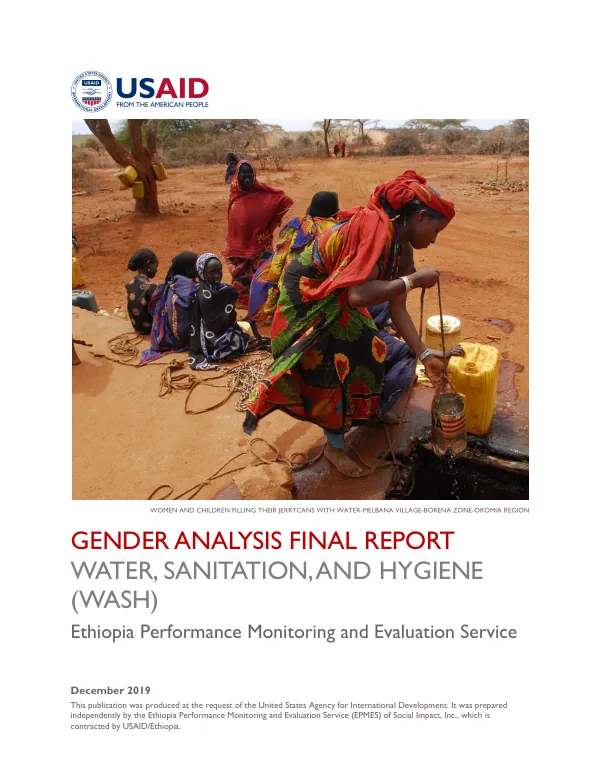
Gender Analysis Final Report: Water, Sanitation, and Hygiene (WASH) in Ethiopia
The WASH Project in Ethiopia aims to support accelerated access to improved water, sanitation, and hygiene services, with a focus on reducing gender disparities in resource access.
2019 · 29 pages
Sign in to readA free account is required to download.
Abstract
The project is part of the Government of Ethiopia's (GOE) efforts to achieve sustainable growth, poverty reduction, and improved social outcomes. Ethiopia has adopted aggressive targets for WASH indicators, as outlined in the Growth and Transformation Plan-II (GTP-II) and Sustainable Development Goals (SDGs). The country faces significant challenges in providing access to water and sanitation services, particularly in rural areas. According to the WHO/UNICEF Joint Monitoring Programme, 43 million people, or slightly less than half of the population, lack access to handwashing facilities at home. Ninety-five percent of the rural population and 80 percent of the urban population have poor sanitation, defined by limited service, unimproved or open defecation. Open defecation remains a major issue in Ethiopia, with 22 percent of the population engaging in the practice as of 2017. The GOE has identified water and sanitation as priority areas and has adopted several national policies and programs to support these targets. These include the National Water Resource Management Policy, Water Sector Strategy, Water Sector Development Program, and the ONE WASH National Program. The project aims to support the implementation of these policies and programs, with a focus on reducing gender disparities in resource access. The project will focus on several key areas, including improving access to water and sanitation services, promoting hygiene practices, and supporting the development of WASH infrastructure. The project will also aim to reduce the burden of WASH-related tasks on women and girls, who are often responsible for collecting water and managing sanitation facilities. By reducing the time and effort required for WASH-related tasks, the project aims to improve the overall well-being and productivity of women and girls. The project will be implemented in several regions of Ethiopia, with a focus on rural areas where access to WASH services is poorest. The project will work with local communities, government agencies, and other stakeholders to identify and address the specific needs and challenges of each area. By working together, the project aims to improve access to WASH services, reduce gender disparities, and contribute to the overall development of Ethiopia. The project will use a range of approaches and tools to achieve its goals, including community-led total sanitation (CLTS), hygiene promotion, and infrastructure development. The project will also aim to support the development of WASH policies and programs at the national and local levels, and to build the capacity of government agencies and other stakeholders to implement and manage WASH programs. Overall, the WASH Project in Ethiopia aims to support the Government of Ethiopia's efforts to improve access to water, sanitation, and hygiene services, with a focus on reducing gender disparities in resource access. By working together with local communities, government agencies, and other stakeholders, the project aims to improve the overall well-being and productivity of women and girls, and to contribute to the overall development of Ethiopia.
Related documents