FEDERAL MINISTRY OF HEALTH
Moving from Destitution to the Middle Class: ENGINE Shines the Light
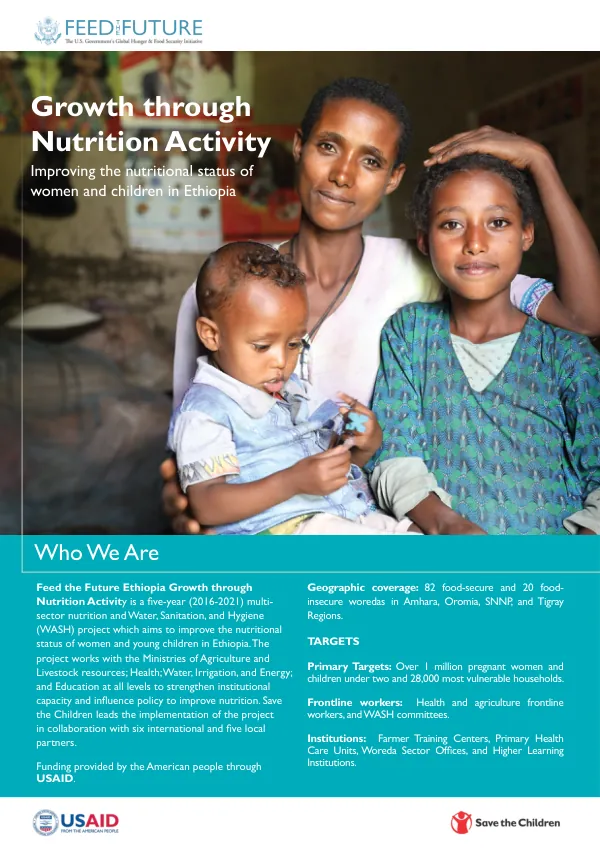
The ENGINE program, a USAID-funded initiative led by Save the Children, aimed to improve the nutritional status of impoverished women and children in Ethiopia.
2016 · 3 pages
Sign in to readA free account is required to download.
Abstract
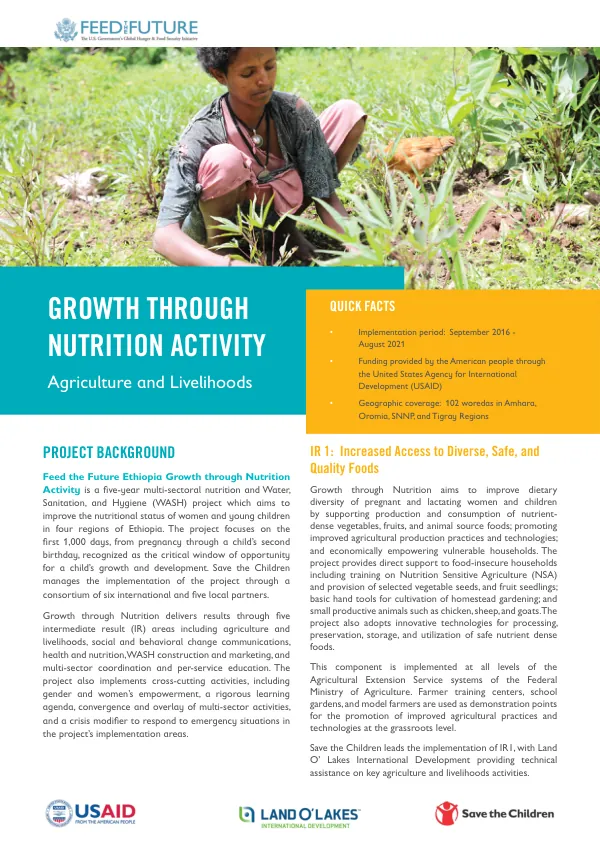
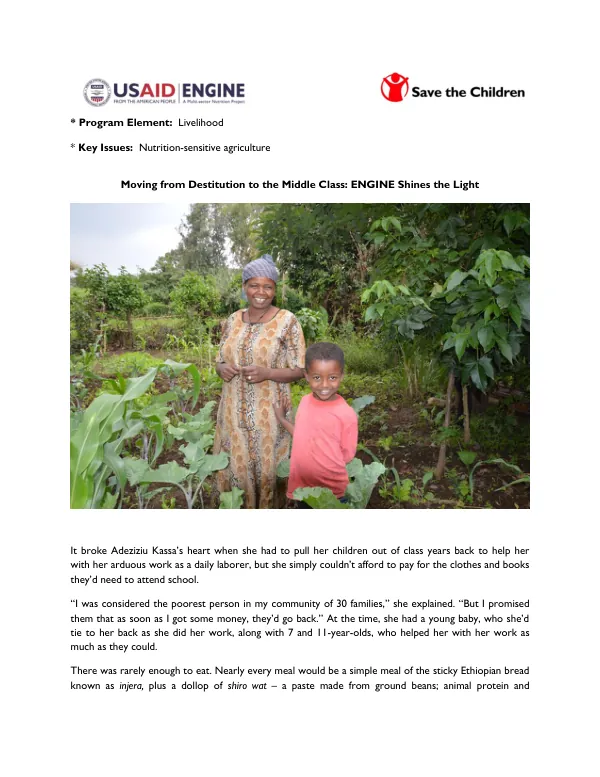
The program's core objective was to prevent under-nutrition during the first 1,000 days by focusing on social behavior change, including linkages to livelihood and economic opportunities. ENGINE was implemented in 83 productive woredas in four regions of Ethiopia: Amhara, Tigray, SNNPR, and Oromia. The program targeted 3.1 million under-five children, half a million pregnant and lactating women, 3.2 million women of reproductive age, and 2.7 million households. ENGINE built upon the Government of Ethiopia's initiatives and the U.S. Government's Global Health and Feed the Future initiatives. The program's approach involved initiating nutrition-sensitive livelihoods efforts led by Land O'Lakes International Development. Participants received training, seeds for nutritious crops, simple tools, and livestock to grow, prepare, and eat nutritious meals. Adeziziu Kassa, a beneficiary of the program, was able to establish a permagarden and began growing crops including Swiss chard, cabbage, kale, potatoes, and carrots. She also learned to compost, address water management, and make fertilizer. Adeziziu's participation in the ENGINE program led to significant improvements in her life. She was able to reenroll her children in school, increase her household income, and improve her family's food security. She also began to diversify her livelihoods, selling excess produce at local markets and investing in livestock. With the help of a loan from her Village Savings and Loan group, Adeziziu was able to construct her own home and move out of a rented shack. The ENGINE program's impact extended beyond individual beneficiaries like Adeziziu. The program's approach to nutrition-sensitive livelihoods helped to create a ripple effect, with participants passing on their knowledge and skills to their neighbors. As a result, communities began to adopt healthier practices and improve their overall well-being. ENGINE's success was due in part to its collaborative approach, which brought together a consortium of organizations, including Save the Children, the Federal Ministry of Health, and the Ministry of Agriculture. The program's implementation was led by a Chief of Party, Habtamu Fekadu, who oversaw the program's activities and ensured its alignment with the Government of Ethiopia's initiatives and the U.S. Government's Global Health and Feed the Future initiatives. The ENGINE program's five-year duration (2011-2016) allowed for a comprehensive evaluation of its impact. The program's results showed significant improvements in the nutritional status of women and children, as well as increased household income and food security. The program's success served as a model for future initiatives aimed at improving the nutritional status of vulnerable populations in Ethiopia.
Related documents