USAID DEC
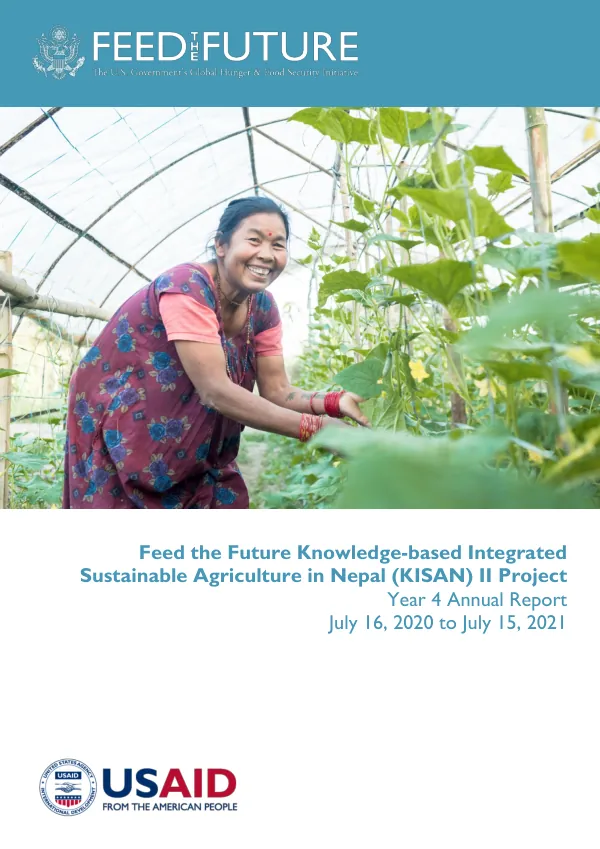
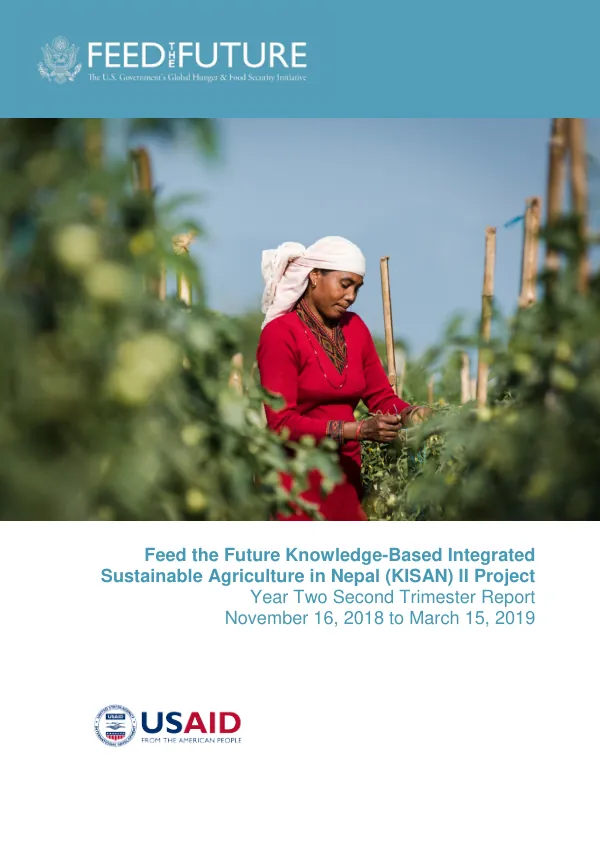
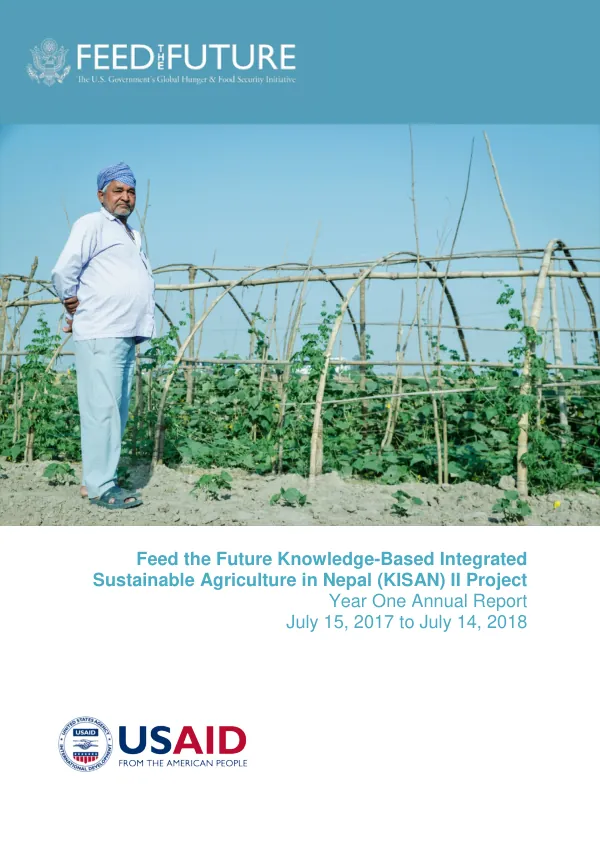
Feed the Future Knowledge-Based Integrated Sustainable Agriculture in Nepal (KISAN) II Project Year One Annual Report
Sign inDIGITAL GREEN FOUNDATION
Feed the Future Knowledge-Based Integrated Sustainable Agriculture in Nepal (KISAN) II Project Year One Annual Report
The KISAN II Project is a Feed the Future initiative implemented in Nepal, with the primary goal of improving the productivity and competitiveness of selected agriculture market systems.
2018 · 75 pages
Sign in to readA free account is required to download.
Abstract
The project is led by Winrock International and is funded by the United States Agency for International Development (USAID). The project's scope encompasses five components: improving the productivity of selected agriculture market systems, strengthening the competitiveness, resilience, and inclusiveness of selected agriculture market systems, strengthening the enabling environment of selected agriculture market systems, increasing vulnerable communities' ability to act on business opportunities within selected market systems, and applying collaboration, learning, and adaptation to market systems development. During the first year of implementation, the project faced significant delays due to uncertainty over future funding obligations from USAID. As a result, the hiring of staff, procurement of equipment, and partnership activities were postponed. However, following the obligation of additional funds in February 2018, the project rapidly commenced or resumed work on delayed activities and hired staff necessary to move implementation forward. Despite the delay, the project still plans to reach 200,000 households during the life of the project, with 40,000 farmers engaged by the end of Year 2 Trimester 1, 100,000 farmers by the end of Year 2 Trimester 2, and 130,000 farmers by the end of Year 2. The project has made significant progress in establishing partnerships with private sector organizations, with 20 partners engaged by the end of the first year. The project has also filled all managerial and field-level positions with high-quality professionals, maintaining the majority of high-performing staff from the previous KISAN I project and adding highly skilled new staff. The project has established operating and financial control systems and procedures to ensure optimal use of USAID funding. The project has also conducted a "bootcamp" training workshop for project staff to explain and reinforce the USAID KISAN II private sector-led strategy and proven implementation approaches. Additionally, the project has mapped the majority of private sector organizations working in the project's targeted value chains in the project's 25 focus districts. The project's start-up activities, including the submission of major deliverables to USAID, the approval and signing of subcontracts with consortium members, and the hiring of staff, have been completed. The project's geographic focus is on 25 districts in Nepal, with a specific emphasis on the private sector-led approach to improving the productivity and competitiveness of selected agriculture market systems. The project's timeframes and recommendations are aligned with the USAID Country Development Cooperation Strategy (CDCS) for Nepal, with a focus on achieving the project's goals and objectives within the specified timeframe.