OPEN UNIVERSITY
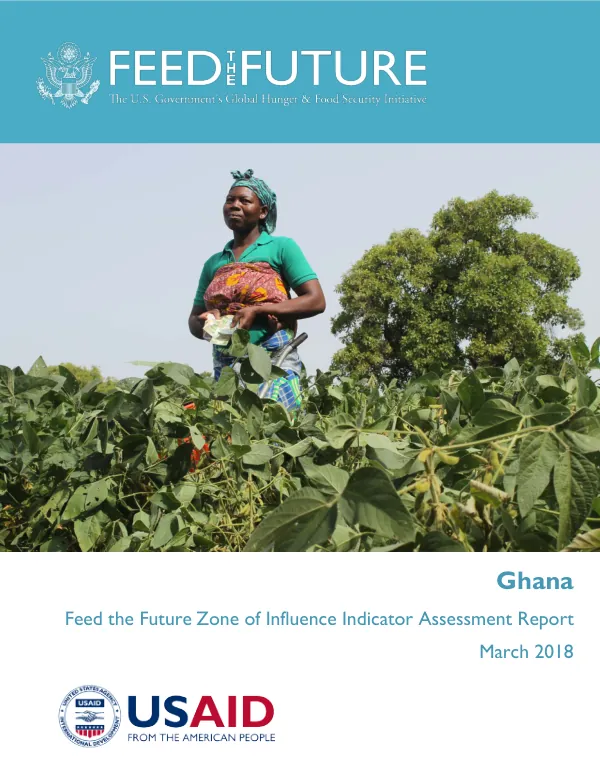
Feed the Future Zone of Influence Indicator Assessment Report
The Feed the Future GHANA 2015 Zone of Influence Interim Indicator Assessment Report provides an overview of the agricultural development initiative in Ghana.
2018 · 106 pages
Sign in to readA free account is required to download.
Abstract
The report focuses on the Zone of Influence (ZOI), which encompasses the northern regions of Ghana, including the Upper East, Upper West, and Northern regions. The ZOI has a projected population of approximately 4.5 million people, with a majority residing in rural areas. The report highlights the demographic characteristics of the ZOI, including a high percentage of women-headed households, which account for 38% of the total households. The majority of the population engages in subsistence farming, with staple crops such as maize, beans, and cassava being the primary sources of income. The ZOI is characterized by limited access to markets, infrastructure, and agricultural inputs, which hinders the development of the agricultural sector. The report presents the results of the ZOI Interim Survey, which was conducted in 2015 to assess the progress of the Feed the Future initiative. The survey collected data on household demographics, living conditions, education, and economic status. The results indicate that the majority of households in the ZOI have limited access to basic necessities such as clean water, sanitation, and healthcare. The poverty prevalence in the ZOI is high, with 63% of the population living below the $1.25 per day poverty threshold. The report also examines the women's empowerment in agriculture, highlighting the limited access of women to productive resources, leadership opportunities, and decision-making power within households. The survey results indicate that women in the ZOI spend a significant amount of time on household chores and agricultural activities, with limited time for leisure and personal development. The report presents the nutritional status of women and children in the ZOI, highlighting the high prevalence of stunting, wasting, and underweight among children under 5 years. The survey results indicate that the majority of households in the ZOI have limited access to nutritious food, with a high prevalence of hunger and dietary deficiencies. The report concludes that the Feed the Future initiative has made significant progress in improving the agricultural sector in the ZOI. However, the report also highlights the challenges faced by the initiative, including limited access to markets, infrastructure, and agricultural inputs. The report recommends that the initiative should focus on improving the access of smallholder farmers to markets, infrastructure, and agricultural inputs, as well as promoting women's empowerment in agriculture. The report presents a range of indicators that track the progress of the Feed the Future initiative in the ZOI. The indicators include poverty prevalence, household economic status, women's empowerment in agriculture, hunger and dietary intake, and nutritional status of women and children. The report provides a comprehensive overview of the agricultural development initiative in Ghana, highlighting the challenges and opportunities faced by the initiative. The report highlights the importance of improving the access of smallholder farmers to markets, infrastructure, and agricultural inputs. The report also emphasizes the need to promote women's empowerment in agriculture, including improving their access to productive resources, leadership opportunities, and decision-making power within households. The report concludes that the Feed the Future initiative has the potential to improve the lives of millions of people in the ZOI, but requires sustained support and commitment from stakeholders.