GLOBAL COMMUNITIES
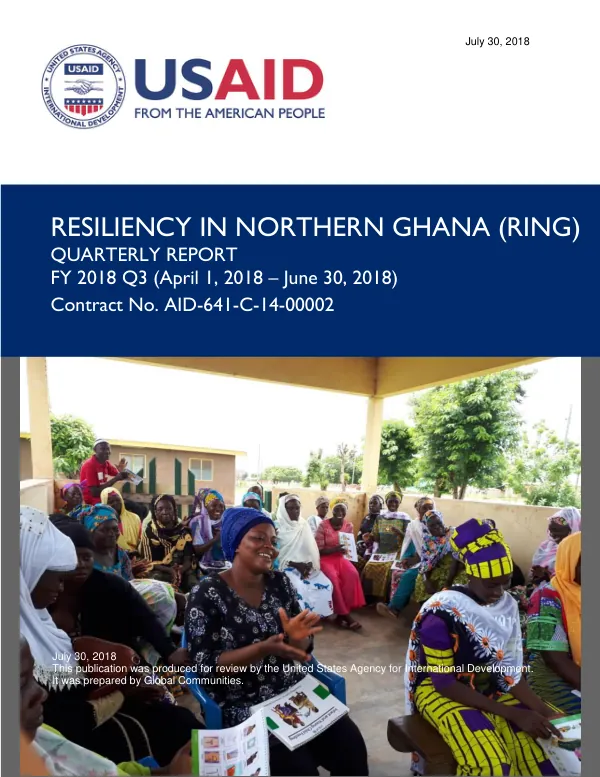
Resiliency in Northern Ghana (RING) Quarterly Report
The Resiliency in Northern Ghana (RING) Program is a five-year, $60 million dollar initiative funded by USAID/Ghana.
2015 · 38 pages
Sign in to readA free account is required to download.
Abstract
The program is an integrated project and partnership under USAID's Feed the Future Initiative designed to contribute to the Government of Ghana's efforts to sustainably reduce poverty. Its goal is to improve the livelihoods and nutritional status of vulnerable populations in the Northern Region. The program will be decentralized and employ mixed modalities for implementation, with interventions implemented through a collaborative approach with the District Assemblies (DAs) in Northern Region and with the Northern Region Coordinating Council (NRCC). The program's first quarter of fiscal year 2015 coincided with the final quarter of district implementation of 2014 annual workplans. This quarter included the harvest of soybeans and cowpea crops, continued distributions of small ruminants, initial VSLA saving cycles, dissemination of ENA messages, completion of WASH projects, Tier One 2015 workplan development, and initiation of Tier Two activities. Districts completed several projects, including 58 borehole repairs, and reached an additional 3,173 households, bringing the total number of households benefiting from RING interventions to 8,179. One theme that emerged during this quarter was the importance of learning and utilizing experiences gained from previous work. The annual work planning process began well ahead of the end of the year, allowing for a preliminary review by RING staff before the official workplan meeting in November. This review process incorporated many lessons from individual components, such as DADU officers in Saboba and Nanumba South modifying the quarantine and distribution process of small ruminants to reduce mortality. However, there are several areas that require further attention. Household-level follow-up on component activities presents a time and resource challenge, impacting the quality of results. For example, soybean crop yields were acceptable but could be improved next year with additional planning and consistent adoption and utilization of good agronomic practices. Household-level follow-up of ENA messaging began but additional planning is needed to ensure households are adopting the behaviors not simply hearing the message. RING staff members have continued close work with district staff counterparts in project implementation and have sought out partnerships with local organizations and groups who can add additional value to RING activities. These connections strive to ensure that the activities among all components continue to drive towards improving nutrition and health among the target vulnerable households. Meetings from this quarter included follow-up with UDS, several producer organizations, agricultural companies, business skills trainers, and organizations that promote diverse nutritional crops. The program has made significant progress in training and capacity building. A total of 719 people were trained in child health nutrition through USG-supported programs, with 352 males and 367 females. Additionally, 3,173 children under 5 were reached, with 1,554 males and 1,619 females. In the agriculture sector, 2,502 individuals received USG-supported short-term training, with 250 producers and 250 females receiving training. Furthermore, 3,173 rural households benefited directly from USG interventions, with 3,015 households having both male and female adults. The program has also made progress in establishing health facilities with established capacity. However, as of the submission of this report, Global Communities does not have an approved Performance Monitoring and Evaluation Plan (PMEP), and therefore, the results per the PMEP are not reported in this section. Once the PMEP is approved, Global Communities will be reporting those results.