CATHOLIC RELIEF SERVICES ORGANIZATION
Feeding South Sudanese Refugees
South Sudanese refugees have been displaced by conflict since December 2013, with approximately 1.6 million people internally displaced and 786,000 fleeing as refugees into neighboring countries.
2016 · 1 pages
Sign in to readA free account is required to download.
Abstract
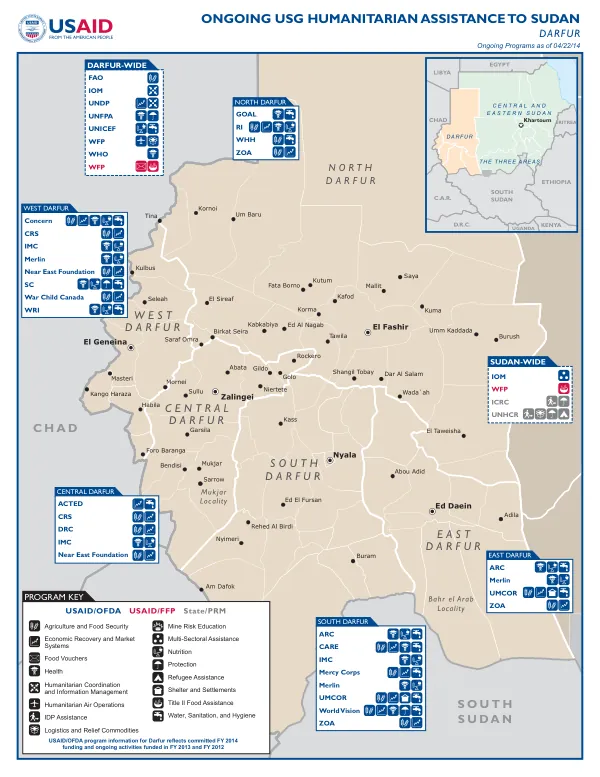
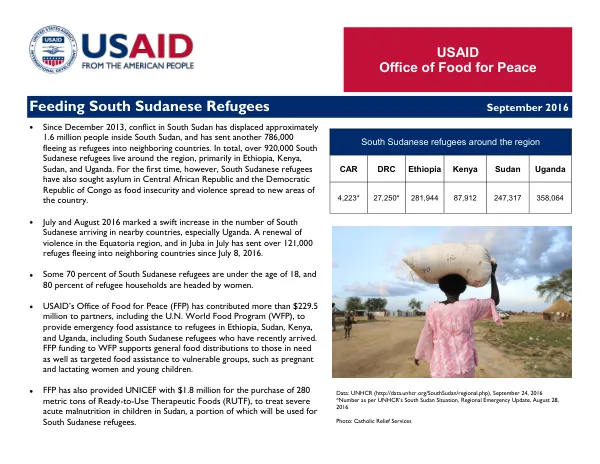
The total number of South Sudanese refugees in the region is over 920,000, primarily residing in Ethiopia, Kenya, Sudan, and Uganda. Refugees have also sought asylum in Central African Republic and the Democratic Republic of Congo due to spreading food insecurity and violence. A significant increase in the number of South Sudanese refugees arrived in nearby countries, particularly Uganda, in July and August 2016. The renewal of violence in the Equatoria region and in Juba in July led to over 121,000 refugees fleeing into neighboring countries since July 8, 2016. The majority of South Sudanese refugees are under the age of 18, with 70% of refugees falling into this category. Additionally, 80% of refugee households are headed by women. The Office of Food for Peace (FFP) at USAID has contributed over $229.5 million to partners, including the U.N. World Food Program (WFP), to provide emergency food assistance to refugees in Ethiopia, Sudan, Kenya, and Uganda, including South Sudanese refugees who have recently arrived. FFP funding to WFP supports general food distributions to those in need as well as targeted food assistance to vulnerable groups, such as pregnant and lactating women and young children. FFP has also provided UNICEF with $1.8 million for the purchase of 280 metric tons of Ready-to-Use Therapeutic Foods (RUTF) to treat severe acute malnutrition in children in Sudan, a portion of which will be used for South Sudanese refugees. The data on South Sudanese refugees in the region, as of September 24, 2016, indicates the following numbers: 4,223 in Central African Republic, 27,250 in the Democratic Republic of Congo, 281,944 in Ethiopia, 87,912 in Kenya, 358,064 in Uganda, and 247,317 in Sudan. The refugee crisis in South Sudan has resulted in a significant humanitarian response, with the Office of Food for Peace playing a crucial role in providing emergency food assistance to those in need. The funding provided by FFP has supported the distribution of food to refugees, as well as targeted assistance to vulnerable groups, such as pregnant and lactating women and young children.