TETRA TECH
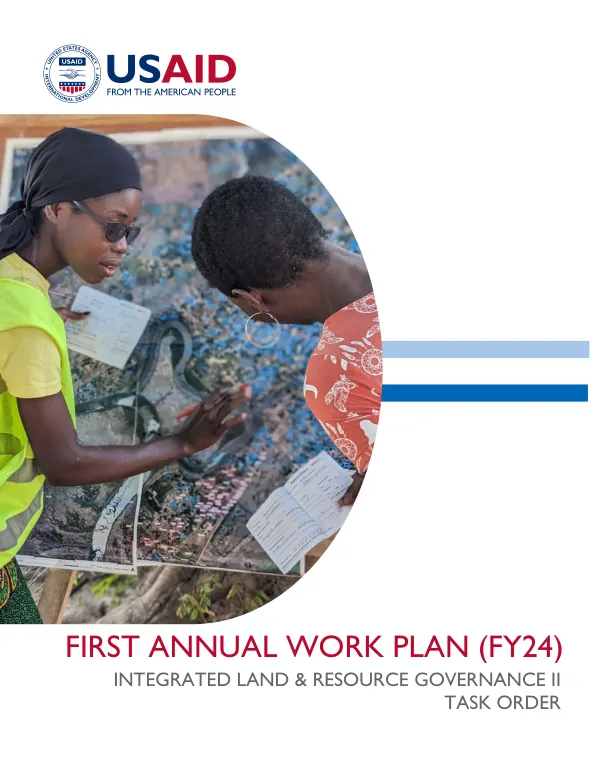
ILRG II First Annual Work Plan (FY24)
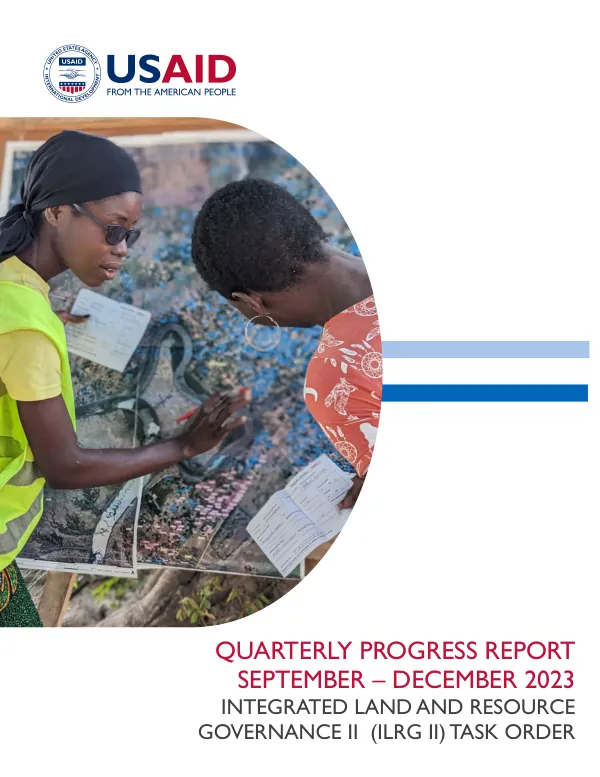
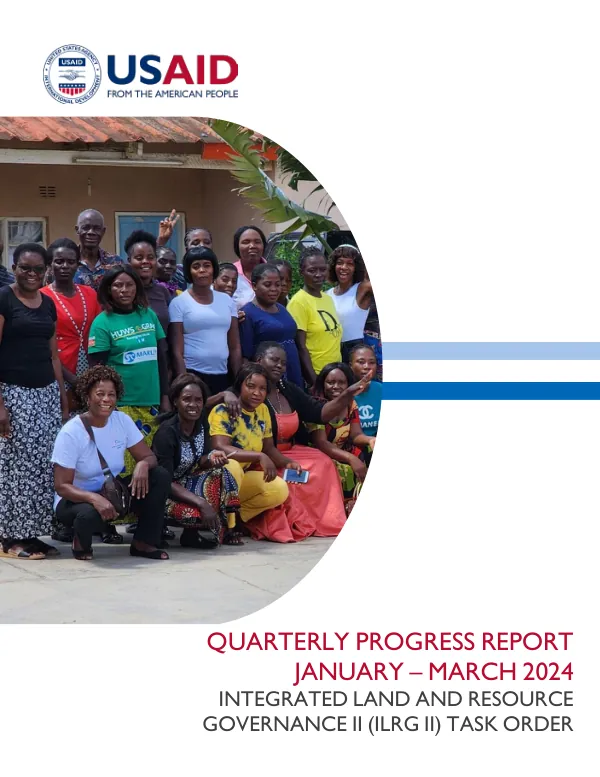
Integrated Land and Resource Governance II (ILRG II) is a task order that aims to provide support to the Land and Resource Governance Division in the Center for Natural Environment in the Bureau of Resilience, Environment and Food Security at the United States Agency for International Development (USAID).
2024 · 26 pages
Sign in to readA free account is required to download.
Abstract
The purpose of ILRG II is to develop, implement, assess, and evaluate interventions that secure land tenure and resource rights and strengthen land and resource governance. ILRG II will identify constraints and barriers to secure land and resource governance, supporting multiple development objectives such as combating climate change, promoting food security, and enabling gender equality. The task order will provide technical services to strengthen and secure the land tenure and resource rights of women, men, Indigenous Peoples, local communities, and other marginalized and underrepresented populations in USAID presence countries. ILRG II seeks to achieve four objectives: 1) strengthening enabling environments to promote legal and policy frameworks for land and resource governance; 2) enhancing the capacity of key stakeholders and partners to implement inclusive land and resource governance laws and practices; 3) building innovative partnerships with the private sector to promote responsible land-based investing; and 4) supporting monitoring, evaluation, research, and learning activities to improve land and resource governance programming. ILRG II will adopt a flexible and adaptive implementation approach, integrating lessons learned from past activities with those learned during the task order. This approach will enable the task order to adjust to unanticipated events, such as changes in government priorities or project staff changes. The task order will focus on several key areas, including IPARD, Green Cities/Adaptation, Environmental Defenders, Women's Empowerment in the Cocoa Sector, and Community-Based Natural Resource Management in Zambia. Each of these areas will involve a range of activities, including background and objectives, management approaches, and technical implementation, to achieve the objectives of ILRG II. ILRG II will work with a range of partners, including USAID, local communities, civil society organizations, and the private sector, to achieve its objectives. The task order will also involve research and analysis to improve understanding of what works and what does not work to achieve land and resource governance rights. The overall goal of ILRG II is to promote development of resilient societies where land and resource governance rights are respected and utilized to create broad-based growth for all.
Related documents