USAID DEC
Reducing the Risk of Land Encroachment: Results from the TGCC Intervention in Zambia
Sign inTHE CLOUDBURST GROUP
Reducing the Risk of Land Encroachment: Results from the TGCC Intervention in Zambia
The Tenure and Global Climate Change (TGCC) intervention in Zambia aimed to improve tenure security and promote agroforestry practices among smallholder farmers.
2018 · 15 pages
Sign in to readA free account is required to download.
Abstract
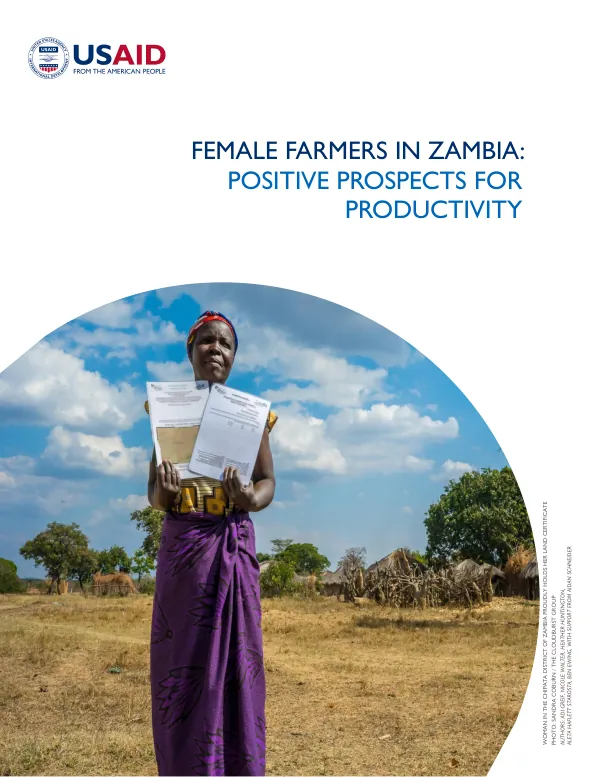
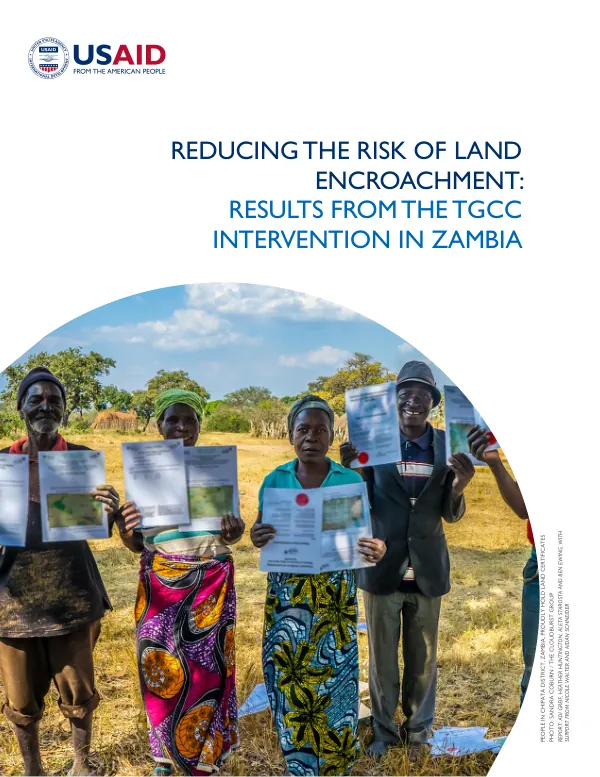
The program was implemented in the Chipata District of Zambia's Eastern Province from 2014 to 2017. The intervention consisted of two main components: land tenure and agroforestry. The land tenure component aimed to increase customary tenure security through informal customary land registration. The Chipata District Land Alliance, a community-based organization, implemented this intervention. They provided legal information, demarcated and mapped land through boundary walks, adjudicated disputes, and distributed land certificates to households. Village-level activities included establishing and training Village Land Committees (VLC) and conducting participatory mapping, resolving disputes, and facilitating the issuance of informal customary land certificates. The agroforestry component was implemented by the NGO Community Markets for Conservation (COMACO). This intervention aimed to promote the adoption of agroforestry practices among smallholder farmers. An extension agent provided support related to planting and establishment of Musangu (Faidherbia Albida) trees and/or Gliricidia (Gliricidia Sepium) on cropland. Activities included founding Farmer Groups in treatment villages, establishing nurseries, distributing seedlings, and providing technical support. The evaluation of the TGCC program used a randomized control trial (RCT) design to examine the impact of the interventions on tenure security and agroforestry adoption. The results showed that the combination of informal customary land registration and community governance support successfully increased household perceptions of improved tenure security. This is one of the first empirical validations of the assumption that land certification increases perceived tenure security. The agroforestry extension increased rates of agroforestry adoption, but short-term seedling survival rates were low. Improved perceptions of tenure security did not have an impact on the rates of agroforestry adoption in the short term. However, customary land registration and community governance support was associated with a slight increase in climate-smart agricultural field investments compared to control communities. The evaluation also highlighted the challenges faced by farmers in keeping seedlings alive, including large labor investments, inadequate water supply, unrestrained animal grazing, and burning fields to clear them. Future programs should consider strengthening land management rules, introducing incentives for seedling survival, or adding monitoring visits. The results of the TGCC program have important implications for rural development initiatives in Zambia and other countries with customary land systems. The program demonstrates the potential of customary land registration and community governance support to improve tenure security and promote agroforestry adoption. The findings also highlight the need for long-term research approaches to understand the impact of these interventions on outcomes such as willingness to fallow land or ensure tree survival.
Related documents