CHEMONICS
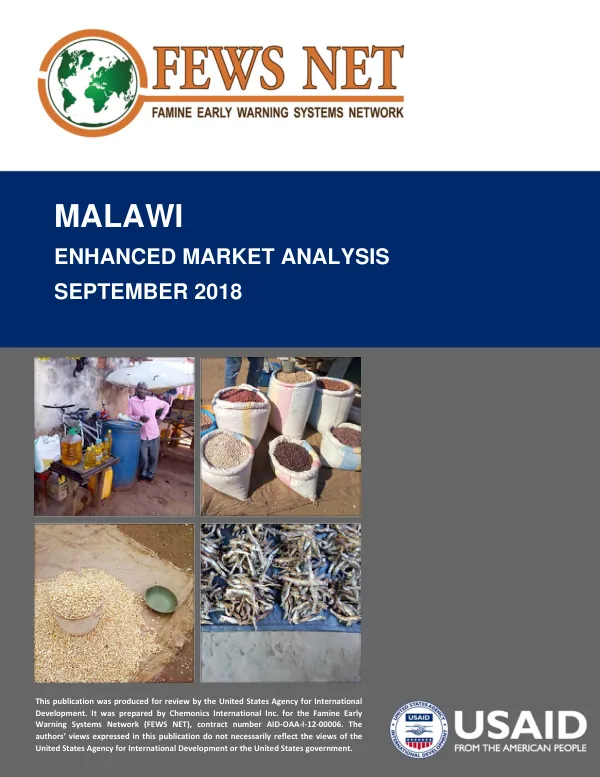
FEWS NET Madagascar Enhanced Market Analysis September 2018
Madagascar's agricultural sector is heavily influenced by environmental and social factors.
2018 · 78 pages
Sign in to readA free account is required to download.
Abstract
The country's climate is characterized by a rainy season from November to March, with interannual rainfall variation contributing to crop failures and food insecurity. Southern Madagascar is particularly vulnerable to extreme weather-related hazards, including droughts and floods, which can have devastating impacts on agricultural production. The social context in Madagascar is marked by high poverty rates, with approximately 70% of the population living below the poverty line. Poverty rates are highest in rural areas, where livelihoods are heavily dependent on agriculture. The distribution of poverty varies by region, with the southern part of the country experiencing the highest levels of poverty. Women-headed households are disproportionately affected by poverty, with 55% of households in this category living below the poverty line. Livelihoods in southern Madagascar are primarily based on subsistence agriculture, with a focus on staple crops such as maize, rice, and cassava. The majority of households in the region rely on these crops for food security, with limited access to markets and financial services. Infrastructure in the area is limited, with many roads in poor condition, making it difficult to transport goods and services. The market structure in southern Madagascar is characterized by a high degree of informality, with many farmers selling their produce directly to consumers or through local markets. Market conduct is often influenced by social and cultural factors, with women playing a significant role in agricultural production and marketing. Market performance is affected by a range of factors, including climate variability, market access, and infrastructure. Food security in southern Madagascar is a major concern, with many households experiencing food deficits during the lean season. The region is heavily reliant on food assistance, with many households receiving support from international organizations and government programs. The modality experience in southern Madagascar highlights the importance of considering environmental, social, and economic factors when designing food assistance programs. The national market context in Madagascar is characterized by a high degree of competition, with many traders and wholesalers operating in the market. The marketing basins serving southern Madagascar are primarily located in the coastal regions, with many traders transporting goods from these areas to the interior. Ports, storage, and transportation infrastructure are critical components of the market system, with many traders relying on these services to transport goods to market. Staple food preferences and consumption patterns in southern Madagascar vary by region and season. Maize is the primary staple crop in the region, with many households consuming it as a main source of energy. Cassava and rice are also important staple crops, with many households relying on these crops during the lean season. The sub-national food balance sheet highlights the importance of considering regional differences in food availability and access when designing food assistance programs. Price analysis in southern Madagascar reveals significant variations in food prices across different regions and seasons. Maize prices, in particular, are highly variable, with prices increasing during the lean season and decreasing during the harvest season. These price fluctuations have significant impacts on household food security, with many households struggling to access affordable food during the lean season.