UNIVERSITY OF CALIFORNIA AT DAVIS
Field Training Evaluation Survey Results from Esoko Call Center Operators
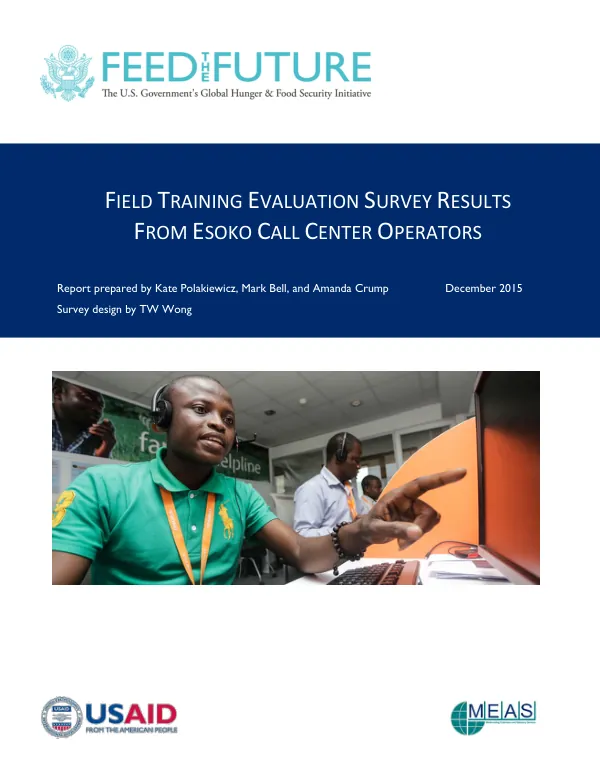
Field training evaluation survey results from Esoko call center operators indicate that a workshop conducted in Ghana during 2015 aimed to enhance the service provided through the call center.
2015 · 15 pages
Sign in to readA free account is required to download.
Abstract
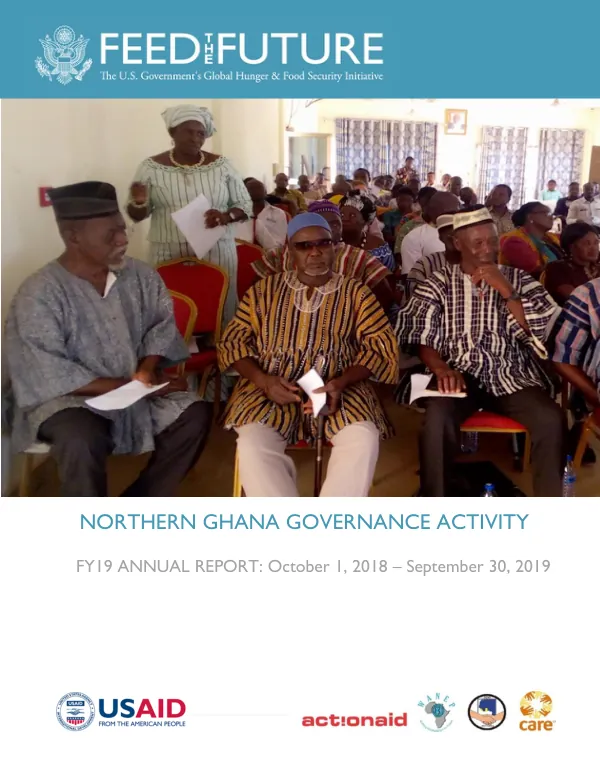
The objectives of the workshop included facilitating a better understanding of the agricultural information sources used and challenges faced by community farmers, ensuring that community farmers were informed of the sources and kinds of information available, and advising call center staff on how to communicate about production issues and potential solutions. The training event included three primary activities: the Seasonality Crop Calendar exercise, the Mind Map exercise, and Phone Literacy training. Survey findings suggested that the Seasonality Crop Calendar exercise was very useful and should be repeated at any subsequent trainings. The Mind Map exercise was considered useful but sufficient for the first training, while the Phone Literacy exercise was highly interactive and engaged farmers in a positive way, resulting in improved understanding of basic cell phone functions. All participants indicated that they benefited from the course and have used information gathered or learned during the training. Feedback suggested that this type of training was very beneficial and should be repeated as it builds a greater bond between service operators and farmers, expands the understanding of call center operators of farmers' circumstances, and further raises awareness of the Esoko service. It was also suggested that future trainings should include researchers and could be held every 3 months. The larger project, managed by the University of Illinois at Urbana-Champaign, aimed to understand the challenges faced by agricultural call centers and determine best practices for future engagement. The study included several field trainings facilitated by a UC Davis researcher and led by Esoko call center operators and community farmers. The intended outcomes of the trainings were to facilitate a better understanding of the agricultural information sources used and challenges faced by community farmers, ensure that community farmers were informed of the sources and kinds of information available, and advise call center staff on how to communicate about production issues and potential solutions. The field trainings were held in March and April 2015 and took place in selected communities in Ghana. They were attended by five call center operators, one call center manager, one UC Davis researcher, and 10-15 farmers. The duration of each training was two days. The trainings aimed to facilitate a better understanding of the agricultural information sources used and challenges faced by community farmers, ensure that community farmers were informed of the sources and kinds of information available, and advise call center staff on how to communicate about production issues and potential solutions. The Mind Map activity involved farmers drawing a diagram to visually represent the ways in which the sources of information for their farming activities are linked together. The activity started with the farm at the center of the diagram, and farmers connected it to different types of information sources they have. Each time someone brought up a similar source, more lines were drawn from the farm to the source. This activity aimed to facilitate a better understanding of the agricultural information sources used and challenges faced by community farmers. The Phone Literacy training was highly interactive and engaged farmers in a positive way, resulting in improved understanding of basic cell phone functions. This training aimed to ensure that farmers felt comfortable with basic phone functions in conjunction with Esoko products and to provide call center staff with a better understanding of how farmers interact with their phones.