TETRA TECH ESI, INC.
Final Note on Solar plus ESS pilot at Dahod
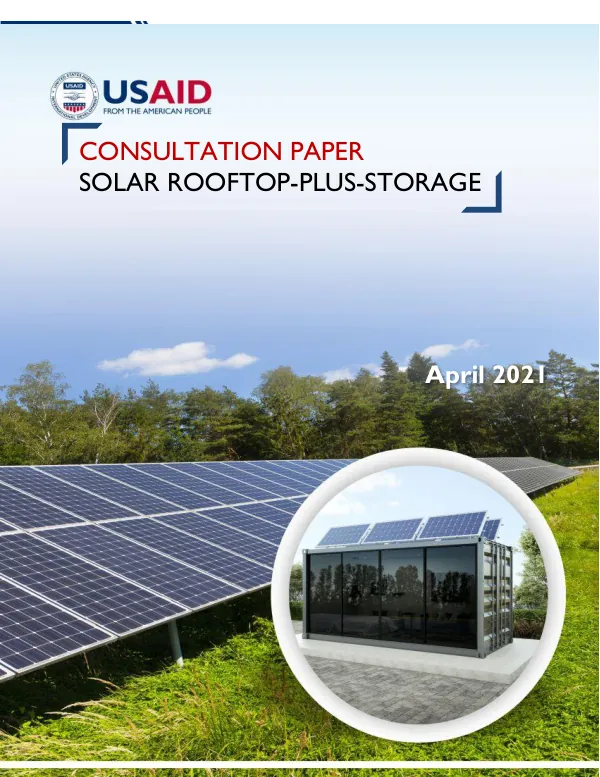
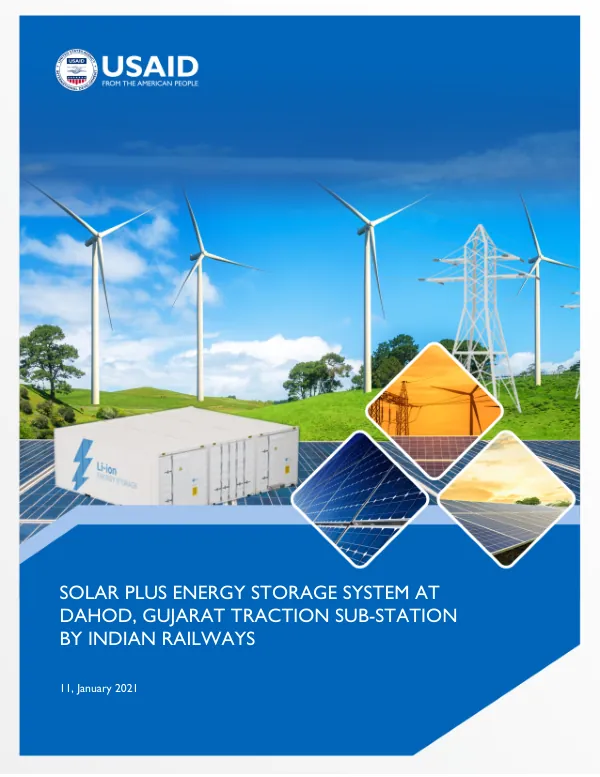
The solar plus energy storage system at Dahod, Gujarat traction sub-station by Indian Railways is a pilot project aimed at assessing the technical, financial, and economic viability of replacing electricity supplied by the DISCOM with solar power.
2021 · 14 pages
Sign in to readA free account is required to download.
Abstract
The project is located near the Dahod Railway station and receives supply from the 132/33 kV sub-station owned by Gujarat Electricity Transmission Corporation Limited (GETCO) to serve the traction load of Indian Railways. The analysis assumes a project life cycle of 25 years, with cost assumptions for the energy storage system (ESS) based on market assessment and available data from various reports. The proposed site covers an area of 90 acres in two patches on either side of the TSS, which can accommodate a maximum solar capacity of about 22.5 MWp considering 4 acres/MW. This solar capacity can generate 38,345 MWh in a year, which is about 49% of the total present electricity consumption at TSS. The average expected generation from the solar project is lower than the average daily requirement, but the solar project will generate more power than the demand during certain hours in a day. Each year, out of 38,345 MWh generated from 22.5 MWp solar plant, 23,686 MWh (62%) will be consumed simultaneously, which is about 31% DISCOM supply, while 14,659 MWh (38%) solar generation will remain surplus. The base case considers replacing DISCOM power with 22.5 MWp solar plant. Based on the current solar tariffs, the levelized cost of solar generation is assumed to be INR 3.00/kWh for the life of the project, while the levelized cost of DISCOM supply for the same period is expected to be INR 7.08/kWh. At the base case, Indian Railways can save annually about INR 4.08/kWh for 23,686 MWh electricity supplied by the solar plant, which is 31% of the TSS requirement. The rest of the TSS requirement, i.e., 69% will be met from DISCOM supply at a levelized tariff of INR 7.08/kWh. However, this leaves 14,659 MWh of solar generation surplus, which can be stored and utilized during periods of high demand. The analysis considers three cases for the assessment: base case, Case I – Use ESS for consuming the solar surplus from 22.5 MWp, and Case II – Deploy 15 MWp solar plant with ESS. The solar plus energy storage system at Dahod, Gujarat traction sub-station by Indian Railways has the potential to reduce the dependence on DISCOM supply and increase the use of renewable energy. The project can save Indian Railways annually about INR 4.08/kWh for 23,686 MWh electricity supplied by the solar plant, which is 31% of the TSS requirement. The analysis highlights the importance of energy storage systems in utilizing the surplus solar generation and reducing the reliance on DISCOM supply. The average expected generation from the solar project is lower than the average daily requirement, but the solar project will generate more power than the demand during certain hours in a day. Each year, out of 38,345 MWh generated from 22.5 MWp solar plant, 23,686 MWh (62%) will be consumed simultaneously, which is about 31% DISCOM supply, while 14,659 MWh (38%) solar generation will remain surplus. The solar plus energy storage system at Dahod, Gujarat traction sub-station by Indian Railways has the potential to reduce the dependence on DISCOM supply and increase the use of renewable energy.