USAID DEC
Final Report: Aquatabs Programme for Water Security and Resilience Assessment in Benin
Sign inABT ASSOCIATES
Final Report: Aquatabs Programme for Water Security and Resilience Assessment in Benin
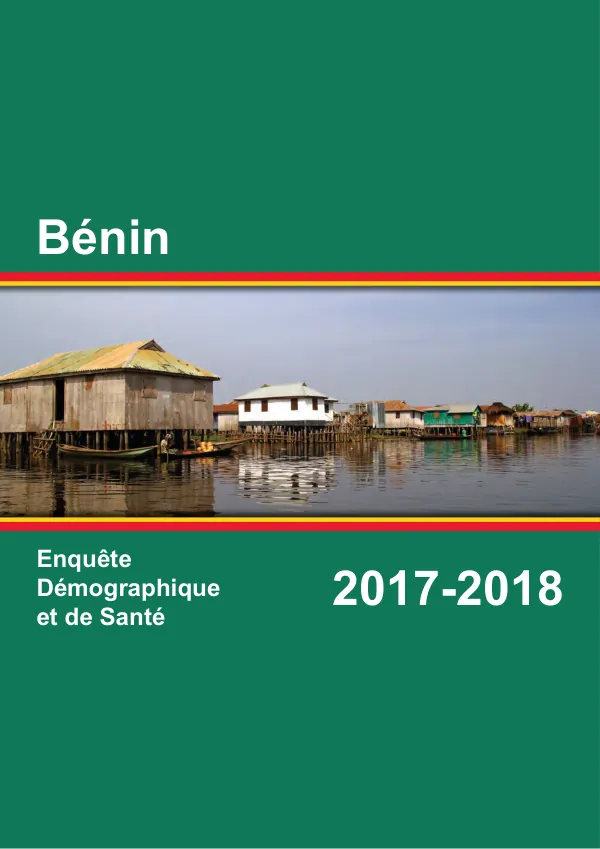
However, this document focuses on a different country, Benin, and a program aimed at providing clean drinking water to its population.
2010 · 12 pages
Sign in to readA free account is required to download.
Abstract
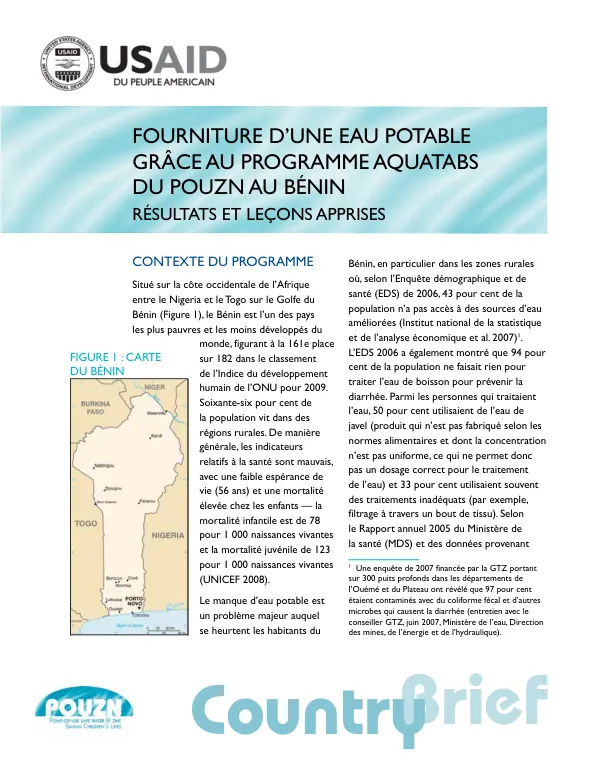
The program, known as Aquatabs, was implemented by Abt Associates and Population Services International (PSI) with funding from the US Agency for International Development (USAID). Benin, located on the western coast of Africa, is one of the poorest and least developed countries in the world, ranking 161st out of 182 in the United Nations Development Programme's Human Development Index for 2009. Sixty-six percent of the population lives in rural areas, and the country faces significant health challenges, including a low life expectancy (56 years) and high infant and juvenile mortality rates (78 and 123 deaths per 1,000 live births, respectively). Access to clean drinking water is a major problem in Benin, particularly in rural areas, where 43% of the population lacks access to improved water sources. The majority of the population (94%) does not treat their drinking water to prevent diarrhea, and those who do often use ineffective methods, such as boiling water with chlorine or filtering it through a cloth. The Aquatabs program aimed to reduce the incidence of diarrhea among children under five years old by creating a sustainable supply of a chlorine-based water disinfection product (Aquatabs) and increasing access to this product. The program also aimed to improve knowledge among caregivers about the importance of treating and storing drinking water properly and to increase the use of Aquatabs for treating drinking water. The program began in 2007, and the product was officially launched on the Beninese market in September 2008. The initial marketing efforts focused on seven major urban areas and surrounding peri-urban areas in the departments of Alibori, Atacora, Atlantic, Borgou, Collines, Donga, and Zou. The program was later extended to additional community-based filières and a television advertising campaign was launched in 2010, which significantly increased sales. The Aquatabs product is a tablet that contains dichloroisocyanurate of sodium (NaDCC), which is effective in treating drinking water at the household level. The product was imported from Ireland and was authorized for sale in Benin by PSI. The price of the product was set at 125 FCFA (approximately $0.25 USD) per pack of 10 tablets, which is considered affordable for low-income households. The program was evaluated through a representative household survey in the target departments in November 2009. The survey found that the program had increased the use of Aquatabs for treating drinking water and had improved knowledge among caregivers about the importance of treating and storing drinking water properly. The program also had a positive impact on the health of children under five years old, with a significant reduction in the incidence of diarrhea. The distribution of Aquatabs was ensured through a network of pharmacies, health centers, and commercial distributors. PSI worked with two private pharmaceutical wholesalers and one state-owned pharmaceutical wholesaler to distribute and sell Aquatabs in private pharmacies, health centers, and public pharmacies. The program also worked with ten commercial wholesalers to distribute the product through commercial distribution channels, such as supermarkets and kiosks. Overall, the Aquatabs program in Benin aimed to improve access to clean drinking water and reduce the incidence of diarrhea among children under five years old. The program was successful in increasing the use of Aquatabs for treating drinking water and improving knowledge among caregivers about the importance of treating and storing drinking water properly.