TETRA TECH ARD, INC.
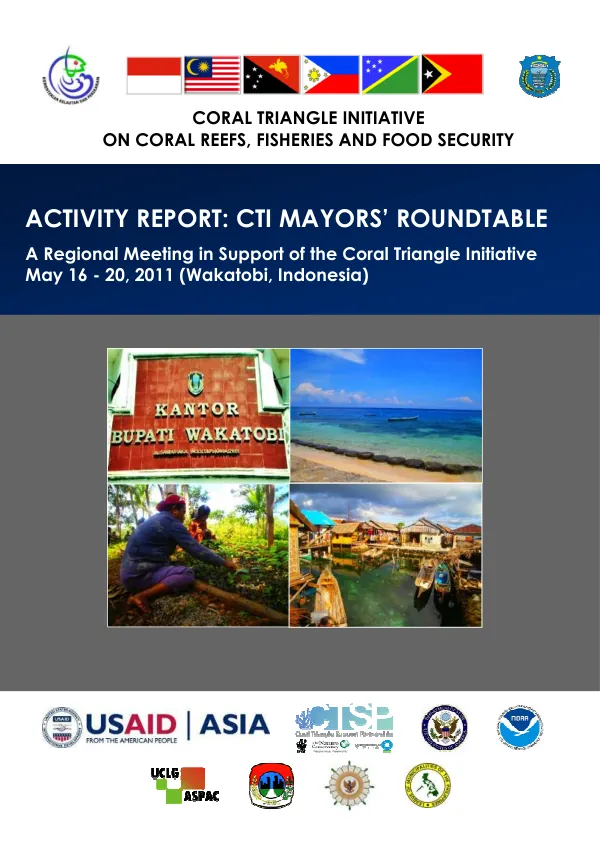
Final Report: CTI Mayors' Roundtable, May 16-19, 2011 Wakatobi, Indonesia
The Coral Triangle Initiative on Coral Reefs, Fisheries and Food Security (CTI-CFF) is a regional effort to conserve and sustainably manage the world's most biologically diverse marine ecosystems.
2011 · 77 pages
Sign in to readA free account is required to download.
Abstract
The initiative involves six countries: Indonesia, Malaysia, Philippines, Papua New Guinea, Solomon Islands, and Timor-Leste. The Regional Plan of Action (RPOA) of the CTI-CFF recognizes the importance of local governments and communities in the management and protection of these ecosystems. The CTI Mayors' Roundtable, held in Wakatobi, Indonesia from May 16-19, 2011, brought together local government officials from the six CTI countries to discuss the role of local governments in the CTI. The meeting aimed to develop a regional local government network to support the implementation of the CTI-CFF. The roundtable was attended by 25 delegates from the six CTI countries, representing local government associations, municipalities, and provinces. The meeting began with an opening session, followed by a series of presentations and discussions on various topics, including the CTI-CFF program overview, the role of local governments in the CTI, and integrated coastal management. The participants also engaged in a gallery walk, where they shared their insights and experiences on the challenges and opportunities facing local governments in the CTI. The meeting concluded with the development of a roadmap for a CTI regional local government network, which aimed to facilitate collaboration and knowledge-sharing among local governments in the region. The CTI Mayors' Roundtable was a significant step towards engaging local governments in the CTI-CFF. The meeting highlighted the importance of local governments in the management and protection of the world's most biologically diverse marine ecosystems. The development of a regional local government network will facilitate collaboration and knowledge-sharing among local governments in the region, ultimately contributing to the conservation and sustainable management of the CTI. The meeting also emphasized the need for local governments to work together to address the challenges facing the CTI, including climate change, overfishing, and habitat destruction. The participants recognized the importance of integrated coastal management and the need for local governments to adopt a holistic approach to managing their coastal resources. The meeting concluded with a sense of optimism and commitment to work together to achieve the goals of the CTI-CFF. The CTI Mayors' Roundtable was a collaborative effort between the CTI-CFF and local governments in the region. The meeting was supported by the US Agency for International Development (USAID) through the Coral Triangle Support Partnership (CTSP). The CTSP provided technical assistance and funding to support the implementation of the CTI-CFF. The meeting also highlighted the importance of partnerships and collaboration among local governments, national governments, and international organizations in achieving the goals of the CTI-CFF. The participants recognized the need for a coordinated approach to managing the CTI, which involves multiple stakeholders and requires a high level of collaboration and coordination.