USAID DEC
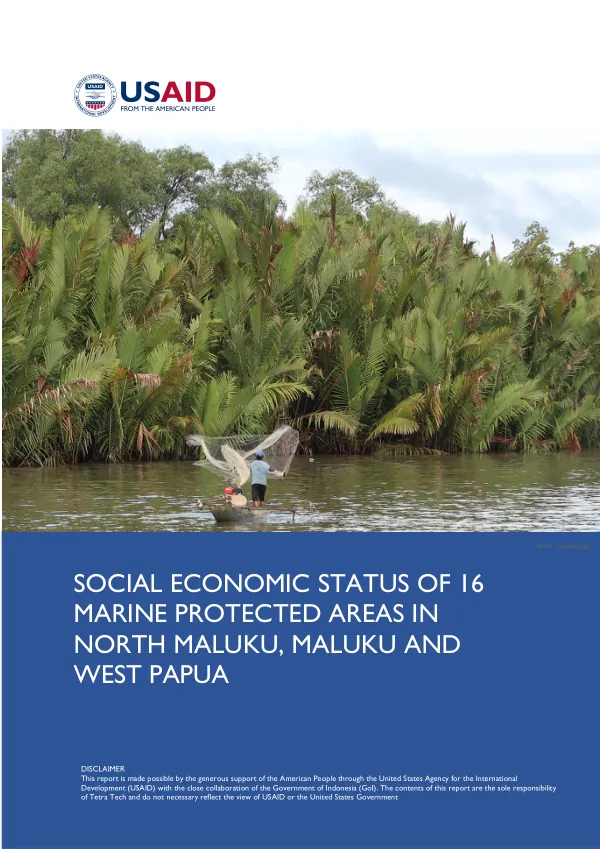
Social Economic Status of 16 Marine Protected Areas in North Maluku, Maluku and West Papua
Sign inGOVERNMENT OF INDONESIA
Social Economic Status of 16 Marine Protected Areas in North Maluku, Maluku and West Papua
The social economic status of 16 marine protected areas in North Maluku, Maluku, and West Papua Provinces was assessed through a baseline and post-baseline survey conducted by WWF-Indonesia.
2021 · 67 pages
Sign in to readA free account is required to download.
Abstract
The study aimed to understand the social profile of the communities living within these protected areas, including their demographic characteristics, primary occupation, and economic welfare. The survey was conducted in 16 marine protected areas, with a total of 14 villages surveyed during the baseline period and 16 villages surveyed during the post-baseline period. The respondents were selected using a stratified random sampling method, with a total of 1,200 respondents interviewed during the baseline period and 1,400 respondents interviewed during the post-baseline period. The data collected included information on the respondents' demographic characteristics, primary occupation, and economic welfare. The results of the survey showed that the majority of the respondents were Muslim, with a significant proportion of Christians also present in some of the MPAs. The primary occupation of the respondents varied across the MPAs, with fishing being the main occupation in most of the areas. However, in some MPAs, such as Makian-Moti, the respondents reported engaging in non-fishing activities, including making concrete bricks and farming. The survey also collected data on the respondents' household assets and electricity use. The results showed that the majority of the respondents had limited access to electricity, with only a small proportion of households having access to electricity during the baseline period. However, there was a significant increase in the number of households with access to electricity during the post-baseline period. The study also assessed the effectiveness of MPA management in improving the economic welfare of the communities living within these protected areas. The results showed that there was a significant increase in the number of households with improved economic welfare during the post-baseline period, compared to the baseline period. The study attributed this improvement to the effective management of the MPAs, which had led to an increase in fish stocks and improved fishing practices. The study made several recommendations for improving the social economic status of the communities living within the MPAs. These recommendations included increasing access to education and healthcare, improving the livelihoods of the fishing communities, and enhancing the effectiveness of MPA management. The study also recommended that future social surveys be conducted to monitor the progress of the MPAs and to identify areas for improvement. The study concluded that the social economic status of the communities living within the MPAs had improved significantly during the post-baseline period, compared to the baseline period. The study attributed this improvement to the effective management of the MPAs and the implementation of various development projects in the area. The study recommended that continued support be provided to the MPAs to ensure the long-term sustainability of the marine ecosystem and the economic welfare of the communities living within these protected areas. The study also highlighted the importance of involving local communities in the management of the MPAs and the need for continued support from government agencies and development partners to ensure the effective management of the MPAs. The study recommended that future research be conducted to identify the most effective ways to involve local communities in the management of the MPAs and to improve the livelihoods of the fishing communities. The study's findings and recommendations have important implications for the management of MPAs in Indonesia and for the development of sustainable livelihoods for the fishing communities living within these protected areas. The study's results highlight the need for continued support for the MPAs and for the development of effective management strategies that take into account the social and economic needs of the local communities.