CENTER FOR EDUCATIONAL DEVELOPMENT
Final Report: Mindanao Youth for Development Program Evaluation
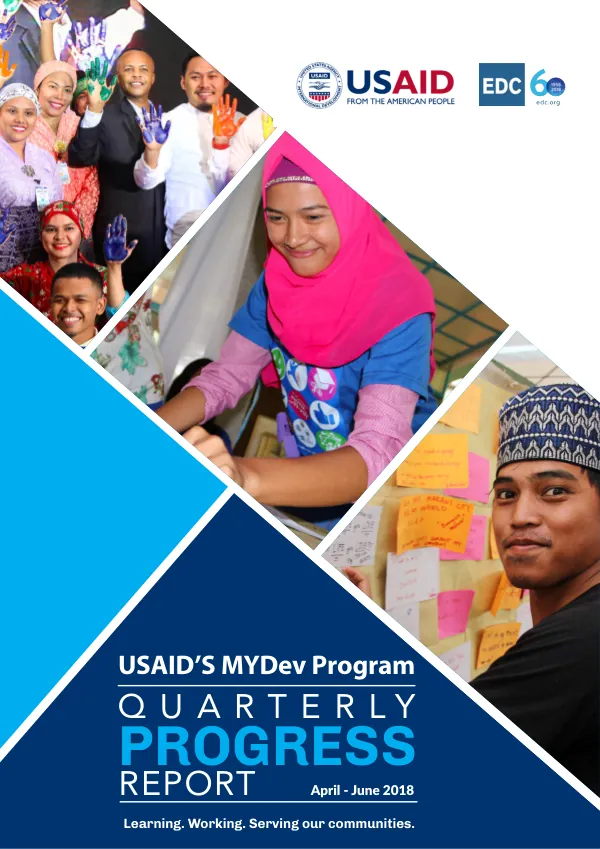
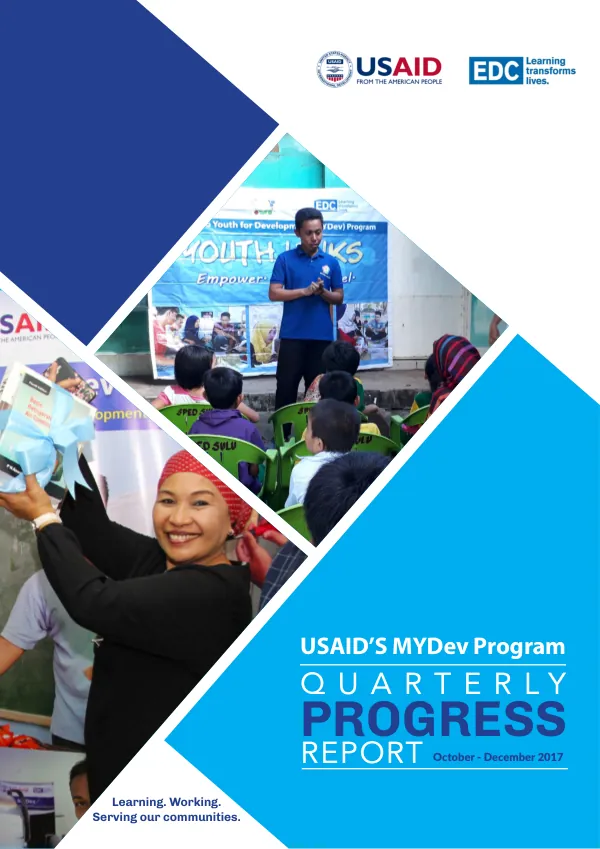
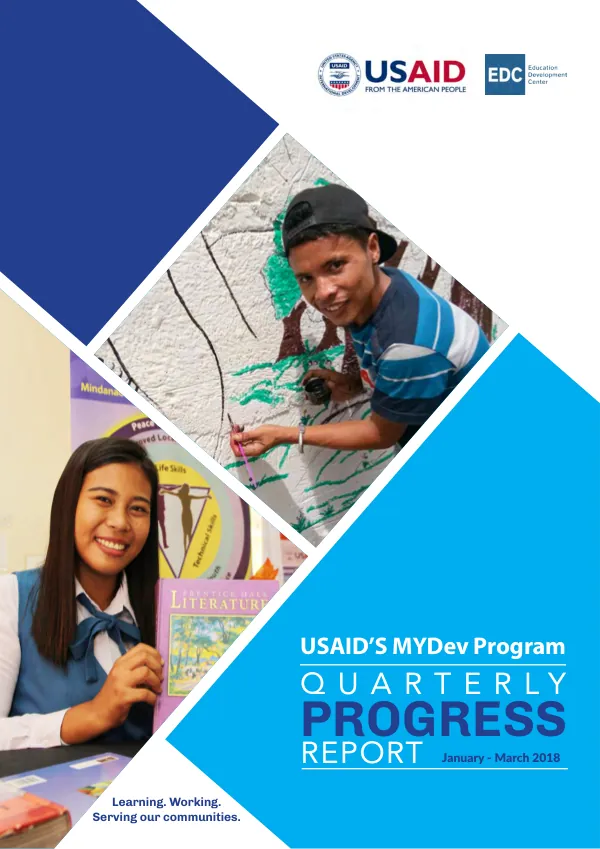
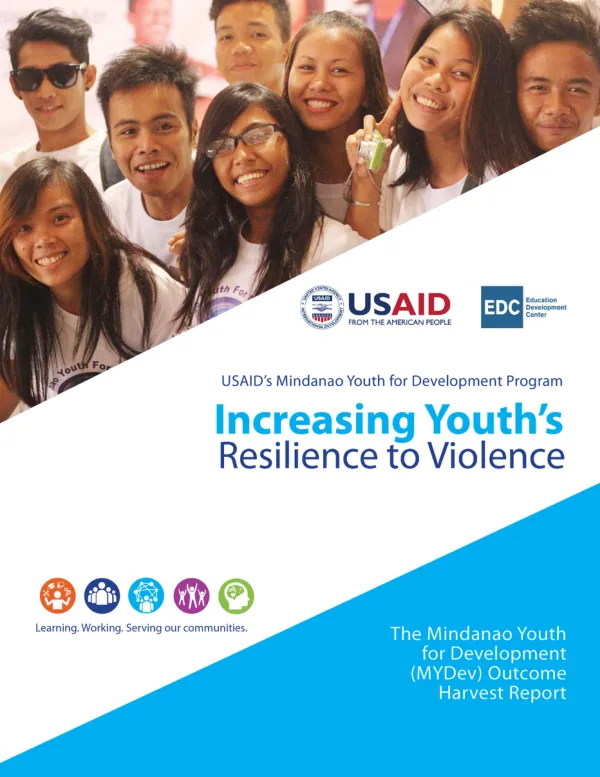
The Mindanao Youth for Development (MYDev) program was launched in 2013 by Education Development Center (EDC) to implement youth life skills, basic education, and livelihood skills initiatives in eight conflict-affected areas of Mindanao.
2019 · 24 pages
Sign in to readA free account is required to download.
Abstract
These initiatives aimed to contribute to USAID/Philippines Development Objective 2: Peace and Stability in Conflict-Affected Areas in Mindanao, by strengthening local governance and increasing youth civic engagement for peace and development. The program reached more than 25,700 vulnerable youth and mobilized local government officials, local businesses, and other stakeholders into Youth Development Alliances (YDA) aimed at coordinating multi-stakeholder support to job skills training and livelihood pathways. The MYDev program was implemented in Cotabato City, Isabela City, Lamitan City, Marawi City, Zamboanga City, the municipalities of Parang in Maguindanao, and Jolo and Indanan in Sulu. The evaluation of the MYDev program used an adapted outcome harvesting method to examine the outcomes related to youth's resilience to violence. The evaluation team conducted a thorough desk review of internal and external project documentation, as well as twenty-two focus group discussions and thirty-two key informant interviews with MYDev alumni, staff, government partners, and implementing partners. The information collected from MYDev-affiliated respondents was verified and substantiated through an additional sixteen focus group discussions and sixteen key informant interviews with respondents not affiliated with MYDev. The evaluation identified two key outcomes related to youth's resilience to violence: youth's resilience to interpersonal violence and youth's resilience to collective violence. The outcome harvesting method revealed that the MYDev program contributed to these outcomes through various program elements, including life skills training, basic education, and livelihood skills initiatives. The evaluation also highlighted the importance of starting from youth's positive assets and involving them in the program development process. The MYDev program's outcome harvesting evaluation was conducted retrospectively, examining data from all project sites and the entire 6-year duration of the program. The evaluation team adapted the outcome harvesting method to examine a specific category of outcomes (youth's resilience to violence) and used a modified approach to answer the evaluation question. The evaluation identified several limitations, including the retrospective design, sample selection, and timing of the study, as well as the sensitivity of the topic of violence and violent extremism. The evaluation's findings suggest that the MYDev program contributed to youth's resilience to violence through various program elements. The program's life skills training, basic education, and livelihood skills initiatives helped to build youth's capacity to resist interpersonal violence, while the program's focus on civic engagement and community development helped to build youth's capacity to resist collective violence. The evaluation's findings also highlight the importance of starting from youth's positive assets and involving them in the program development process. The MYDev program's outcome harvesting evaluation provides valuable insights into the program's effectiveness in building youth's resilience to violence. The evaluation's findings can inform the development of future programs aimed at promoting youth's resilience to violence in conflict-affected areas.