USAID DEC
Final Report: UNODC Mission to Mozambique, Based on the ICCWC Wildlife and Forest Crime Analytic Toolkit
Sign inTRAFFIC INTERNATIONAL
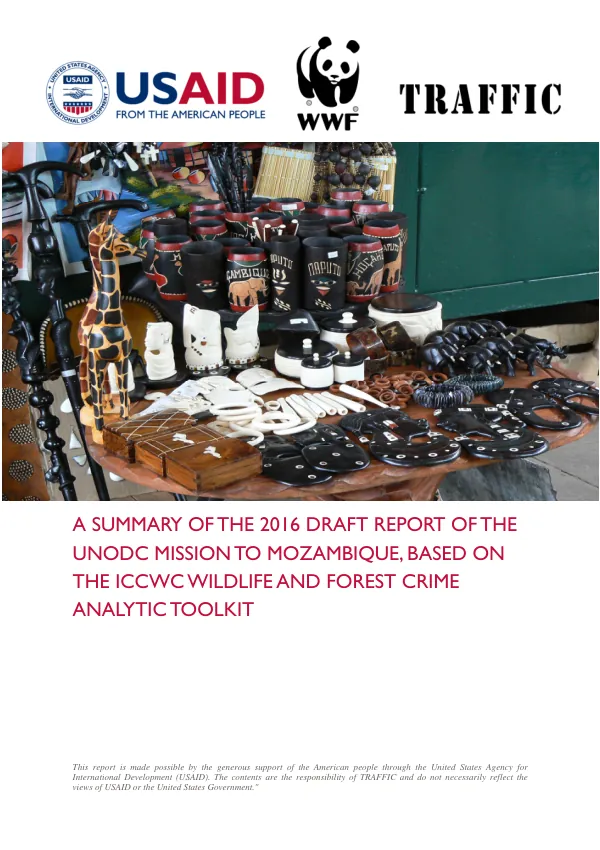
Final Report: UNODC Mission to Mozambique, Based on the ICCWC Wildlife and Forest Crime Analytic Toolkit
The UNODC mission to Mozambique, based on the ICCWC Wildlife and Forest Crime Analytic Toolkit, assessed the country's capacity to combat wildlife and forest crime.
2018 · 33 pages
Sign in to readA free account is required to download.
Abstract
The assessment aimed to provide an overview of the report's relevance to the Khetha project, focusing on components that address illegal wildlife trade information needs and capacity needs of government agencies. The report notes that many agencies consulted for the assessment expressed a limited understanding of the nature and seriousness of wildlife and forest crime, as well as Mozambique's role in international criminal activity. The recommendation is frequently made that relevant agencies should receive awareness-raising in issues related to organized crime and trafficking, especially trafficking in fauna and flora. Assistance from international experts is also mentioned in this regard. The report highlights several key findings, including a lack of resources, limited training in enforcement techniques, a lack of respect for enforcement agencies among the citizenry, widespread corruption, and gaps in legislation. The analysis also identifies inadequate levels of expertise and professionalism in law enforcement agencies. The report provides several key recommendations, including the completion of the legislative process related to CITES implementation in Mozambique, reviewing Mozambique's law relating to forestry and flora trafficking, and providing training to Border Police and Customs officers in law-enforcement techniques and awareness-raising in issues related to organized crime and trafficking. The assessment also recommends that the Directorate of Customs in Mozambique review procedures at major container ports to ensure efficient and effective joint working between relevant agencies and introduce measures to combat the smuggling of wildlife products and other contraband. Additionally, the report suggests introducing a requirement for the completion of an appropriate declaration form by all travelers seeking to enter Mozambique and amending Customs law to make false declarations a criminal offense. The report emphasizes the need for a whole-of-government response to combat wildlife and forest crime, highlighting the importance of building the State's overall capacity to combat crime. The assessment concludes that most focus should be placed on enforcement, with a particular emphasis on addressing the capacity needs of agencies. The report identifies several key areas for improvement, including the need for adequate resources, training, and expertise in law enforcement agencies. The assessment also highlights the importance of addressing corruption and gaps in legislation to effectively combat wildlife and forest crime. The report provides a comprehensive overview of the challenges facing Mozambique in combating wildlife and forest crime, highlighting the need for a coordinated and multi-faceted approach to address these issues. The assessment provides a range of recommendations to improve the country's capacity to combat wildlife and forest crime, including the need for awareness-raising, training, and legislative reform.