USAID DEC
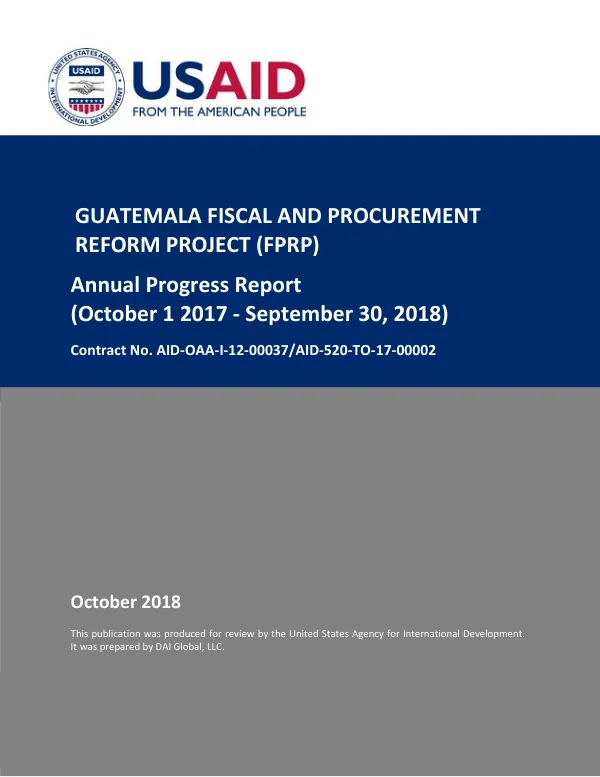
Fiscal and Procurement Reform Project (FPRP) Annual Progress Report (October 1, 2017 - September 30, 2018)
Sign inCHEMONICS
Fiscal and Procurement Reform Project (FPRP) Annual Progress Report (October 1, 2017 - September 30, 2018)
The Fiscal and Procurement Reform Project (FPRP) in Guatemala is a USAID-funded initiative aimed at improving the country's public financial management and procurement systems.
2018 · 107 pages
Sign in to readA free account is required to download.
Abstract
The project's primary objectives include enhancing domestic resource mobilization, expenditure management, and procurement reform, as well as promoting transparency and accountability in public financial management. The project's implementation is led by DAI Global, LLC, with the support of the USAID/Guatemala office. The project's activities are divided into two main components: Domestic Resource Mobilization and Expenditure Management and Procurement Reform. The Domestic Resource Mobilization component focuses on improving the country's tax administration, enhancing the tax base, and promoting voluntary compliance. This component is implemented through various activities, including the development of a new tax administration strategy, the implementation of a tax information exchange system, and the provision of technical assistance to the tax authority. The Expenditure Management and Procurement Reform component aims to improve the efficiency and transparency of public expenditure management and procurement processes. This component is implemented through various activities, including the development of a new public procurement law, the implementation of a public procurement platform, and the provision of technical assistance to the public procurement authority. The project also focuses on promoting transparency and accountability in public financial management, through the development of a performance indicator tracking system and the implementation of a monitoring and evaluation framework. The project's progress is monitored through a quarterly reporting system, which provides updates on the project's achievements and challenges. The project's performance is also evaluated through a performance indicator tracking system, which tracks the project's progress against its key performance indicators. The project's achievements include the development of a new tax administration strategy, the implementation of a tax information exchange system, and the provision of technical assistance to the tax authority. The project's challenges include the need to improve the country's tax administration, enhance the tax base, and promote voluntary compliance. The project also faces challenges in implementing the new public procurement law and the public procurement platform. Despite these challenges, the project has made significant progress in improving the country's public financial management and procurement systems. The project's implementation is supported by a team of technical advisors, who provide technical assistance to the project's implementing partners. The project's budget is managed by the USAID/Guatemala office, which provides financial support to the project. The project's duration is three years, with a total budget of $10 million. The project's achievements include the development of a new tax administration strategy, the implementation of a tax information exchange system, and the provision of technical assistance to the tax authority. The project also faces challenges in implementing the new public procurement law and the public procurement platform. Despite these challenges, the project has made significant progress in improving the country's public financial management and procurement systems.
Related documents