USAID DEC
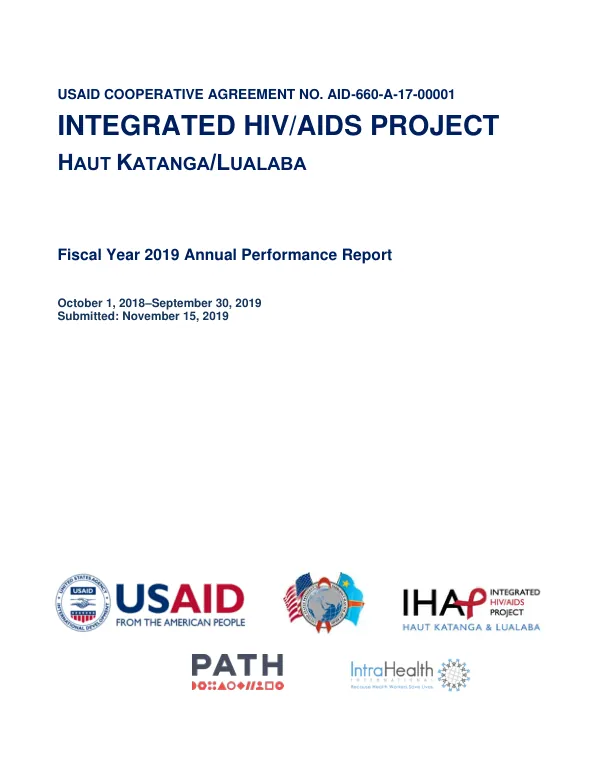
Fiscal Year 2019 Annual Performance Report: Integrated HIV/AIDS Project in Haut Katanga and Lualaba
Sign inUSAID
Fiscal Year 2019 Annual Performance Report: Integrated HIV/AIDS Project in Haut Katanga and Lualaba
The Integrated HIV/AIDS Project in Haut Katanga and Lualaba (IHAP-HK/L) is a collaborative effort between the project consortium and the United States Agency for International Development (USAID).
2019 · 61 pages
Sign in to readA free account is required to download.
Abstract
The project's primary objective is to ensure a continuum of care for HIV/AIDS services in Haut Katanga and Lualaba. To achieve this goal, IHAP-HK/L implemented a comprehensive package of HIV testing, care, and treatment services in 106 facilities in Haut Katanga and 56 facilities in Lualaba. During the fiscal year 2019, IHAP-HK/L tested 249,926 individuals in facilities and communities, representing 85% of the annual target. Among those tested, 14,778 were found to be HIV positive, a yield of 5.9%. This represents an achievement of 114% of the annual target. The project also reported a high rate of HIV testing among pregnant women, with 70,761 (99%) knowing their HIV status. Of the 1,101 pregnant women who tested positive, 97% were linked to treatment. IHAP-HK/L also implemented a program to test HIV-exposed infants who reached 18 months of age. In fiscal year 2019, the project tested 333 (25% of the registered HIV-exposed infants) HIV-exposed infants, among whom four tested positive for HIV and began treatment. The project also collected and transported 784 dried blood spot (DBS) samples from infants to two laboratories in Lubumbashi for analysis, representing 54% of the fiscal year 2019 target. The project's care and treatment services were also expanded in fiscal year 2019. IHAP-HK/L reported that 2,953 pregnant women were tested for HIV and informed of their status in the first quarter of the fiscal year. This number increased to 4,627 in the fourth quarter, representing a cumulative achievement of 12,913. The project also reported a high rate of viral suppression among individuals on antiretroviral therapy (ART), with 97% of individuals achieving viral suppression. In addition to its core services, IHAP-HK/L also implemented a range of interventions to improve the quality of care and treatment services. These interventions included the establishment of a network of health facilities, the provision of training and technical assistance to healthcare providers, and the implementation of a quality management system. The project also worked to improve the availability and management of essential commodities, including antiretroviral medications and laboratory supplies. Overall, IHAP-HK/L made significant progress in fiscal year 2019 towards achieving its objectives. The project's comprehensive package of HIV testing, care, and treatment services reached a large number of individuals, and the project's care and treatment services were expanded to include a range of interventions to improve the quality of care and treatment services.
Related documents