DEVELOPMENT ALTERNATIVES, INC./FINNET
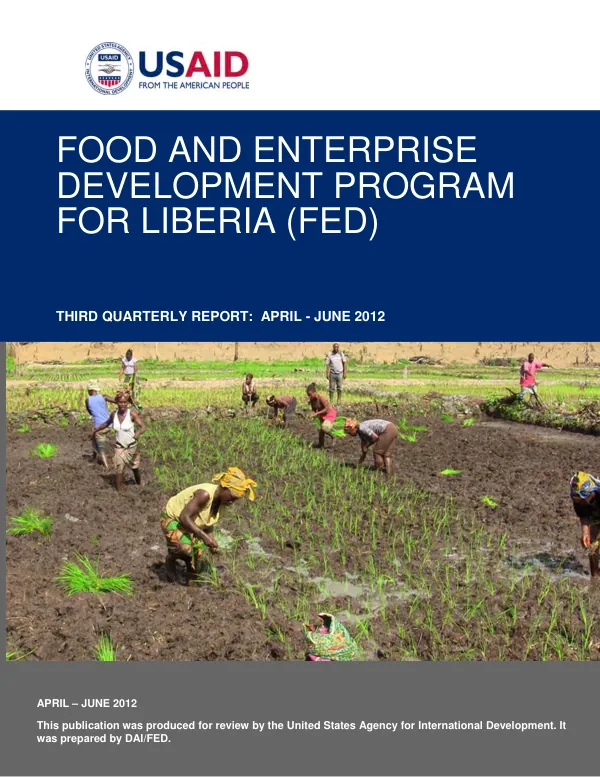
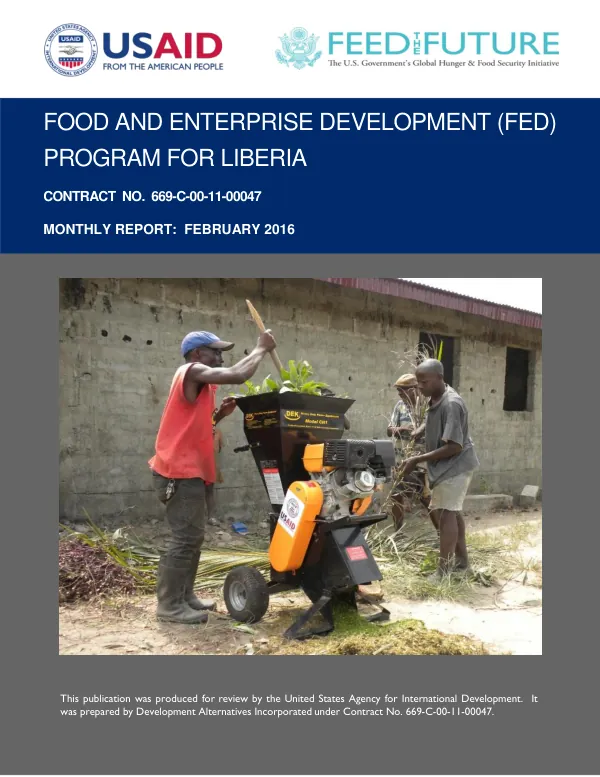
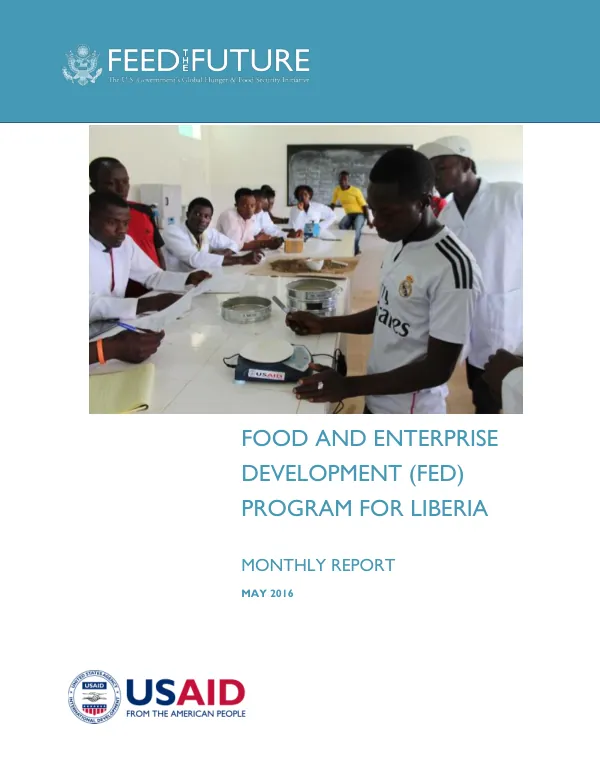
Food and Enterprise Development (FED) Program for Liberia Monthly Report
The Food and Enterprise Development (FED) Program for Liberia is a USAID-funded initiative aimed at increasing agricultural productivity and profitability in the country.
2016 · 27 pages
Sign in to readA free account is required to download.
Abstract
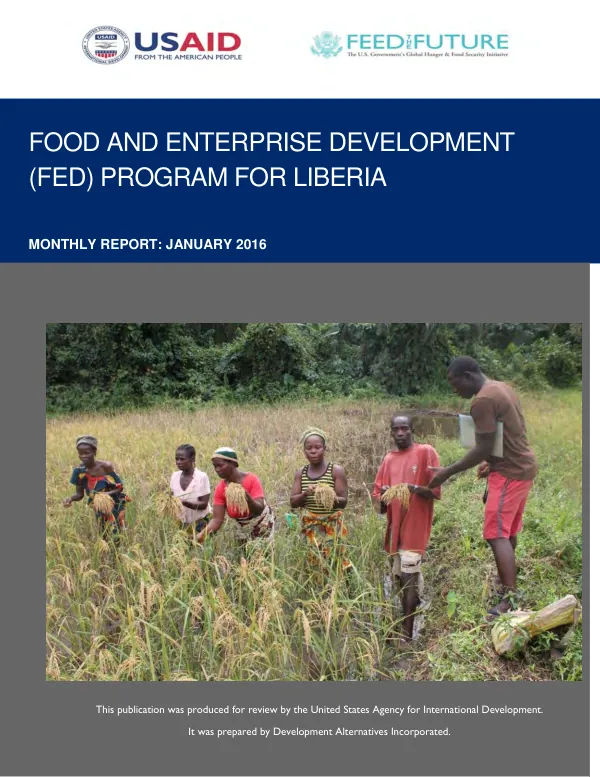
The program was launched in 2011 and is set to conclude its fifth and final year of operation. FED's strategy focuses on building an indigenous incentive structure to assist agricultural stakeholders in adopting commercial approaches. This incentive structure is built upon several key components, including improved technology for productivity and profitability, expanded and modernized input supply and extension systems, commercial approaches to marketing and processing, enterprise development, and workforce development. FED works closely with the Ministry of Agriculture, civil society, and the private sector to provide communities with access to agricultural inputs, extension services, nutrition information, processing services, market information, transportation, agro-business education, and business development. FED's activities are implemented in six counties: Bong, Lofa, Nimba, Grand Bassa, Grand Bassa, and Montserrado. The program focuses on these counties because they are crucial to promoting intra- and inter-county commerce, which in turn improves food availability and access for all Liberians. FED's approach is market-led and value-driven, with a specific focus on building indigenous capacity, particularly among Liberia's youth and women. The program's objectives include increasing the production, marketing, and nutritional utilization of rice, cassava, and other crops, as well as enhancing the productivity of goat farming in the target counties. FED's efforts are aimed at boosting incomes and job opportunities, particularly among smallholder farmers and small and medium-sized enterprises. FED's activities are implemented through a consortium led by Development Alternatives, Inc., in partnership with Winrock International, International Fertilizer Developmental Center (IFDC), Louisiana State University (LSU), and The Cadmus Group. The program's progress is monitored and evaluated through regular monitoring and evaluation reports, which provide insights into the effectiveness of FED's interventions and identify areas for improvement. FED's achievements include the establishment of demonstration plots, training programs for farmers, and the provision of agricultural inputs and extension services. The program has also facilitated the creation of business hubs and market linkages, which have improved access to markets and increased incomes for smallholder farmers. Overall, the FED Program for Liberia is a critical initiative aimed at promoting agricultural productivity and profitability in the country. Its market-led and value-driven approach, combined with its focus on building indigenous capacity, makes it an effective tool for improving food availability and access for all Liberians.