FEWS NET
Food Assistance Outlook Brief
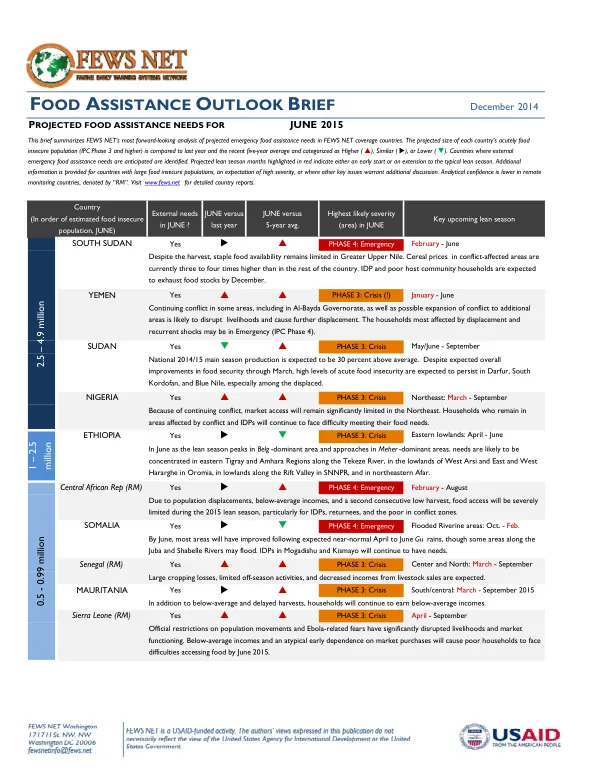
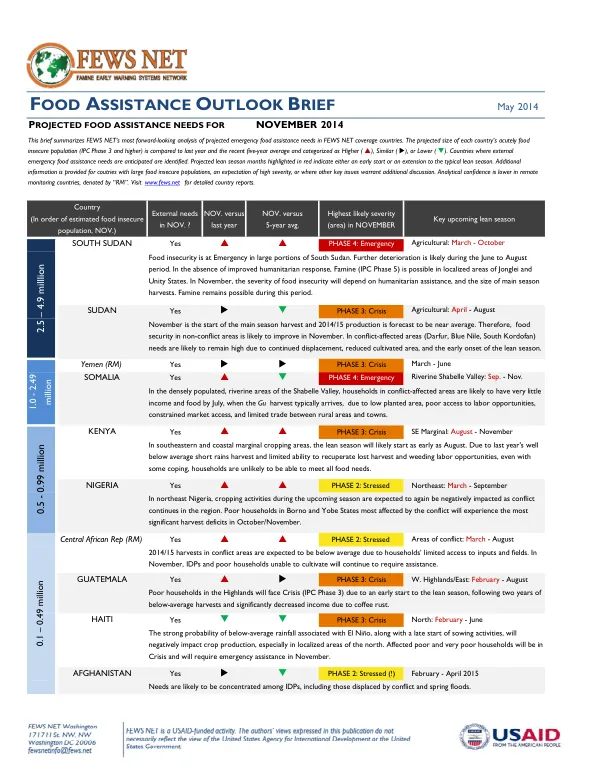
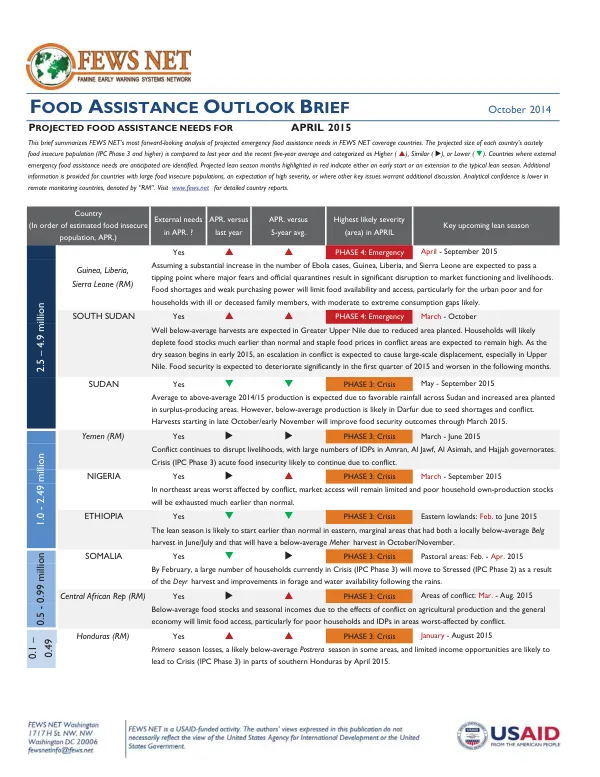
The projected food assistance needs for April 2015 are expected to be significant in several countries.
2014 · 4 pages
Sign in to readA free account is required to download.
Abstract
In South Sudan, Sudan, Yemen, Nigeria, Ethiopia, Somalia, Central African Republic, and Honduras, the highest likely severity of food insecurity is expected to be in Phase 4: Emergency. In these countries, the projected size of the acutely food insecure population is higher than last year and the five-year average. In Guinea, Liberia, and Sierra Leone, a substantial increase in the number of Ebola cases is expected to lead to significant disruption to market functioning and livelihoods, resulting in food shortages and weak purchasing power. The estimated acutely food insecure population in these countries is 2.5-4.9 million, with moderate to extreme consumption gaps likely. In Sudan, well below-average harvests are expected in Greater Upper Nile due to reduced area planted, leading to households depleting food stocks much earlier than normal and staple food prices remaining high. In Sudan and South Sudan, an escalation in conflict is expected to cause large-scale displacement, especially in Upper Nile, resulting in significant deterioration of food security. In Afghanistan, below-average production is expected due to seed shortages and conflict, while average to above-average production is expected in Sudan and increased area planted in surplus-producing areas. However, harvests starting in late October/early November will improve food security outcomes through March 2015. In Mauritania, Crisis (IPC Phase 3) is expected in April 2015 in the drought-affected western highlands due to significant losses during the single 2014 cropping season and expectations for below-average coffee income. In El Salvador, the population of Stressed (IPC Phase 2) households is higher than average in localized areas due to poor Primera harvests, limited coffee income, and above-average red bean prices. In Karamoja, a well below-average harvest will lead to an early lean season for the second year in a row, while in eastern Senegal, rainfed and flood recession cropping has been significantly impacted by poorly distributed rainfall, resulting in Crisis (IPC Phase 3) by March. In Madagascar, ongoing severe dryness and likely below-average rainfall through December are expected to result in the second consecutive below-average harvest. The lean season is expected to start earlier than normal in eastern, marginal areas that had a locally below-average Belg harvest in June/July and will have a below-average Meher harvest in October/November. In northeast areas worst affected by conflict, market access will remain limited, and poor household own-production stocks will be exhausted much earlier than normal.