ADVENTIST DEVELOPMENT AND RELIEF AGENCY INTERNATIONAL
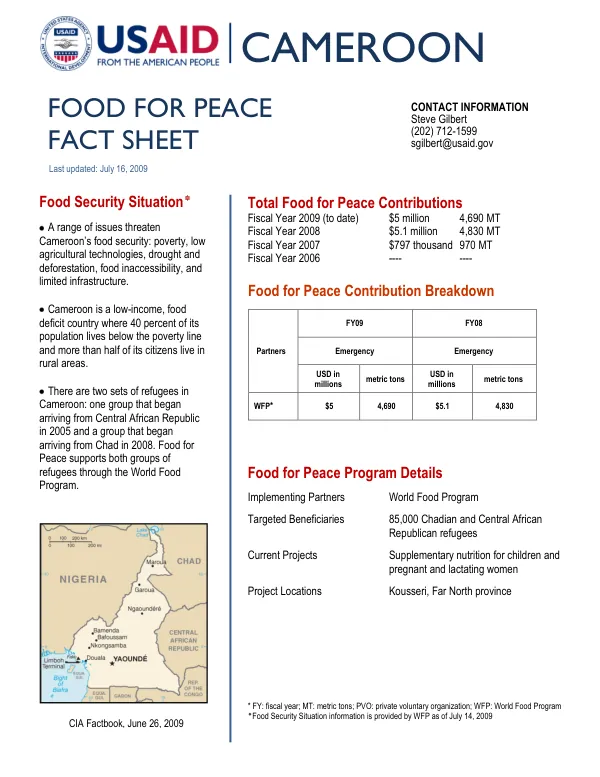
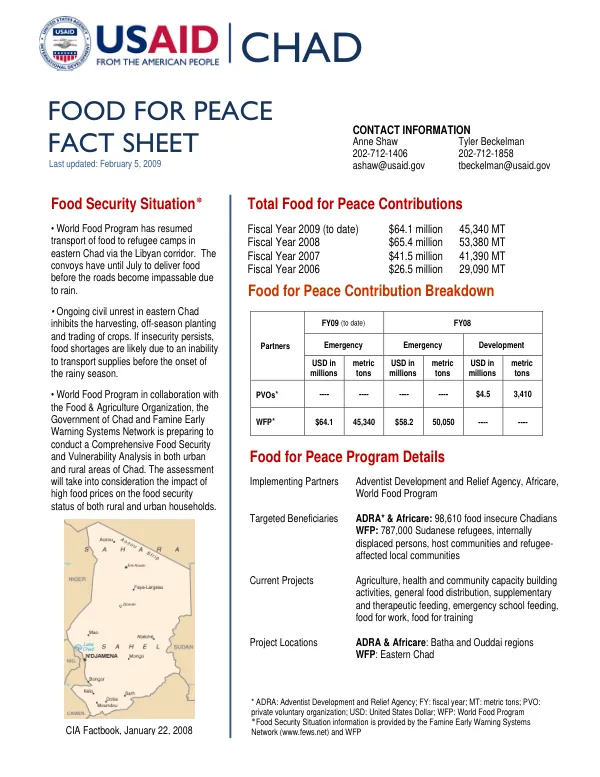
Food for Peace Contribution Breakdown
The Food for Peace program in Chad is a humanitarian initiative aimed at addressing the country's food security challenges.
2009 · 1 pages
Sign in to readA free account is required to download.
Abstract
The program is implemented in partnership with various organizations, including the Adventist Development and Relief Agency, Africare, and the World Food Program. In Fiscal Year 2009, the program received a total contribution of $64.1 million, which enabled the distribution of 45,340 metric tons of food. The program's implementing partners target specific beneficiary groups, including 98,610 food-insecure Chadians and 787,000 Sudanese refugees, internally displaced persons, host communities, and refugee-affected local communities. The program's activities focus on agriculture, health, and community capacity building, as well as general food distribution, supplementary and therapeutic feeding, emergency school feeding, food for work, and food for training. The World Food Program is responsible for delivering food to refugee camps in eastern Chad via the Libyan corridor. The convoys have until July to deliver food before the roads become impassable due to rain. Ongoing civil unrest in eastern Chad hinders the harvesting, off-season planting, and trading of crops, which may lead to food shortages if insecurity persists. The World Food Program, in collaboration with the Food and Agriculture Organization, the Government of Chad, and the Famine Early Warning Systems Network, is preparing to conduct a Comprehensive Food Security and Vulnerability Analysis in both urban and rural areas of Chad. The assessment will take into consideration the impact of high food prices on the food security status of both rural and urban households. The program's current projects are focused on addressing the food security challenges in Chad, particularly in the Batha and Ouddai regions, where ADRA and Africare are implementing their activities. In eastern Chad, the World Food Program is implementing its projects, which include general food distribution, supplementary and therapeutic feeding, emergency school feeding, food for work, and food for training. The program's contributions have been steadily increasing over the years, with a total contribution of $41.5 million in Fiscal Year 2007 and $26.5 million in Fiscal Year 2006. The program's efforts aim to improve the food security situation in Chad, particularly in the face of ongoing civil unrest and high food prices.
Related documents