INTERNATIONAL ORGANIZATION FOR MIGRATION
WEST AFRICA Food Security Alert
Intense conflict in regions bordering Lake Chad has limited food availability and access for households in Nigeria, Niger, Chad, and Cameroon.
2015 · 2 pages
Sign in to readA free account is required to download.
Abstract
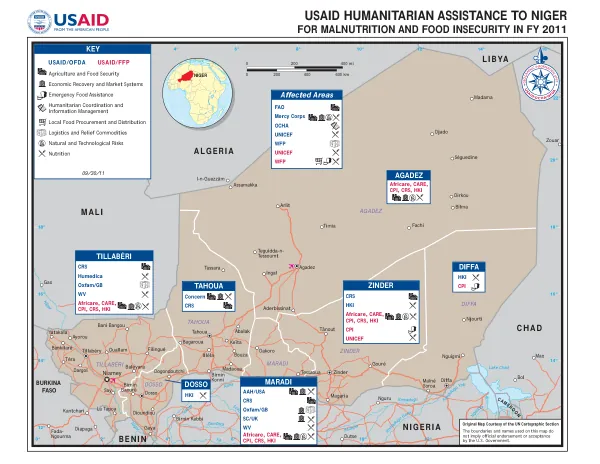
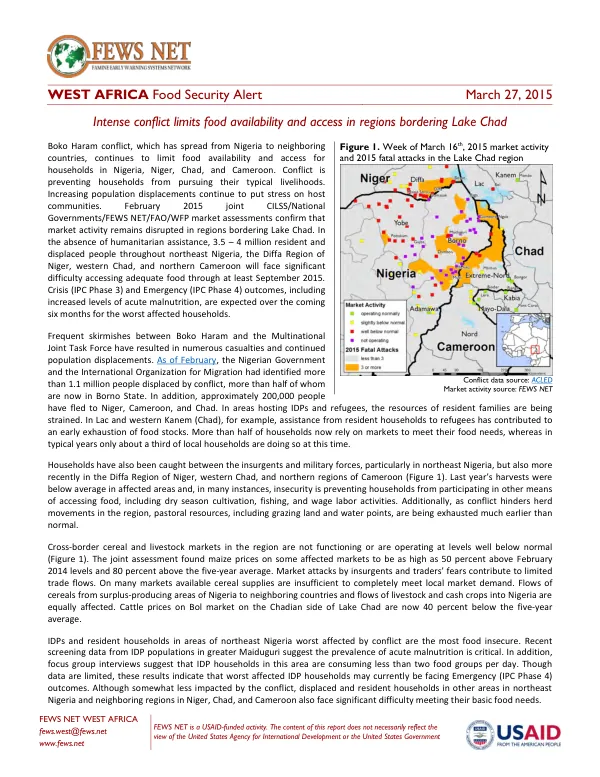
The Boko Haram conflict, which has spread from Nigeria to neighboring countries, continues to disrupt typical livelihoods and prevent households from pursuing their usual activities. Increasing population displacements are putting additional stress on host communities. Market assessments conducted in February 2015 confirm that market activity remains disrupted in regions bordering Lake Chad. In the absence of humanitarian assistance, 3.5 - 4 million resident and displaced people throughout northeast Nigeria, the Diffa Region of Niger, western Chad, and northern Cameroon will face significant difficulty accessing adequate food through at least September 2015. Crisis (IPC Phase 3) and Emergency (IPC Phase 4) outcomes, including increased levels of acute malnutrition, are expected over the coming six months for the worst affected households. Frequent skirmishes between Boko Haram and the Multinational Joint Task Force have resulted in numerous casualties and continued population displacements. As of February, the Nigerian Government and the International Organization for Migration had identified more than 1.1 million people displaced by conflict, with over half of them in Borno State. In addition, approximately 200,000 people have fled to Niger, Cameroon, and Chad. In areas hosting IDPs and refugees, the resources of resident families are being strained, with more than half of households now relying on markets to meet their food needs, whereas in typical years only about a third of local households are doing so at this time. Households have been caught between the insurgents and military forces, particularly in northeast Nigeria, but also more recently in the Diffa Region of Niger, western Chad, and northern regions of Cameroon. Last year's harvests were below average in affected areas, and insecurity is preventing households from participating in other means of accessing food, including dry season cultivation, fishing, and wage labor activities. Additionally, as conflict hinders herd movements in the region, pastoral resources, including grazing land and water points, are being exhausted much earlier than normal. Cross-border cereal and livestock markets in the region are not functioning or are operating at levels well below normal. The joint assessment found maize prices on some affected markets to be as high as 50 percent above February 2014 levels and 80 percent above the five-year average. Market attacks by insurgents and traders' fears contribute to limited trade flows. On many markets, available cereal supplies are insufficient to completely meet local market demand. Flows of cereals from surplus-producing areas of Nigeria to neighboring countries and flows of livestock and cash crops into Nigeria are equally affected. Cattle prices on Bol market on the Chadian side of Lake Chad are now 40 percent below the five-year average.