USAID DEC
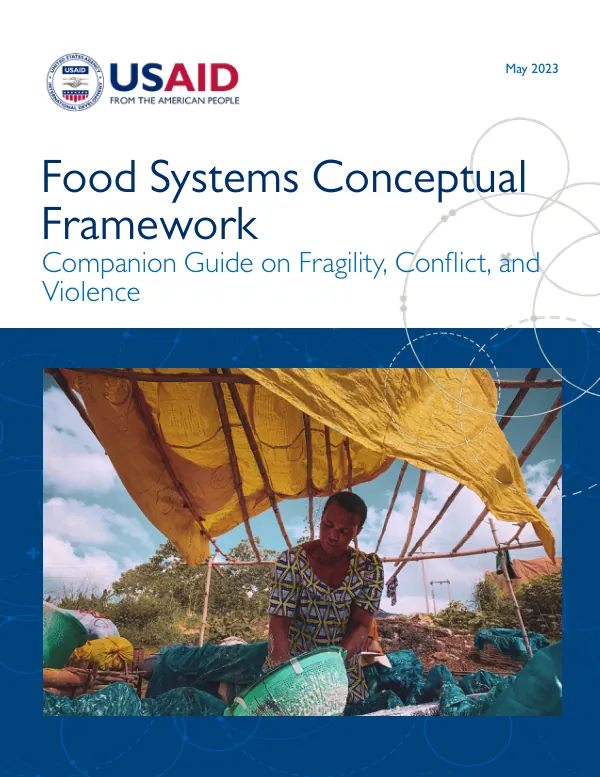
Food Systems Conceptual Framework: Companion Guide on Fragility, Conflict, and Violence
Sign inCNFA, INC.
Food Systems Conceptual Framework: Companion Guide on Fragility, Conflict, and Violence
The alarming trendlines associated with conflict and food insecurity metrics are a pressing concern.
2023 · 16 pages
Sign in to readA free account is required to download.
Abstract
State-based, non-state, and one-sided violence occurred more frequently from 2011 to 2020, resulting in a 110% increase in the total worldwide number of deaths from conflict. Additionally, 89.3 million people were forcibly displaced worldwide at the end of 2021, more than double the 42.7 million who were displaced at the end of 2012. Hunger metrics are also on an upward climb, with an estimated 702 to 828 million people worldwide experiencing hunger in 2021, a jump of 150 million since the start of the COVID-19 pandemic. Conflict is a key driver of rising food insecurity, alongside other important factors such as climate variability, economic downturns, and poverty and inequality. Conflict often interacts with these other key drivers in complex ways that have significant repercussions on food systems. The document emphasizes the intimate relationship between food systems and conflict dynamics, highlighting the need to understand fragility, conflict, and violence to strengthen food systems. Fragility, conflict, and violence (FCV) are defined as the vulnerability of a country or region to armed conflict, large-scale violence, or other instability, including an inability to manage transnational threats or other significant shocks. Conflict is present when two or more individuals or groups pursue mutually incompatible goals, and violence is the intentional use of physical force or power, threatened or actual, against another person or group that results in or has a high likelihood of resulting in injury, death, psychological harm, maldevelopment, or deprivation. The external forces that help give food systems their shape can have both positive and negative effects. Many of these forces, depicted as "drivers" in the USAID conceptual framework, interact in complicated ways that can stress the resilience of the entire system. Disruptions to international trade can have profound implications for elevating risks of domestic instability, as reliance on foreign markets leaves certain locations particularly vulnerable to exogenous shocks that might disrupt imports of staple crops and potentially lead to increases in food prices. Food price spikes have been linked to social unrest and urban violence, and the relationship between the political turbulence associated with the Arab Spring and global wheat failures is a prominent example of the overall dynamics. Conflict can also disrupt trade, as seen in the case of Russia's invasion of Ukraine and the concerns about a "hurricane of hunger." Shocks such as COVID-19 can impair livelihoods and food access, which can elevate FCV risks, and changes in food access have nuanced relationships with FCV dynamics. The USAID conceptual framework illustrates how key elements of the agency's work come together as part of the food system. The framework depicts where RFS' equities influence the food system and its role in inclusively, equitably, and sustainably reducing hunger, malnutrition, and poverty. The framework also illustrates the range of ways RFS and other donors might take action through various investment levers to support priority development outcomes, including diets, health, incomes, nutrition, and environmental sustainability. Understanding FCV dynamics is essential when considering food systems, as food systems investments could inadvertently favor certain groups over others and inflame tensions, or even offer incentives for recruitment by violent extremist organizations. Food system investments must take FCV dynamics into account not just to promote peace for peace's sake but to meet development outcomes.
Related documents