USAID
Foods of the World: South Dakota
The agricultural development initiative in South Dakota began in 1970 with funding from the U.S.
7 pages
Sign in to readA free account is required to download.
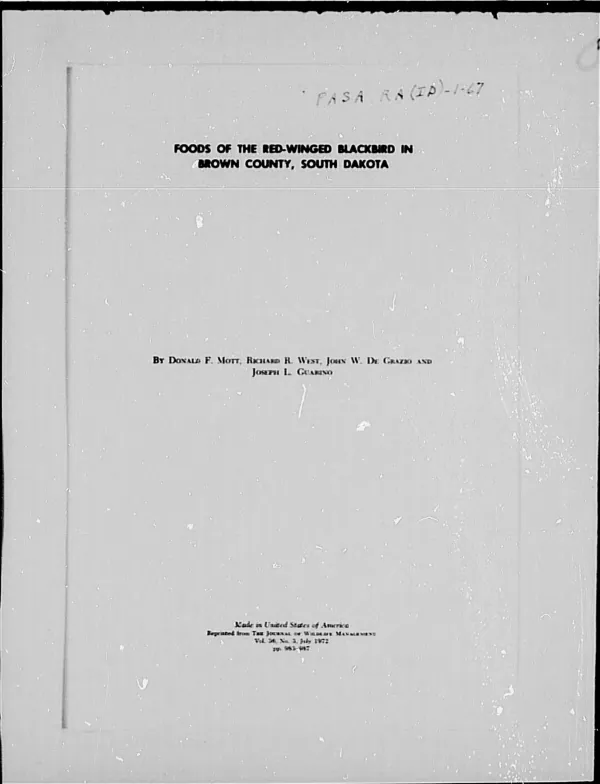
Abstract
Department of Agriculture. The study area, located in the southeastern part of the state, includes the counties of Aurora, Beadle, and Jerauld. The region is characterized by rolling hills and fertile soil, making it suitable for a variety of crops. The climate is temperate, with warm summers and cold winters. Agricultural production in the region is dominated by wheat, oats, and corn. The average annual rainfall is 30 inches, with most of it falling during the spring and summer months. The region is also home to a significant number of livestock, including cattle and sheep. The agricultural development initiative in South Dakota was implemented in phases, with the first phase focusing on farmer training and infrastructure development. The second phase, which began in 1975, focused on market linkage facilitation and the establishment of a regional marketing cooperative. The initiative was evaluated using a combination of quantitative and qualitative methods, including surveys, interviews, and economic analysis. The results of the evaluation showed that the initiative was successful in improving agricultural productivity and household income in the region. The initiative also had a positive impact on the environment, with a reduction in soil erosion and an increase in the use of conservation tillage. The initiative also helped to promote the adoption of sustainable agriculture practices, including the use of compost and crop rotation. Overall, the agricultural development initiative in South Dakota was a successful effort to improve agricultural productivity and household income in the region. The initiative demonstrated the importance of a comprehensive approach to agricultural development, one that includes farmer training, infrastructure development, and market linkage facilitation.
Related documents
Documents in this collection
 2021
2021USAID DEC
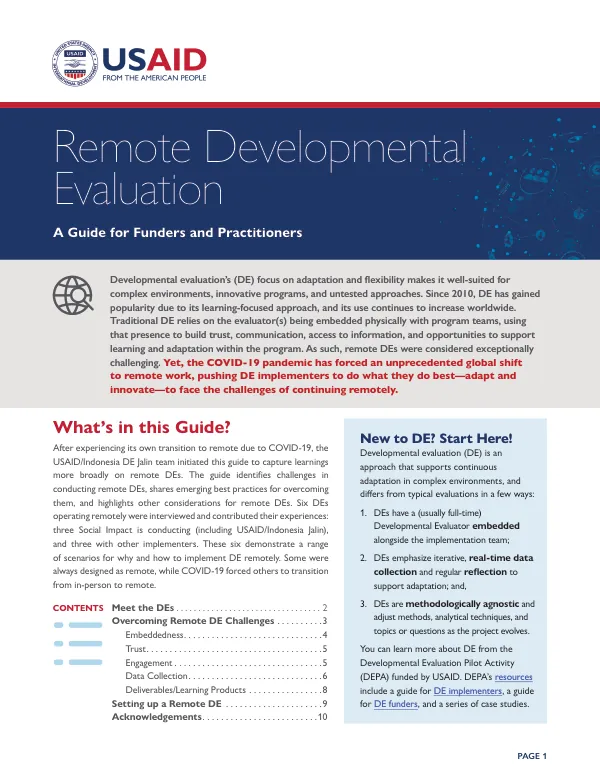
Remote Developmental Evaluation: A Guide for Funders and Practitioners
Open record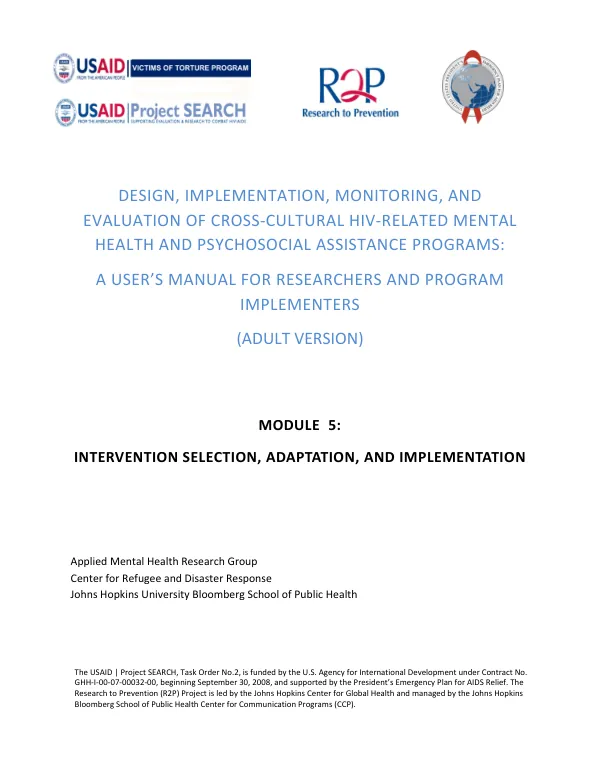
USAID DEC
Design, Implementation, Monitoring, and Evaluation of Cross-Cultural HIV-Related Mental Health and Psychosocial Assistance Programs: A User’s Manual for Researchers and Program Implementers (Adult Version)
Open record