COASTAL RESOURCES CENTER
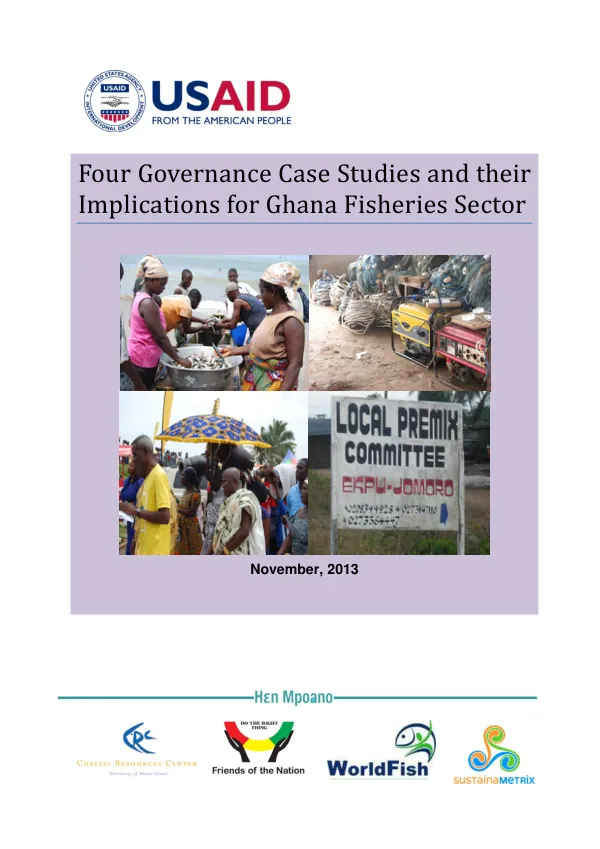
Four Governance Case Studies and their Implications for Ghana Fisheries Sector
The Integrated Coastal and Fisheries Governance (ICFG) Initiative in Ghana aimed to improve fisheries management and governance in the Western Region.
2013 · 80 pages
Sign in to readA free account is required to download.
Abstract
The initiative focused on community-based fisheries management committees (CBFMCs) as a key component of fisheries governance. CBFMCs were established to promote sustainable fishing practices, improve fish yields, and enhance the livelihoods of fishing communities. The CBFMCs were formed through a participatory process involving local stakeholders, including fishermen, women's groups, and community leaders. The committees were responsible for managing fishing activities, enforcing regulations, and promoting sustainable fishing practices. The CBFMCs also played a crucial role in sensitizing the community on the importance of fisheries management and the need to adopt sustainable fishing practices. The ICFG initiative also focused on controlling illegal, destructive, and non-sustainable fishing practices in the Central Region of Ghana. The study identified pair trawling and bottom trawling as the most common forms of illegal fishing practices. These practices were found to be prevalent in the Central Region, particularly in areas with high fishing pressure. The study also highlighted the need for effective enforcement mechanisms to control these practices. In addition to fisheries management, the ICFG initiative also addressed the issue of premix fuel in the Central Region. Premix fuel is a type of fuel used by fishermen to power their engines. However, the availability and affordability of premix fuel have been a major challenge for fishermen in the region. The study found that the lack of premix fuel has led to a decline in fishing activities and a reduction in fish yields. The ICFG initiative aimed to improve the livelihoods of fishing communities in the Western and Central Regions of Ghana. The initiative focused on promoting sustainable fishing practices, improving fish yields, and enhancing the livelihoods of fishing communities. The CBFMCs played a crucial role in promoting sustainable fishing practices and improving fish yields. The initiative also highlighted the need for effective enforcement mechanisms to control illegal fishing practices and the importance of addressing the issue of premix fuel in the region. The ICFG initiative was implemented in collaboration with local stakeholders, including fishermen, women's groups, and community leaders. The initiative also received support from national and international organizations, including the USAID and the Coastal Resources Center. The initiative aimed to improve fisheries management and governance in the Western and Central Regions of Ghana and to enhance the livelihoods of fishing communities in the region. The study found that the CBFMCs had made significant contributions to fisheries management and governance in the Western Region. The committees had improved fish yields, enhanced the livelihoods of fishing communities, and promoted sustainable fishing practices. However, the study also highlighted the need for continued support and capacity building for the CBFMCs to ensure their sustainability. The ICFG initiative also highlighted the need for effective enforcement mechanisms to control illegal fishing practices in the Central Region. The study found that the lack of effective enforcement mechanisms had led to a decline in fish yields and a reduction in the livelihoods of fishing communities. The initiative aimed to improve the enforcement of fisheries regulations and to promote sustainable fishing practices in the region.
Related documents