USAID DEC
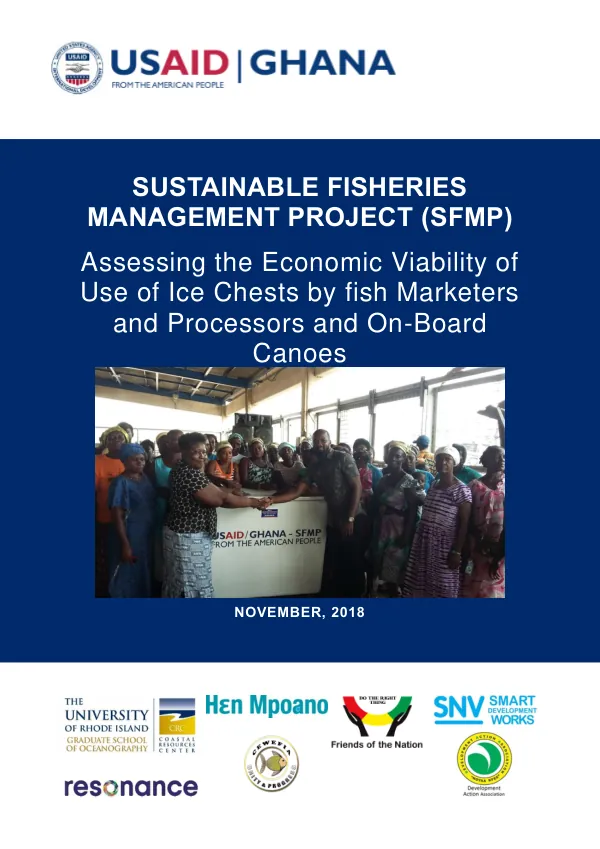
Assessing the Economic Viability of Use of Ice Chests by Fish Marketers and Processors and On-Board Canoes
Sign inCOASTAL RESOURCES CENTER
Assessing the Economic Viability of Use of Ice Chests by Fish Marketers and Processors and On-Board Canoes
The Sustainable Fisheries Management Project (SFMP) in Ghana aimed to improve the economic viability of using ice chests by fish marketers and processors, as well as on-board canoes.
2018 · 15 pages
Sign in to readA free account is required to download.
Abstract
The project was implemented under the Year 3 Work Plan of the SFMP, with the goal of increasing sales prices and profits through improved post-harvest fish quality. The use of ice and insulated fish containers/ice chests was piloted as a measure to improve freshly harvested fish quality. This approach was based on a similar study conducted in The Gambia, which demonstrated that the use of ice on-board fishing vessels resulted in increased value of overall catch due to a decrease in post-harvest losses. In the Gambian study, fishermen using ice lost an average of 14 percent less than those not using ice. The project intervention model under the SFMP for the fisheries value chain aimed to increase profitability and improve income for fishers, processors, and marketers. The use of ice chests was expected to reduce post-harvest losses and increase the value of the catch, ultimately leading to higher sales prices and profits. The project involved the distribution of 20 ice chests within specific communities, with the goal of assessing the economic viability of using ice chests by fish marketers and processors. The study period was not specified, but it is mentioned that the project was implemented under the Year 3 Work Plan of the SFMP. The methodology for the study included key informant interviews with group members, as well as interviews with facilitating organizations and non-users with proximity to the ice chest. The study aimed to gather information on the implementation strategy, benefits, and challenges of using ice chests, as well as the economic viability of this approach. The results of the study are not explicitly stated in the provided text, but it is mentioned that the project aimed to assess the economic viability of using ice chests by fish marketers and processors, as well as on-board canoes. The study is expected to provide insights into the effectiveness of this approach in improving post-harvest fish quality and increasing sales prices and profits. The project was implemented in collaboration with various organizations, including the Coastal Resources Center, Hen Mpoano, and SNV Netherlands Development Organization. The study is expected to contribute to the development of sustainable fisheries management practices in Ghana and improve the livelihoods of fishers, processors, and marketers.