COASTAL RESOURCES CENTER
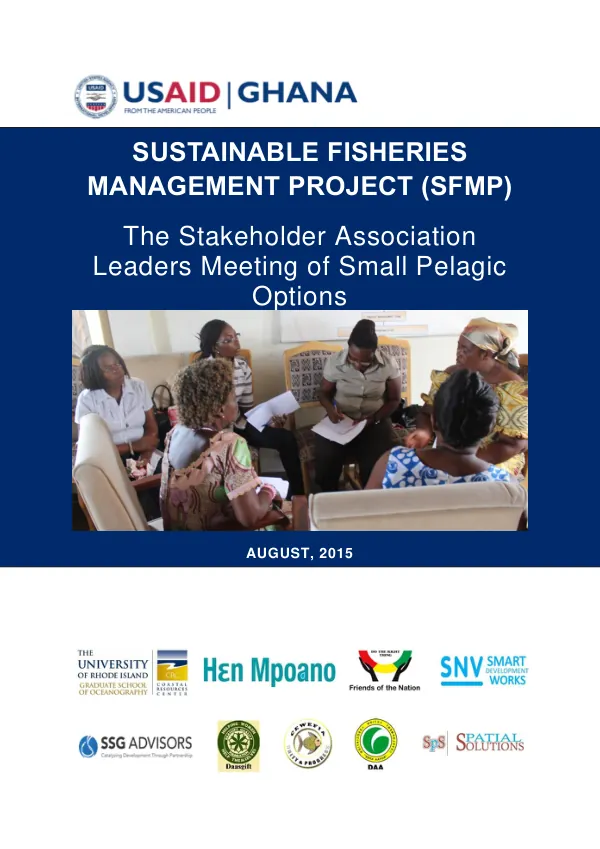
The Stakeholder Association Leaders Meeting of Small Pelagic Options
The Sustainable Fisheries Management Project (SFMP) is a 5-year initiative funded by USAID Ghana, implemented by a consortium of partners led by the Coastal Resources Center of the University of Rhode Island.
2015 · 18 pages
Sign in to readA free account is required to download.
Abstract
The project aims to contribute to the rebuilding of Ghana's marine fisheries stock (small pelagics) and catches through the adoption of responsible fishing practices. Ghana's small pelagic species, primarily composed of Sardinella aurita and Sardinella maderensis, are the main source of animal protein for coastal populations, but the stock has experienced signs of collapse due to overfishing. Recent stock assessments reported that small pelagic stocks are severely overfished, and overfishing continues to exacerbate beyond the level of sustainability. To address this issue, Friends of the Nation (FoN) led stakeholder engagement processes from June to August 2015, developing and discussing eleven fisheries management action options with stakeholders. These options included Closed Area, Closed Season, Increase Mesh size, Increase Min. Fish size, Territorial Use rights, Limit Number of Boats, Remove subsidy, Add fishing holidays, Daily landing Quotas, Total Annual Quotas, and Business as Usual. Two rounds of stakeholder meetings were organized in each of the four coastal Regions: Western, Central, Greater Accra, and Volta Region. The first round of meetings socialized the eleven management options and allowed stakeholders to discuss and decide which option they preferred. The preferred options were then scored and ranked, with the results presented in Table 1. The preferred options included Closed Area, Closed Season, Increased Minimum Mesh Size, Increase Minimum Fish Size, Add Fishing Holidays, Limit Number of Boats, Daily Landing Quotas, and Territorial Use Rights. The reasons for selecting these options were discussed during the stakeholder meetings, with the goal of addressing the overfishing issue and promoting sustainable fisheries management practices. The stakeholder meetings involved interactive power-point presentations, group work sessions, and plenary discussions. The meetings were facilitated by resource persons who delivered presentations to participants, and group sessions were held to discuss the management options. The outcomes of the group work sessions were presented at the plenary sessions, and the preferred options were scored and ranked. The results of the stakeholder engagement processes will inform the development of a fisheries management plan that addresses the overfishing issue and promotes sustainable fisheries management practices in Ghana. The plan will be implemented by the SFMP consortium, with the goal of rebuilding Ghana's marine fisheries stock and promoting responsible fishing practices.