USAID DEC
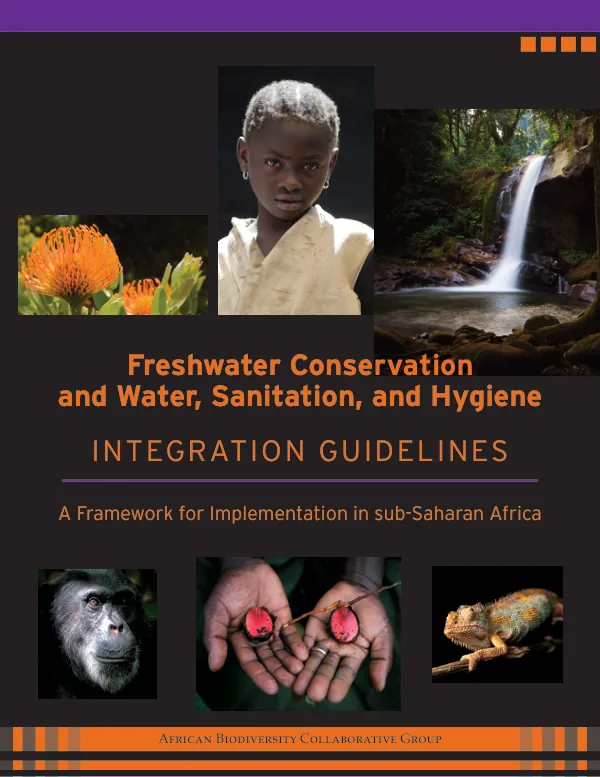
Freshwater Conservation and Water, Sanitation, and Hygiene Integration Guidelines: A Framework for Implementation in sub-Saharan Africa
Sign inAFRICAN BIODIVERSITY COLLABORATIVE GROUP
Freshwater Conservation and Water, Sanitation, and Hygiene Integration Guidelines: A Framework for Implementation in sub-Saharan Africa
Freshwater conservation and Water, Sanitation, and Hygiene (WASH) integration is crucial for maintaining ecosystem resilience and protecting WASH infrastructure against the impacts of natural disasters and climate variability.
2013 · 53 pages
Sign in to readA free account is required to download.
Abstract
The poor are most vulnerable to environmental risk factors such as unsafe water and climate change. Human communities living in remote areas with high biodiversity value are often impoverished with little to no access to improved water sources and sanitation facilities. The sustainability of freshwater resources and safe drinking water projects depends on the appropriate conservation of the broader watershed. Preserving free-flowing river systems, intact wetlands, and groundwater recharge areas is essential for maintaining ecosystem resilience and protecting WASH infrastructure. WASH activities associated with conservation integrate health objectives with watershed management approaches, and link rural and urban water supply and sanitation. These linkages reduce the impact of pollution on the watershed and the ecosystem goods and services that it provides. Conservation efforts more traditionally intersect with WASH at the rural or community level. However, the rapid growth of towns and cities, increased water variability related to climate change, and water stress such as aquifer over-exploitation, saline intrusion, and eutrophication, have increased attention on the upstream watersheds that filter and regulate urban water supplies. A set of core guiding principles are included as critical elements to consider before developing and implementing integrated projects. These principles emphasize the importance of integrating WASH and freshwater conservation at the planning stage, ensuring that WASH and conservation goals are aligned, and that the project is designed to address the needs of both WASH and conservation stakeholders. The guidelines provide a framework for integrated programming in sub-Saharan Africa, aiming to provide guidance to health, development, and conservation professionals on how to plan, coordinate, develop, and achieve mutually supported WASH and freshwater conservation outcomes. The guidelines are the result of a collaborative effort between the Africa Biodiversity Collaborative Group (ABCG) and its member organizations, development non-governmental organizations, academics, and USAID and other donors. The guidelines are designed to be flexible and adaptable to different contexts and project settings. They provide a set of tools and resources to support the development of integrated projects, including a theory of change, a set of core principles, and a framework for monitoring and evaluation. The guidelines also emphasize the importance of stakeholder engagement and participation in the project planning and implementation process. The guidelines are intended to support the development of integrated projects that address the needs of both WASH and conservation stakeholders. They provide a framework for planning, coordinating, and implementing projects that integrate WASH and freshwater conservation, and aim to promote the sustainability of freshwater resources and the protection of WASH infrastructure. The guidelines are based on a set of core principles that emphasize the importance of integrating WASH and freshwater conservation at the planning stage, ensuring that WASH and conservation goals are aligned, and that the project is designed to address the needs of both WASH and conservation stakeholders. The guidelines also provide a framework for monitoring and evaluation, and emphasize the importance of stakeholder engagement and participation in the project planning and implementation process. The guidelines are designed to be used by a range of stakeholders, including health, development, and conservation professionals, and are intended to support the development of integrated projects that address the needs of both WASH and conservation stakeholders. The guidelines provide a framework for planning, coordinating, and implementing projects that integrate WASH and freshwater conservation, and aim to promote the sustainability of freshwater resources and the protection of WASH infrastructure.
Related documents
Documents in this collection
 2012
2012USAID DEC
Linking Biodiversity Conservation and Water, Sanitation, and Hygiene: Experiences from sub-Saharan Africa
Open record 2021
2021USAID DEC