USAID DEC
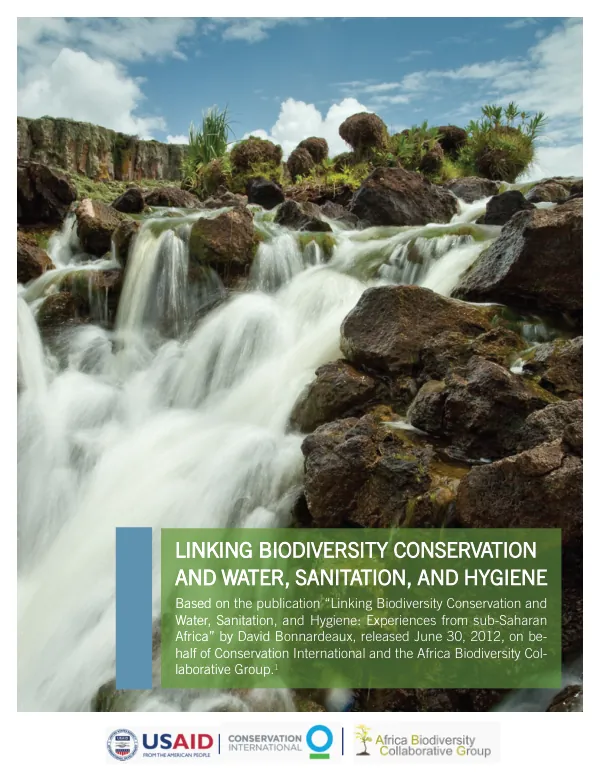
Linking Biodiversity Conservation and Water, Sanitation, and Hygiene: Experiences from sub-Saharan Africa
Sign inAFRICAN BIODIVERSITY COLLABORATIVE GROUP
Linking Biodiversity Conservation and Water, Sanitation, and Hygiene: Experiences from sub-Saharan Africa
The Africa Biodiversity Collaborative Group (ABCG) commissioned a quick review of existing projects and initiatives that address both freshwater conservation and Water, Sanitation and Hygiene (WASH) objectives.
2012 · 4 pages
Sign in to readA free account is required to download.
Abstract
The study aimed to demonstrate the existing links between WASH and freshwater conservation and document integrated approaches that are achieving conservation and human well-being goals. Sub-Saharan Africa is home to nine of Earth's 34 biodiversity hotspots, including the Cape Floristic Region, Coastal Forest of Eastern Africa, Madagascar and the Indian Ocean Islands, Guinean Forests of Western Africa and Succulent Karoo. The region also has extensive inland waters including the Nile, Congo and Zambezi basins, the Great lakes of the Rift Valley and the Okavango Delta in Botswana, harboring a vast repository of biodiversity and high level of endemism. However, around four in 10 people still rely on unimproved sources for their daily water needs in the region and two thirds are still without improved sanitation. The report highlights the importance of integrating WASH and freshwater conservation efforts to achieve conservation and human well-being goals. It notes that WASH projects can either degrade or help enhance freshwater ecosystem health depending on how they are designed and implemented. The report also emphasizes the need to attribute monetary value to the role that ecosystems play in delivering services such as drinking water, sanitation and hygiene benefits. The report includes exemplary case studies where true integration of WASH and freshwater conservation has occurred. These include integrated river basin management approaches, population, health and environment projects, environmental flow assessments, and payment for watershed services projects. The report also highlights the importance of cost and resource sharing, building trust within communities, filling programming gaps, and better planning around water basins. Integrated River Basin Management (IRBM) and basin-planning play a key role in delivering economic efficiency, social equity and environmental sustainability of water. Environmental flow assessments (EFAs) are becoming the global standard for determining the amount of water required to sustain aquatic ecosystems and satisfy basic human needs. Payment for Watershed Services (PWS) directly supports targets associated with human health through improvements in water quality and quantity, as well as supporting the maintenance of other ecosystem services. The report also notes that Population, Health and Environment (PHE) projects have been effective throughout sub-Saharan Africa, mostly in family planning, reproductive health, and HIV/AIDS. Great gains could be made across the board through cost and resource sharing by linking WASH, conservation, their related sectors, and PHE projects. Synergetic gains, efficiency, building trust, filling programming gaps, and better planning are key themes that emerged in the course of writing the report. The report concludes that integrating WASH and freshwater conservation efforts can lead to positive outcomes in both sectors, including improved health and well-being for communities and the conservation of freshwater ecosystems. It also highlights the importance of better planning around water basins, cost and resource sharing, building trust within communities, filling programming gaps, and leveraging institutional and programmatic support for longer-term conservation efforts.