RTI INTERNATIONAL
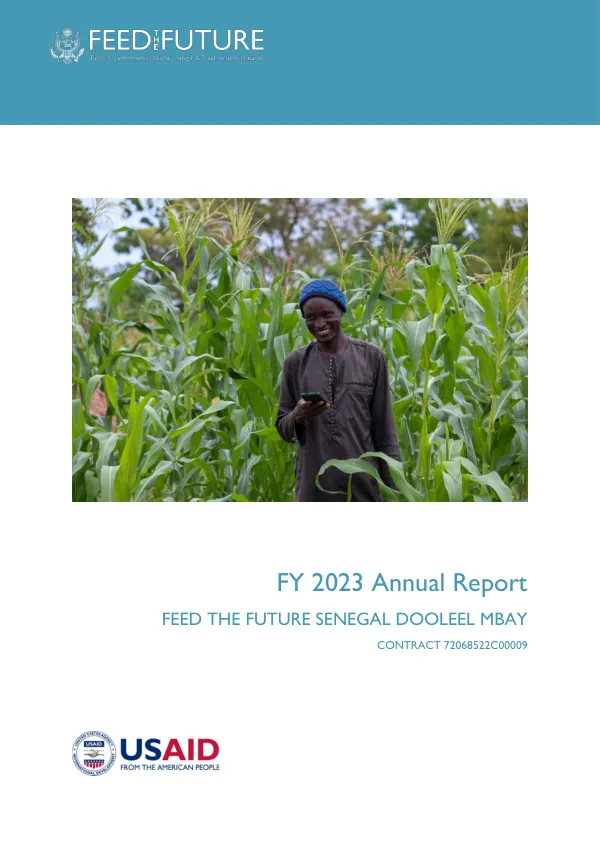
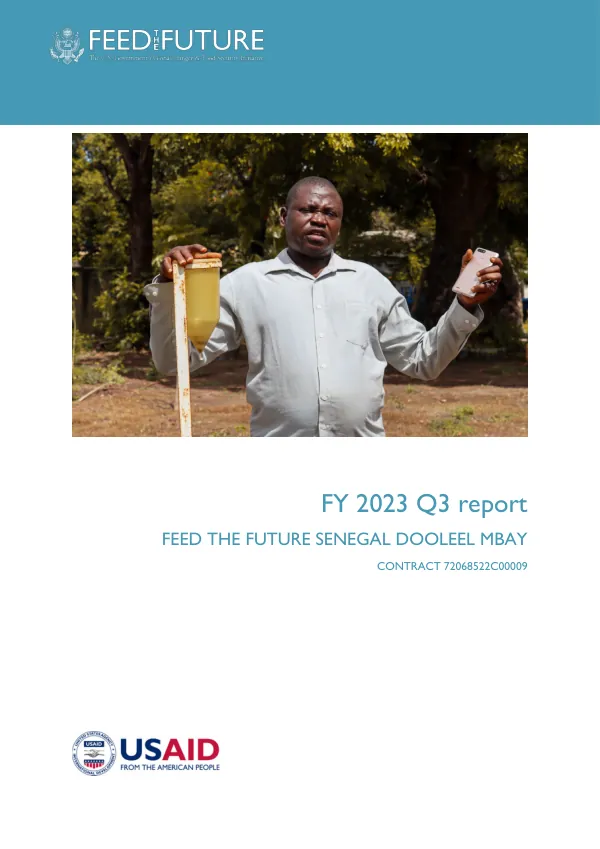
FY 2023 Quarter 3 Report: Feed the Future Senegal Dooleel Mbay
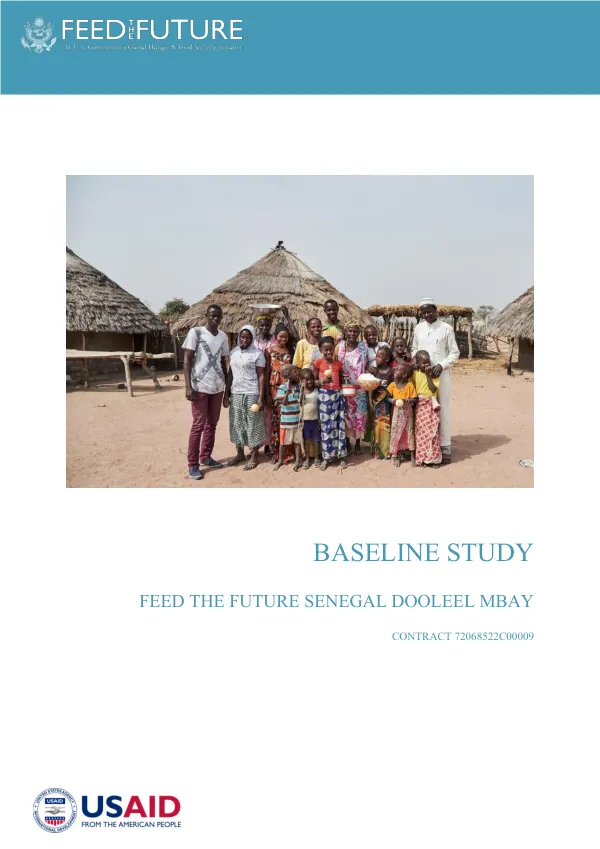
The Feed the Future Senegal Dooleel Mbay program is a USAID-funded initiative aimed at improving agricultural productivity and market access for smallholder farmers in Senegal.
2023 · 66 pages
Sign in to readA free account is required to download.
Abstract
The program focuses on three key components: smallholder productivity, employment and enterprise development, and access to markets and trade. Smallholder productivity along the value chains increased during the third quarter of FY 2023. Adoption of value-enhancing technologies and services increased, with more than 2,500 farmers receiving training in sustainable agriculture techniques. Employment and enterprise development in key food value chains also increased during the quarter. More than 1,000 micro, small, and medium enterprises (MSMEs) accessed business development services, and over 500 entrepreneurs, managers, and technical staff received training in skills development. Access to markets and trade increased during the quarter, with more than 500 market linkages established between food value chain stakeholders. Food value chain stakeholders' capacities to meet market demands improved, with increased production, processing, and incorporation of local cereals as a substitute to import wheat. The program also implemented activities under the Additional Ukraine Supplemental Appropriations Act 2022. Objective 1 aimed to improve the resilience of farmers by strengthening their safety nets and reducing the impact of increased fertilizer costs for 80,000 members of 80 producer networks through a grant support program. Objective 2 leveraged alternative initiatives to chemical fertilizer and introduced effective practices and technologies through co-investment grants. Objective 3 increased the production, processing, and incorporation of local cereals as a substitute to import wheat. Cross-cutting activities focused on improving the business environment for MSMEs competitiveness, private investments in agriculture, access to value chains in rural areas, and agricultural policy environment strengthened. Enhanced risk management capacities and climate resilience were also improved through cross-cutting activities. Increased women and youth economic empowerment, as well as increased contribution of targeted food value chains to nutrition, were also achieved through cross-cutting activities. Monitoring, evaluation, and learning activities were conducted throughout the quarter to assess program progress and identify areas for improvement. Communication activities, including the development of branding and marketing materials, were also implemented to promote the program's achievements and impact. Environmental mitigation and monitoring plans were also developed to ensure the program's environmental sustainability. The program's geographic focus is on the Casamance region of Senegal, with a specific emphasis on the Kolda and Ziguinchor departments. The program's timeframes are aligned with the USAID Senegal Country Development Cooperation Strategy (CDCS) 2020-2025, with a focus on achieving the program's objectives by the end of FY 2025.
Related documents