USAID/SENEGAL
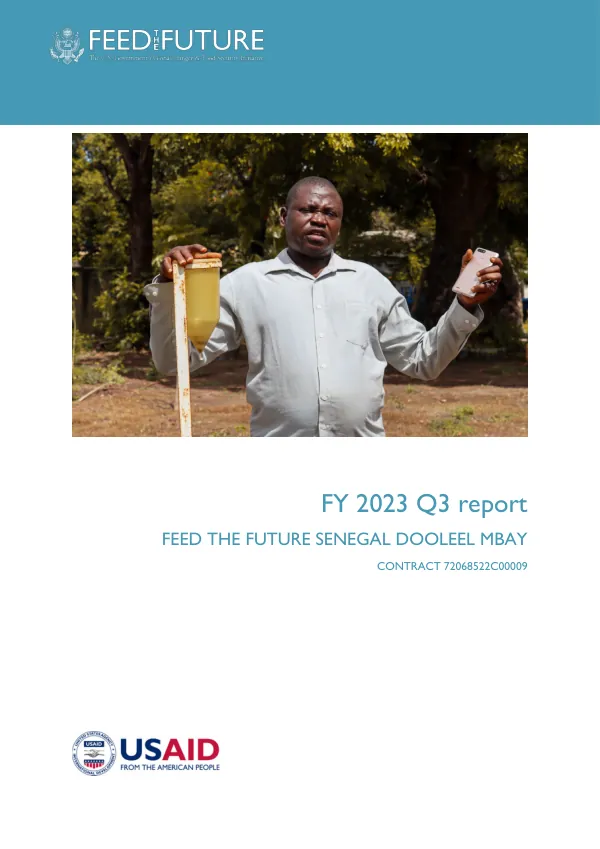
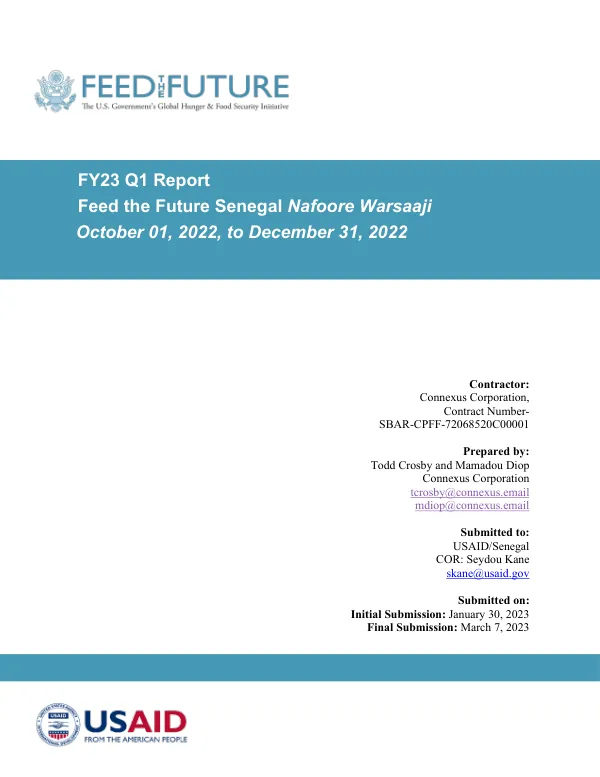
FY23 Q1 Report: Feed the Future Senegal Nafoore Warsaaji
The Feed the Future Senegal Nafoore Warsaaji program is a USAID-funded initiative aimed at improving the agricultural sector in Senegal.
2023 · 208 pages
Sign in to readA free account is required to download.
Abstract
The program began on October 1, 2022, and concluded on December 31, 2022. The primary objective of the program is to increase inclusive agriculture sector growth, particularly among women and youth. Nafoore Warsaaji's theory of change is centered around the idea that by improving access to horticultural inputs and technology, especially among women and youth, the program can increase the adoption of sustainable agricultural practices and improve market organization for horticulture. The program's vision is to create a more inclusive and sustainable agricultural sector in Senegal, while its mission is to promote economic growth and reduce poverty. The program's implementation approaches focus on three key areas: increasing access to horticultural inputs and technology, improving market organization for horticulture, and increasing private sector trade and investment. The program's zone of intervention includes six horticulture hubs, which are located in different regions of Senegal. The program's activity progress reporting highlights several key achievements, including the scale-up of six existing horticulture hubs, the expansion of private sector investment in horticultural value chains, and the facilitation of access to finance and insurance. The program also reports on its cross-cutting activities, including the strengthening of preventative measures related to COVID-19, building synergies with government entities and other USAID-funded activities, and promoting gender and youth inclusion. The program's monitoring, evaluation, and learning plan (AMELP) and environmental mitigation and monitoring plan (EMMP) reporting highlight the program's efforts to track its progress and adapt to changing circumstances. The program's year 3 GANTT chart and detailed work plan provide a detailed outline of the program's activities and timelines. Despite the program's achievements, several challenges were encountered, including the COVID-19 pandemic, which affected the program's implementation. The program's solutions to these challenges included adapting its activities to the new circumstances and strengthening its partnerships with government entities and other stakeholders. Overall, the Feed the Future Senegal Nafoore Warsaaji program has made significant progress in improving the agricultural sector in Senegal, particularly among women and youth. The program's achievements and challenges highlight the importance of adapting to changing circumstances and strengthening partnerships with stakeholders to achieve sustainable development outcomes.
Related documents