FEED THE FUTURE
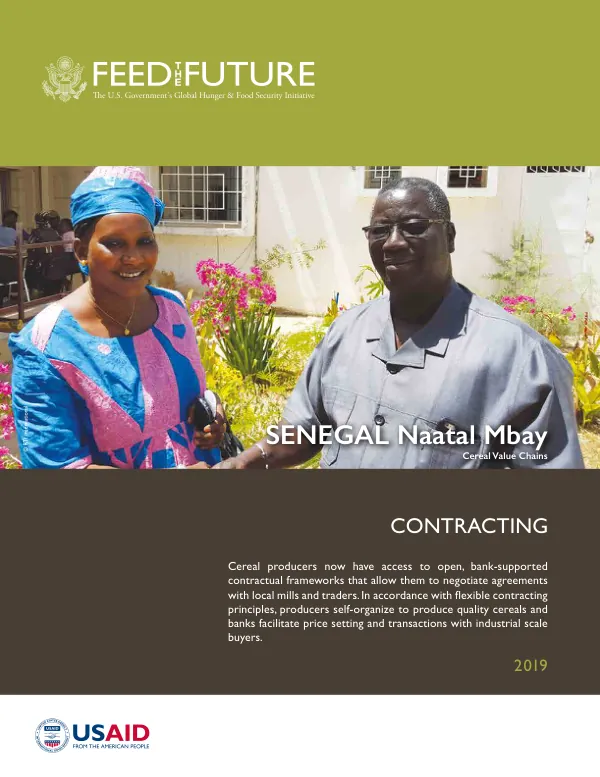
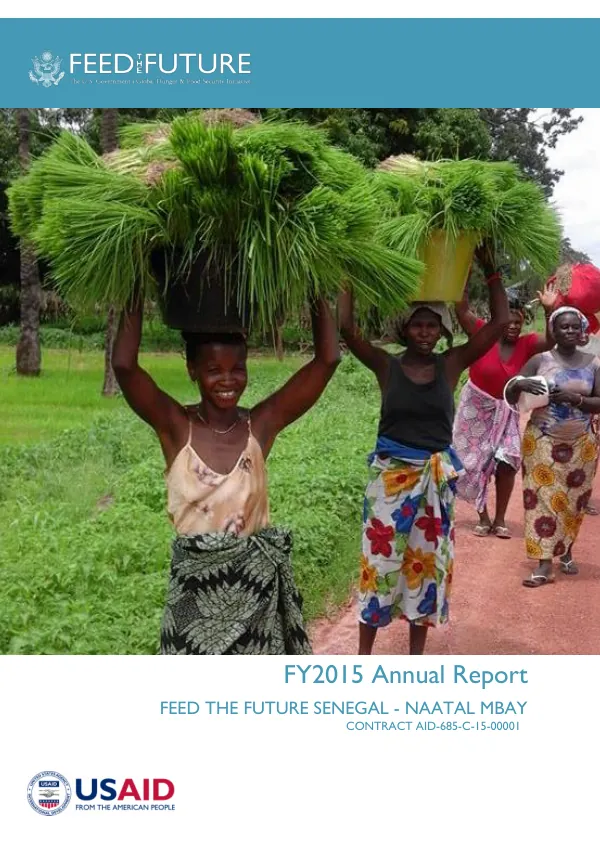
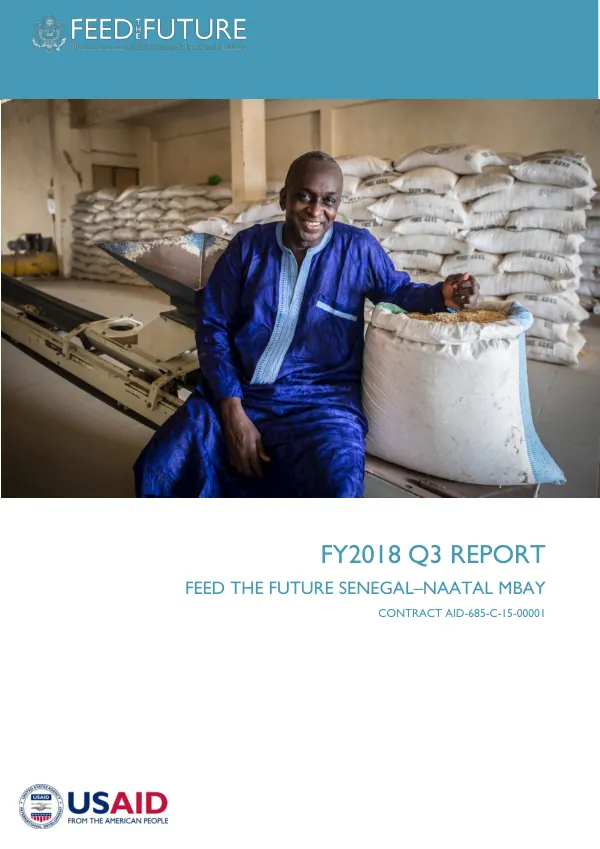
FY2018 Q3 Report Feed the Future Senegal–Naatal Mbay
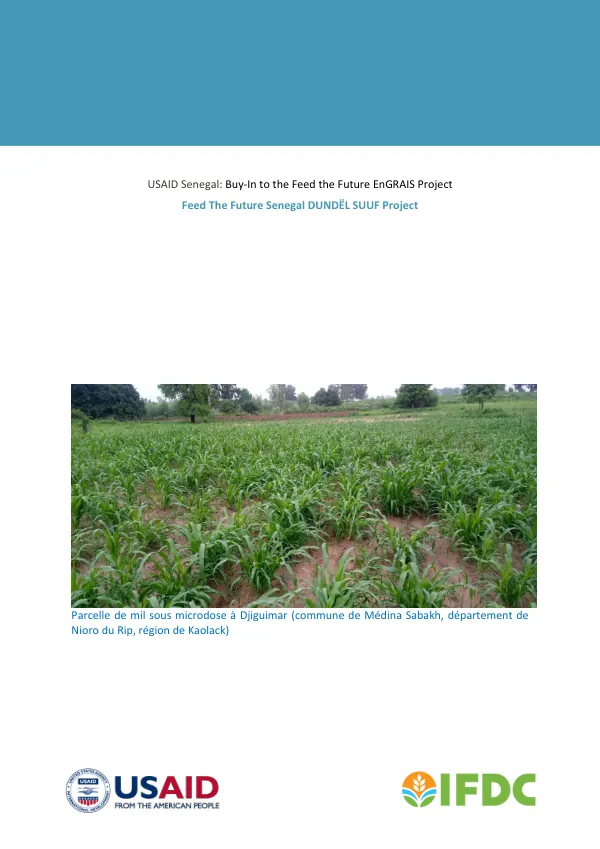
The Feed the Future Senegal Naatal Mbay Project is a USAID-funded initiative aimed at improving agricultural productivity, market access, and policy environment in Senegal.
2018 · 87 pages
Sign in to readA free account is required to download.
Abstract
The project began in 2015 and is scheduled to conclude in 2023. The project's primary objective is to increase agricultural productivity and income for smallholder farmers in the Naatal Mbay region. The project is implemented through five components: Component 1.1, which focuses on strengthening agricultural input and production systems; Component 1.2, which aims to improve post-harvest systems; Component 2.1, which targets market access and linkages to smallholders; Component 2.2, which seeks to increase private sector investments; and Component 3, which focuses on strengthening the agricultural policy environment. The project also includes cross-cutting areas such as local capacity development, gender integration, environmental compliance, and climate change adaptation. The project's technical program has achieved several key results in the first three quarters of FY2018. In terms of agricultural productivity, the project has supported the establishment of 15 demonstration plots, which have shown yield improvements of up to 60% compared to control plots. The project has also trained over 2,500 farmers in sustainable agriculture techniques, with a focus on women-headed households. In terms of market access, the project has facilitated the sale of agricultural products to local markets, resulting in increased income for smallholder farmers. The project has also established partnerships with private sector companies to increase access to finance and improve the use of financial tools. The project's efforts to strengthen the agricultural policy environment have included the development of a national agricultural policy framework and the establishment of a national agricultural advisory service. The project's monitoring, evaluation, and learning activities have included the conduct of a midline study, which assessed the project's progress and identified areas for improvement. The study found that the project had made significant progress in improving agricultural productivity and market access, but that there were still challenges related to climate change adaptation and environmental compliance. The project's communication activities have included the development of a project website and social media platforms, which provide information on the project's progress and achievements. The project has also established a project communication team to ensure that stakeholders are informed about the project's activities and results. Overall, the Feed the Future Senegal Naatal Mbay Project has made significant progress in improving agricultural productivity, market access, and policy environment in Senegal. The project's achievements have been recognized by the Government of Senegal and other stakeholders, and the project continues to be an important contributor to the country's agricultural development.