USAID DEC
Gap Analysis and Investment Case for Integrated Community Case Management (iCCM) in Kenya
Sign inSAVE THE CHILDREN FUND
Gap Analysis and Investment Case for Integrated Community Case Management (iCCM) in Kenya
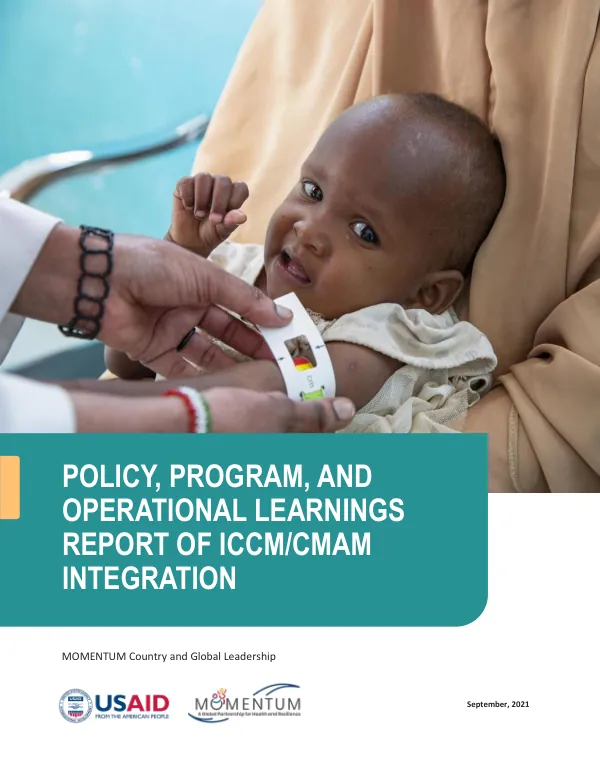
The Integrated Community Case Management (iCCM) initiative in Kenya aims to accelerate the decline in childhood mortality by providing timely and effective treatment and/or referral to a health facility for various childhood illnesses.
2021 · 42 pages
Sign in to readA free account is required to download.
Abstract
This equity-focused strategy complements and extends the reach of public health services, particularly in areas with limited access to facility-based healthcare providers. Community health volunteers (CHVs) play a crucial role in identifying and correctly treating children with diarrhoea, pneumonia, and malaria, provided they receive adequate training, supervision, and support. The iCCM initiative in Kenya has been in place since 2004, with the World Health Organization (WHO) and United Nations Children's Fund (UNICEF) issuing a joint statement recommending its implementation and scale-up. However, inadequate comprehensive support for iCCM persists, hindering the expansion of iCCM coverage. Currently, there is no single national document outlining the current status of and gaps in iCCM investment in Kenya to inform future direction. The Ministry of Health's Division of Neonatal and Child Health, headed by Dr. Laura Oyiengo, has been instrumental in leading the steering committee responsible for developing the Gap Analysis and Investment Case for iCCM in Kenya. The document was developed with the support of USAID Advancing Nutrition, and it aims to identify the gaps in iCCM investment and provide recommendations for future direction. The Gap Analysis and Investment Case for iCCM in Kenya was developed through a desk review and a gap analysis. The desk review involved a comprehensive review of existing literature and documents related to iCCM in Kenya, while the gap analysis identified the gaps in iCCM investment and provided recommendations for future direction. The document highlights the importance of commodity management, financing, and cost of implementing iCCM in Kenya. Commodity management is a critical component of iCCM, as it ensures that community health volunteers have access to essential medicines and equipment. However, the current commodity management system in Kenya is inadequate, leading to stockouts and delays in the delivery of essential medicines. The document recommends the strengthening of commodity management systems, including the establishment of a national commodity management system. Financing is another critical component of iCCM, as it ensures that community health volunteers are adequately supported and equipped to provide quality services. However, the current financing mechanism for iCCM in Kenya is inadequate, leading to a funding gap of approximately KES 1.4 billion. The document recommends the establishment of a sustainable financing mechanism for iCCM, including the allocation of funds from the national budget. The cost of implementing iCCM in Kenya is estimated to be approximately KES 2.5 billion over a period of five years. However, the current funding gap of approximately KES 1.4 billion is a significant challenge to the implementation of iCCM. The document recommends the mobilization of additional funds to bridge the funding gap and ensure the successful implementation of iCCM. The productivity benefits of iCCM in Kenya are significant, with an estimated return on investment of 3:1. This means that for every dollar invested in iCCM, the country can expect a return of three dollars in terms of improved health outcomes. The document recommends the scaling up of iCCM coverage to reach more children and communities, particularly in areas with limited access to facility-based healthcare providers. In conclusion, the Gap Analysis and Investment Case for iCCM in Kenya highlights the importance of commodity management, financing, and cost of implementing iCCM in Kenya. The document provides recommendations for future direction, including the strengthening of commodity management systems, the establishment of a sustainable financing mechanism, and the mobilization of additional funds to bridge the funding gap. The successful implementation of iCCM in Kenya will require a concerted effort from all stakeholders, including the government, development partners, and community health volunteers.