USAID DEC
GEM Support to Agribusiness Development in Mindanao
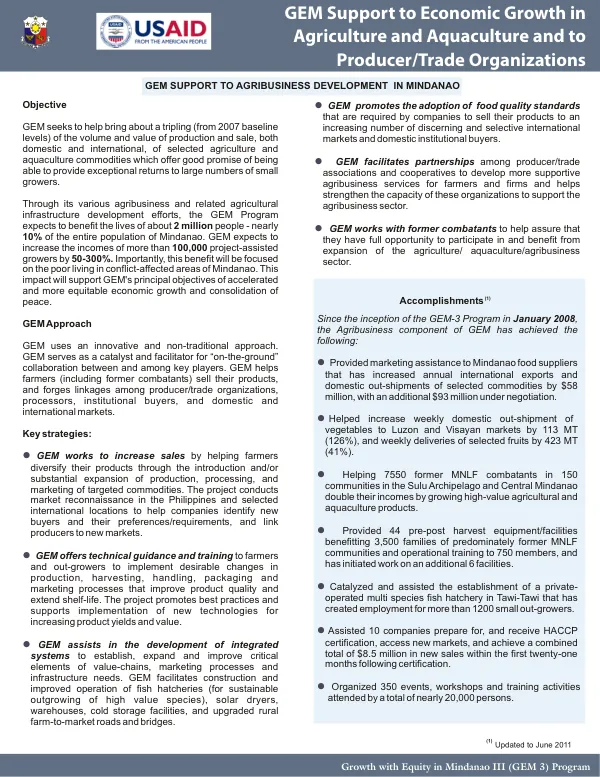
The Growth with Equity in Mindanao III (GEM 3) Program aims to triple the volume and value of production and sale of selected agriculture and aquaculture commodities in Mindanao.
2011 · 2 pages
Sign in to readA free account is required to download.
Abstract
The program seeks to benefit the lives of approximately 2 million people, nearly 10% of the entire population of Mindanao, by increasing the incomes of more than 100,000 project-assisted growers by 50-300%. This impact will support GEM's principal objectives of accelerated and more equitable economic growth and consolidation of peace. GEM uses an innovative and non-traditional approach, serving as a catalyst and facilitator for "on-the-ground" collaboration between and among key players. The program helps farmers, including former combatants, sell their products and forges linkages among producer/trade organizations, processors, institutional buyers, and domestic and international markets. Key strategies include increasing sales by diversifying products, providing technical guidance and training to farmers, and developing integrated systems to establish, expand, and improve critical elements of value-chains, marketing processes, and infrastructure needs. GEM has achieved significant accomplishments since its inception in January 2008. The program has provided marketing assistance to Mindanao food suppliers, increasing annual international exports and domestic out-shipments of selected commodities by $58 million, with an additional $93 million under negotiation. GEM has also helped increase weekly domestic out-shipment of vegetables to Luzon and Visayan markets by 113 MT (126%), and weekly deliveries of selected fruits by 423 MT (41%). Additionally, the program has helped 7,550 former MNLF combatants in 150 communities in the Sulu Archipelago and Central Mindanao double their incomes by growing high-value agricultural and aquaculture products. GEM supports the production and marketing of high-value commodities not widely or traditionally grown in Mindanao. The program helps small farmers penetrate targeted markets and facilitates domestic sales of fruits and vegetables in Luzon and Visayan markets and international exports of selected commodities. GEM also supports food quality and value-added practices, including the adoption of the Hazard Analysis and Critical Control Points (HACCP) certification system, to expand access and sales to markets in Europe, Asia, and North America. GEM works to attract private investment for new cool/cold chain and other pre-post harvest facilities, leading to a sizeable expansion of warehousing, cold storage, and vapor heat treatment facilities to prolong shelf life and quality of targeted commodities. The program also helps assure the fisheries sector makes optimal contribution to economic development on a sustainable basis by increasing value without increasing catch, and advises government and industry on sustainable fisheries management and negotiated access to fishing grounds of Pacific neighbors.