SOCIAL IMPACT, INC.
Final Report: Gender Analysis for Highlands Resilience Project in Ethiopia
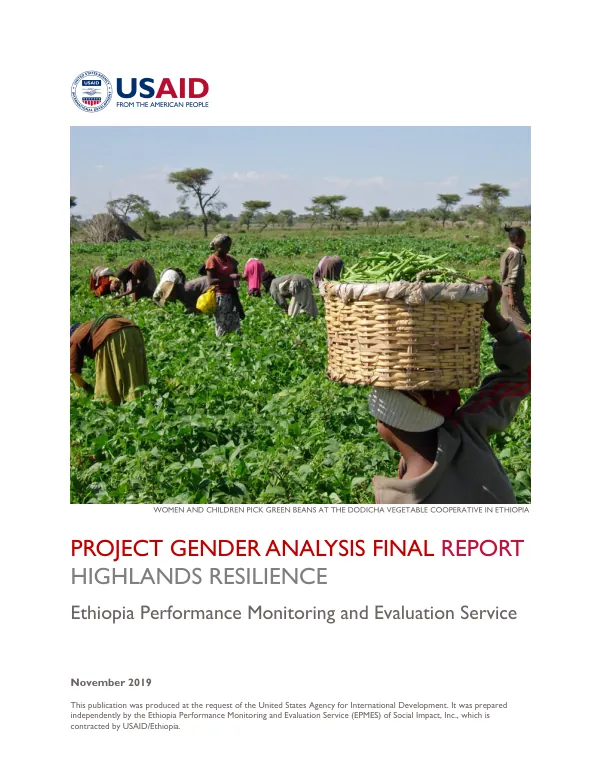
The Highlands Resilience Project is a cross-sectoral and comprehensive approach to resilience programming in the highlands of Ethiopia.
2019 · 30 pages
Sign in to readA free account is required to download.
Abstract
The project aims to increase inclusive resilience of vulnerable populations to multisectoral, recurrent, and acute shocks, including drought, household level health shocks, conflict, and economic fluctuations. The project is designed to support the USAID/Ethiopia Country Development Cooperation Strategy (CDCS). The project's geographic focus is on the highlands of Ethiopia, which includes woredas in parts of Amhara, Dire Dawa, Gambela, Oromia, and Tigray regions. This region is vulnerable to a set of multisectoral shocks, including chronic food insecurity, degraded natural resources, and disasters such as drought. The Highlands Resilience Project includes and integrates existing scaled government systems, as well as provisions for continuous learning and adaptation. The project's design priorities and considerations for integrating gender within its project design and project appraisal document (PAD) were identified through a gender analysis. The gender analysis was conducted to provide pertinent information for the USAID/Ethiopia Highlands Resilience Design Team to integrate gender within its project design and PAD. The analysis identified design priorities and considerations for the project, addressing issues such as gaps in participation by gender, potential priority areas for intervention, and potential risks and differential effects. The gender analysis team used two primary data collection methods: a desk review of secondary sources containing qualitative and quantitative data, and stakeholder consultations. The desk review involved analyzing existing literature and data on the highlands of Ethiopia, including reports, studies, and data from government agencies and international organizations. The stakeholder consultations involved engaging with various stakeholders, including government officials, community leaders, and project implementers. The consultations aimed to gather information on the project's potential impact on different gender groups, as well as to identify potential risks and challenges associated with the project. The gender analysis identified several key findings, including the need to address gaps in participation by gender, particularly among women and girls. The analysis also highlighted the importance of integrating gender within the project design and PAD to ensure that the project's interventions are effective and equitable for all gender groups. The Highlands Resilience Project aims to support the USAID/Ethiopia CDCS, which focuses on improving the resilience of vulnerable populations in the highlands. The project's design priorities and considerations for integrating gender within its project design and PAD were identified through a gender analysis. The Highlands Resilience Project's implementation details include the integration of existing scaled government systems, as well as provisions for continuous learning and adaptation. The project's design priorities and considerations for integrating gender within its project design and PAD were identified through a gender analysis. The project's design priorities and considerations for integrating gender within its project design and PAD were identified through a gender analysis. The analysis identified several key findings, including the need to address gaps in participation by gender, particularly among women and girls. The Highlands Resilience Project aims to support the USAID/Ethiopia CDCS, which focuses on improving the resilience of