USAID DEC
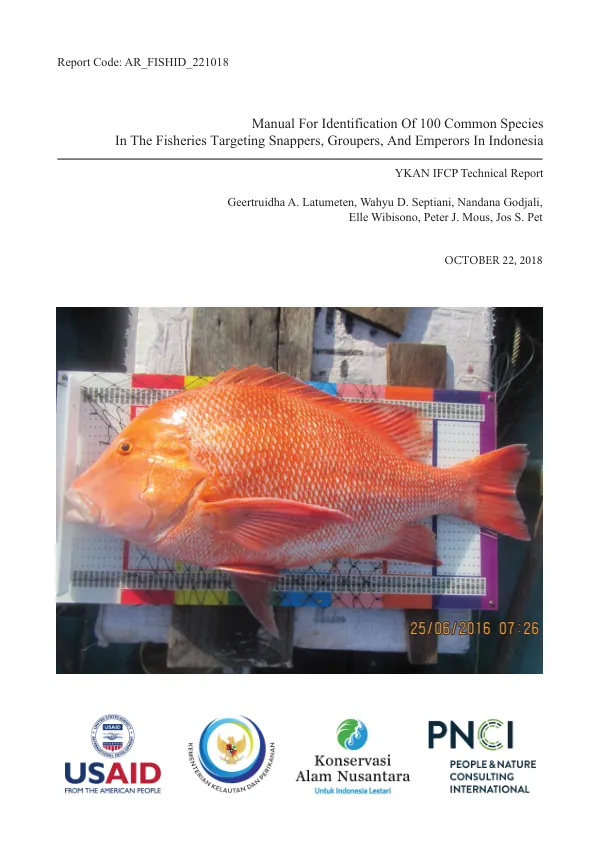
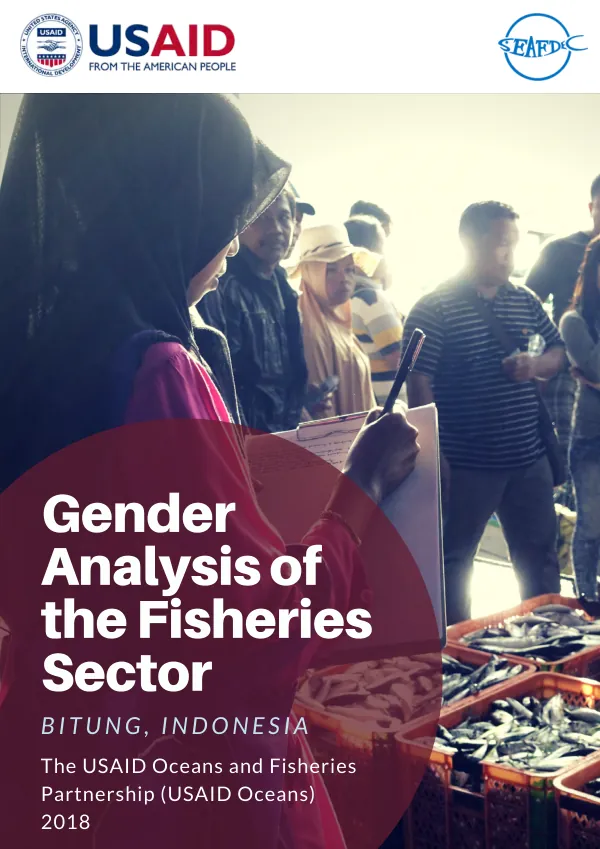
Gender Analysis of the Fisheries Sector in Bitung, Indonesia
The USAID Oceans and Fisheries Partnership launched the Oceans and Fisheries program in 2015 to combat illegal, unreported and unregulated (IUU) fishing and promote sustainable fisheries in the Asia-Pacific region.
2018 · 51 pages
Sign in to readA free account is required to download.
Abstract
The program's objectives include developing a financially sustainable regional catch documentation and traceability system (CDTS) to combat IUU fishing and seafood fraud, expanding the use of the CDTS to priority biodiversity areas, strengthening human and institutional capacity to conserve marine biodiversity, and enhancing public-private partnerships to conserve biodiversity and promote sustainable fisheries management. The program subcontracted Sam Ratulangi University to conduct a gender analysis of fisheries for the USAID Oceans' learning site of Bitung, Indonesia. Bitung is the center of fisheries in North Sulawesi and in the Eastern Indonesia region, with tuna being its prime fishery product. The research was conducted from December 2016 through March 2018, and the study identified gender differentials in fisheries roles and interactions, as well as gender issues and needs along the value chain. The study found that both men and women have roles in Bitung's fisheries sector, but community members continue to reinforce gender roles through beliefs and perceptions that women are not suitable for fishing due to perceived physical limitations or their responsibility to take care of their household. Men largely control access to physical resources, including ships, fishing gear, and industrial-scale processing units, while women only gain access to small-scale processing units and local marketing activities. Men perform heavier physical tasks, such as fishing at sea and transporting fish, while women are more involved in fish processing and marketing. The study also found that men are more knowledgeable in fishing activities, while women have more knowledge in fish processing and marketing activities. Access to capital and information resources, especially for small-scale ventures, are most often dominated by women. Time spent by women and men in the tuna value chain is relatively equal, with women spending more time in fish processing activities but comparable time in outdoor activities. The study's findings suggest that empowerment and decision-making vary across the value chain, but on average are relatively equal and reasonable. The study's recommendations include strategic interventions to empower and build the capacity of women along the tuna fisheries value chains, and to strengthen women's involvement to promote sustainable fisheries management in Bitung and the surrounding areas. The study used a value chain-mapping workshop, literature reviews, and field data collection to establish several gender differentials that follow USAID's gender dimensions framework. The study's findings have implications for USAID Oceans' objectives, particularly in its CDT and fisheries management activities, and can be used to promote women's economic empowerment and gender equality. The study's recommendations for key stakeholders include USAID Oceans and Fisheries Partnership, local government units and national government, private sector/fisheries industry, educational and training institutions, research institutions, NGOs, civil society organizations, women's groups, and development assistance agencies and other regional bodies. The study's findings and recommendations can be used to inform policy and programming decisions to promote sustainable fisheries management and gender equality in Bitung and the surrounding areas.