KOSOVO MINISTRY OF AGRICULTURE, FORESTRY AND RURAL DEVELOPMENT
GENDER ANALYSIS REPORT: Climate Resilient Agriculture in the Mekong Delta
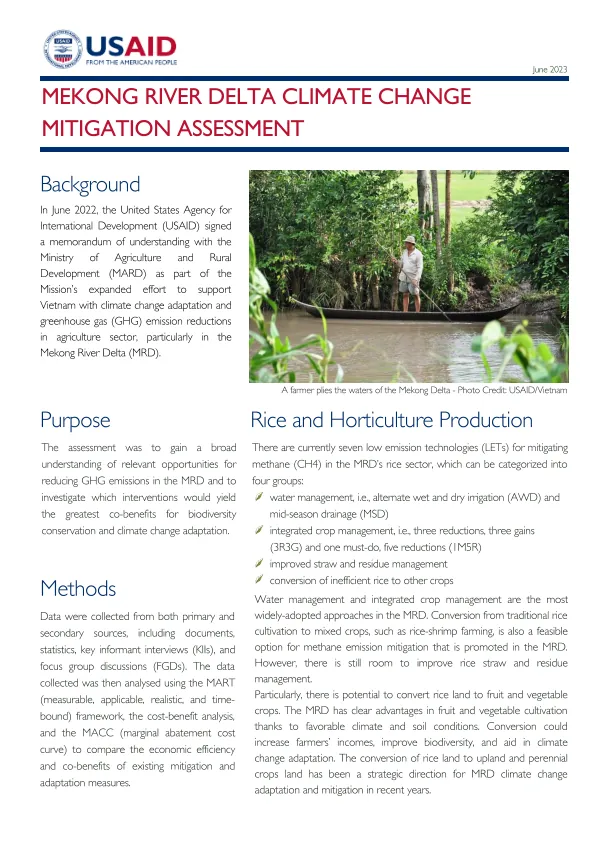
Climate Resilient Agriculture in the Mekong Delta is a critical initiative aimed at increasing climate resilience, reducing methane emissions, and conserving biodiversity in the region.
2023 · 29 pages
Sign in to readA free account is required to download.
Abstract
The Mekong Delta, a densely populated and fertile area in Vietnam, is highly vulnerable to climate change, with rising temperatures, sea-level rise, and increased frequency of extreme weather events posing significant threats to the local population and ecosystem. The initiative, launched by the United States Agency for International Development (USAID) Vietnam and the Ministry of Agriculture and Rural Development (MARD), seeks to promote climate resilient agriculture through four mutually reinforcing approaches. The first approach focuses on expanding low methane emission agricultural development, which involves promoting sustainable agricultural practices that reduce greenhouse gas emissions and increase sequestration of carbon dioxide. The second approach aims to build climate resilience for vulnerable communities, which includes providing support to farmers, particularly women and ethnic minorities, to adapt to climate change and improve their livelihoods. This approach involves providing training, capacity building, and access to climate-resilient agricultural technologies and practices. The third approach promotes nature-based solutions, which involves conserving and restoring natural ecosystems, such as mangroves and wetlands, to provide ecosystem services and support biodiversity conservation. This approach also involves engaging local communities in the decision-making process and ensuring that women have a voice in the management and monitoring of these ecosystems. The fourth approach focuses on developing climate resilient and low emission development policies, which involves working with policymakers and local implementers to mainstream gender issues in policy and programming. This approach also involves strengthening the capacity of women's organizations to engage in policy dialogue and addressing identified gender-related policy issues. A gender analysis report was conducted to inform the design of the Mekong CRA Activity. The report highlights the importance of considering gender in the implementation of climate resilient agriculture initiatives, as women and men have different roles, responsibilities, and access to resources and decision-making power. The report identifies several key findings, including the fact that women are underrepresented in politics and positions of power, and have less decision-making power in their own households. Women also have limited access to agricultural training and services, and are more likely to learn about new technologies through informal social networks. The report provides several recommendations for the implementation of the Mekong CRA Activity, including the need to add a stakeholder validation step in activity design to ensure that findings of the gender analysis are validated by the specific communities the Activity will be working with. The report also recommends that USAID take steps to reduce barriers for women, ethnic minorities, and persons with disabilities to participate in and effectively learn from capacity development activities. Overall, the Mekong CRA Activity has the potential to make a significant impact in promoting climate resilient agriculture in the Mekong Delta, and the gender analysis report provides valuable insights and recommendations for ensuring that the initiative is inclusive and effective in addressing the needs of women and other vulnerable groups.
Related documents