MAKING CENTS INTERNATIONAL
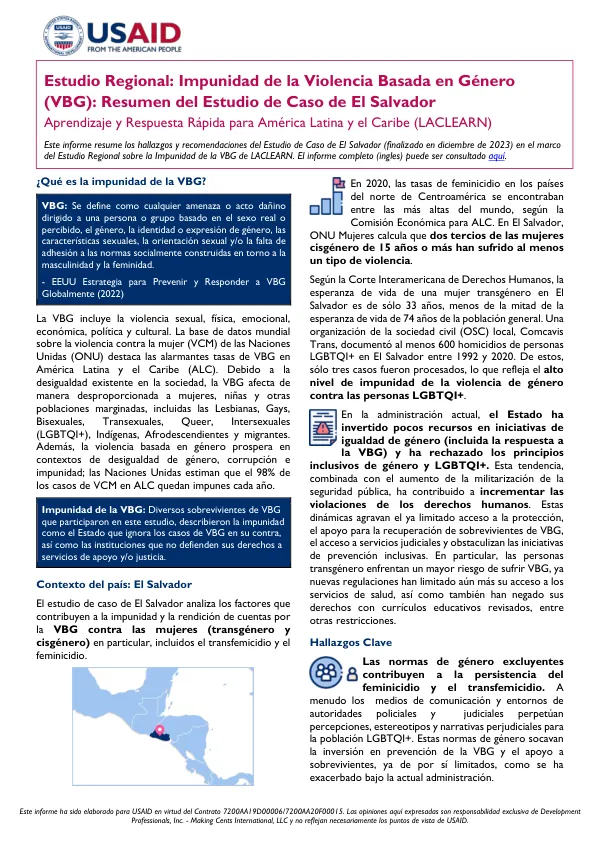
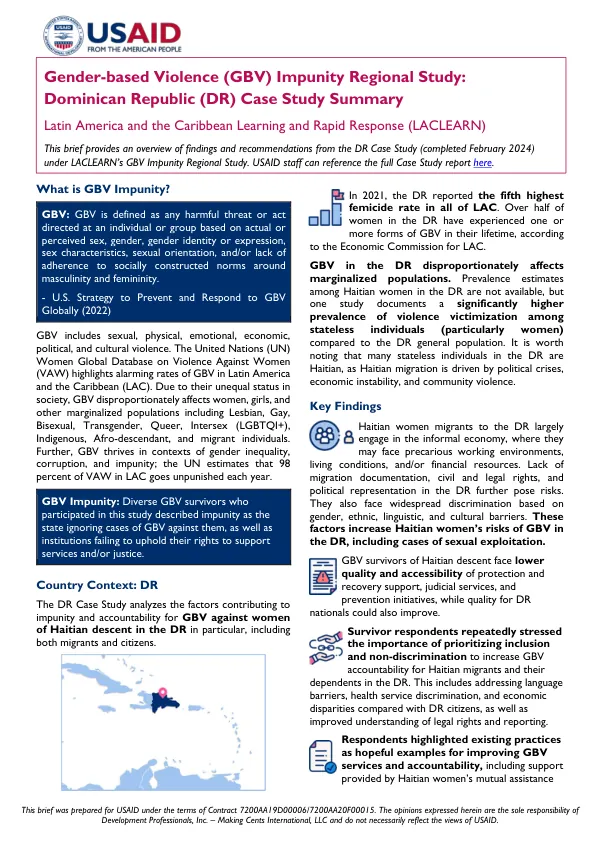
Gender-based Violence (GBV) Impunity Regional Study: El Salvador Case Study Summary
GBV Impunity Regional Study: El Salvador Case Study Summary GBV is defined as any harmful threat or act directed at an individual or group based on actual or perceived sex, gender, gender identity or expression, sex characteristics, sexual orientation, and/or lack of adherence to socially constructed norms around masculinity and femininity.
2024 · 2 pages
Sign in to readA free account is required to download.
Abstract
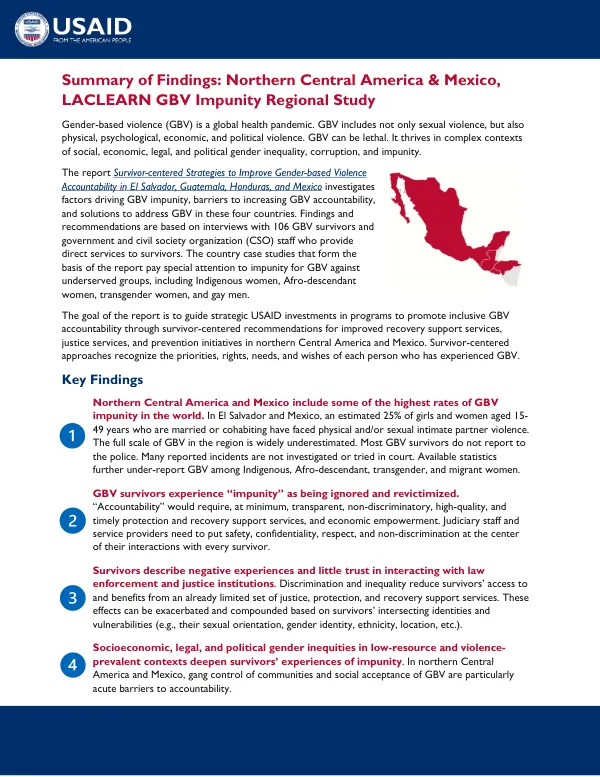
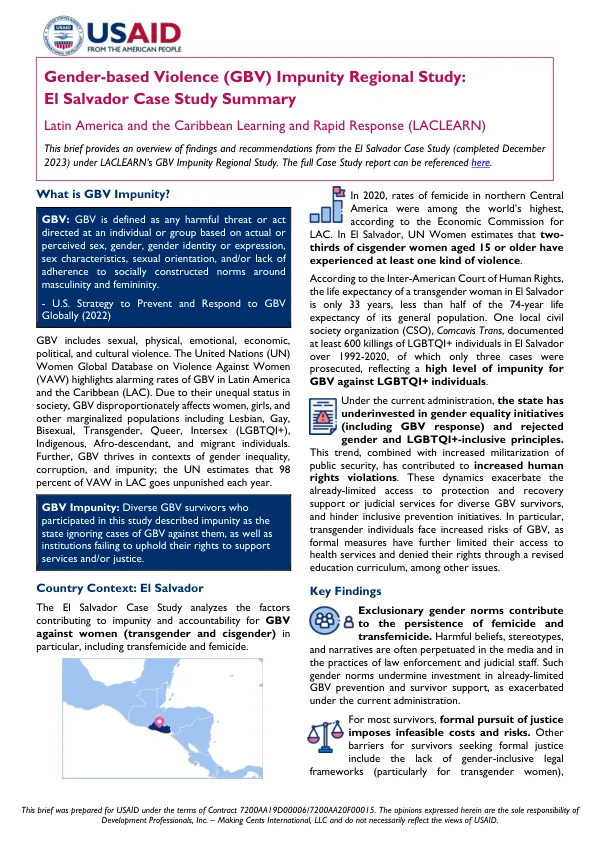
GBV includes sexual, physical, emotional, economic, political, and cultural violence. The United Nations (UN) Women Global Database on Violence Against Women (VAW) highlights alarming rates of GBV in Latin America and the Caribbean (LAC). GBV Impunity is the state ignoring cases of GBV against individuals, as well as institutions failing to uphold their rights to support services and/or justice. In El Salvador, rates of femicide in northern Central America were among the world's highest in 2020, according to the Economic Commission for LAC. UN Women estimates that two-thirds of cisgender women aged 15 or older have experienced at least one kind of violence. The life expectancy of a transgender woman in El Salvador is only 33 years, less than half of the 74-year life expectancy of its general population. Exclusionary gender norms contribute to the persistence of femicide and transfemicide. Harmful beliefs, stereotypes, and narratives are often perpetuated in the media and in the practices of law enforcement and judicial staff. Such gender norms undermine investment in already-limited GBV prevention and survivor support. For most survivors, formal pursuit of justice imposes infeasible costs and risks. Other barriers for survivors seeking formal justice include the lack of gender-inclusive legal frameworks, discrimination during the judicial process, and lack of trust in state institutions due to past rights violations. CSOs play a vital role in advocating for gender equality and GBV-related laws. In addition, CSO-led data collection and monitoring of GBV could amplify visibility and understanding of the problem. Survivor-centered solutions recognize the priorities, rights, and needs of survivors, even when they are not necessarily aligned with donor priorities. For example, donors often center their definition of GBV impunity around the absence of judicial prosecution of perpetrators, and may focus their responses accordingly. However, diverse GBV survivors underscore the need to address both GBV impunity among perpetrators and the lack of accountability to survivors across legal, economic, and political systems. Three strategic pathways are proposed to improve GBV accountability: 1) protection and recovery support, 2) criminal justice services, and 3) prevention initiatives. Protection and recovery support includes increasing funding for CSO-led services, such as psychosocial support, medical services, legal aid, inclusive shelters, and financial aid. Criminal justice services involve developing CSO-led legal aid systems, implementing Standard Operating Procedures for inclusive GBV response among health clinics and law enforcement, and establishing CSO-led monitoring and reporting mechanisms on GBV crimes and state response. GBV prevention includes providing technical support and funding to CSOs regarding inclusive GBV prevention, supporting CSO advocacy efforts towards LGBTQI+ rights and gender inclusion in laws and policies, and improving data collection and reporting on GBV.