MAKING CENTS INTERNATIONAL
Gender-based Violence (GBV) Impunity Regional Study: Peru Case Study Summary
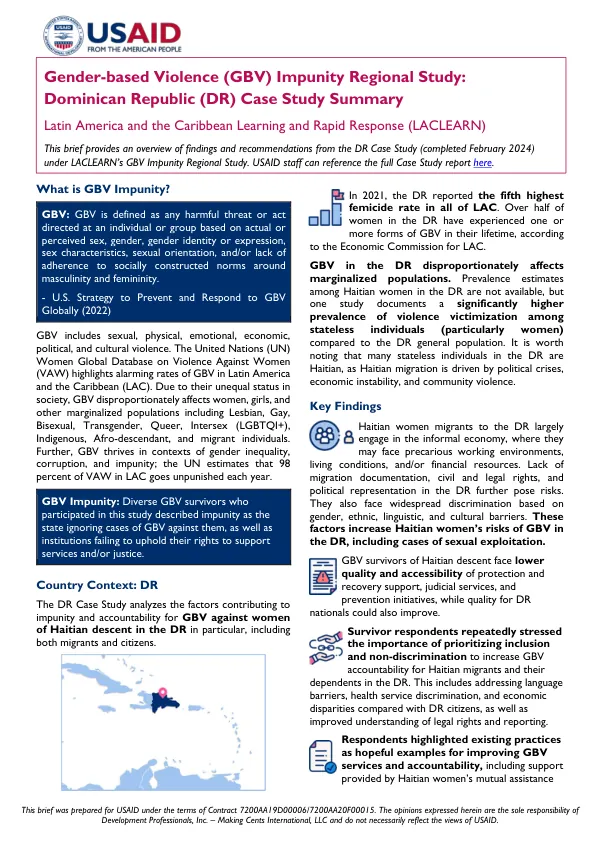
The GBV Impunity Regional Study, conducted under the LACLEARN initiative, aimed to investigate factors driving GBV impunity and barriers to GBV accountability in Latin America and the Caribbean.
2024 · 2 pages
Sign in to readA free account is required to download.
Abstract
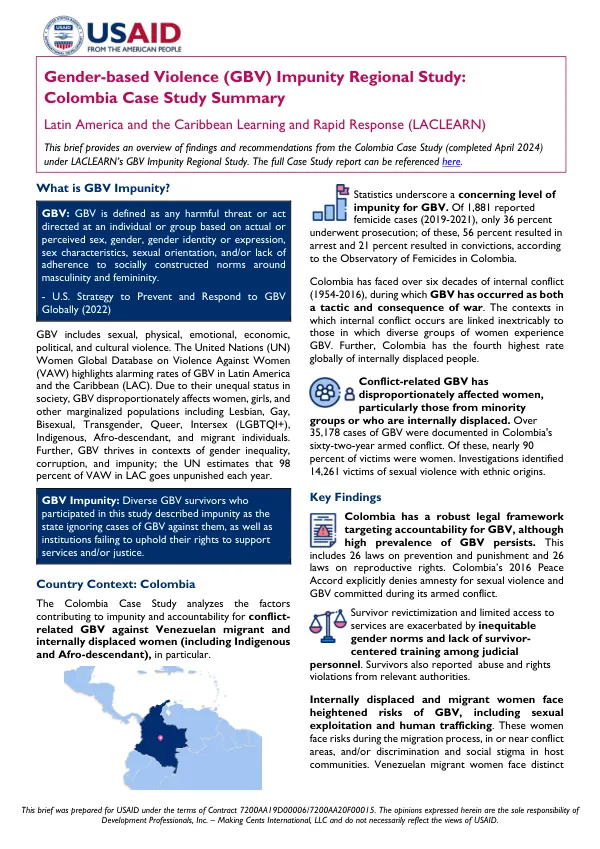
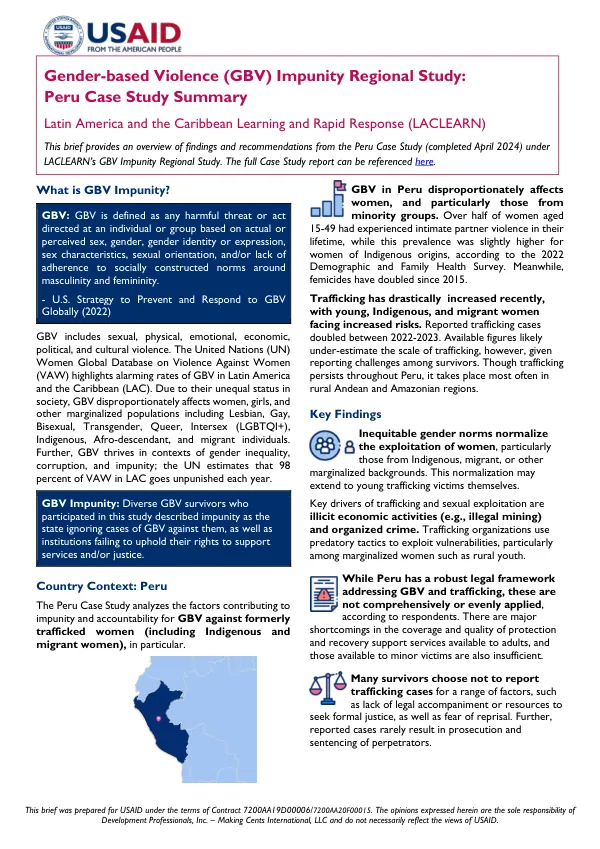
The study utilized a political economy approach, incorporating desk reviews and key informant interviews with over 230 diverse GBV survivors, local CSOs, and government service providers. GBV is defined as any harmful threat or act directed at an individual or group based on actual or perceived sex, gender, gender identity, or expression, sex characteristics, sexual orientation, and/or lack of adherence to socially constructed norms around masculinity and femininity. GBV includes sexual, physical, emotional, economic, political, and cultural violence, disproportionately affecting women, girls, and other marginalized populations. The Peru Case Study, one of eight reports from the LACLEARN GBV Impunity Regional Study, analyzed the factors contributing to impunity and accountability for GBV against formerly trafficked women, particularly those from Indigenous and migrant backgrounds. GBV in Peru disproportionately affects women, particularly those from minority groups, with over half of women aged 15-49 having experienced intimate partner violence in their lifetime. Key findings from the Peru Case Study indicate that inequitable gender norms normalize the exploitation of women, particularly those from Indigenous, migrant, or other marginalized backgrounds. Key drivers of trafficking and sexual exploitation are illicit economic activities and organized crime, with trafficking organizations using predatory tactics to exploit vulnerabilities, particularly among marginalized women such as rural youth. The study highlights major shortcomings in the coverage and quality of protection and recovery support services available to adults and minor victims, with many survivors choosing not to report trafficking cases due to lack of legal accompaniment, resources, or fear of reprisal. Reported cases rarely result in prosecution and sentencing of perpetrators, perpetuating GBV impunity. Recommended strategies to improve GBV accountability include protection and recovery support, criminal justice services, and prevention initiatives. Protection and recovery support involves ensuring culturally-appropriate and accessible shelters for diverse women survivors, raising awareness of protection and recovery support services, and providing trauma-informed mental health support. Criminal justice services involve improving protective accompaniment and reporting mechanisms for trafficking survivors and advocating for legislation to effectively address trafficking prevention, survivor protection, and perpetrator prosecution. GBV prevention initiatives include increasing budgeting for GBV prevention programs, implementing transformative social norm change programs, and building CSO capacities in prevention and response efforts.