USAID
Gender Digital Divide Gender Analysis Technical Resource
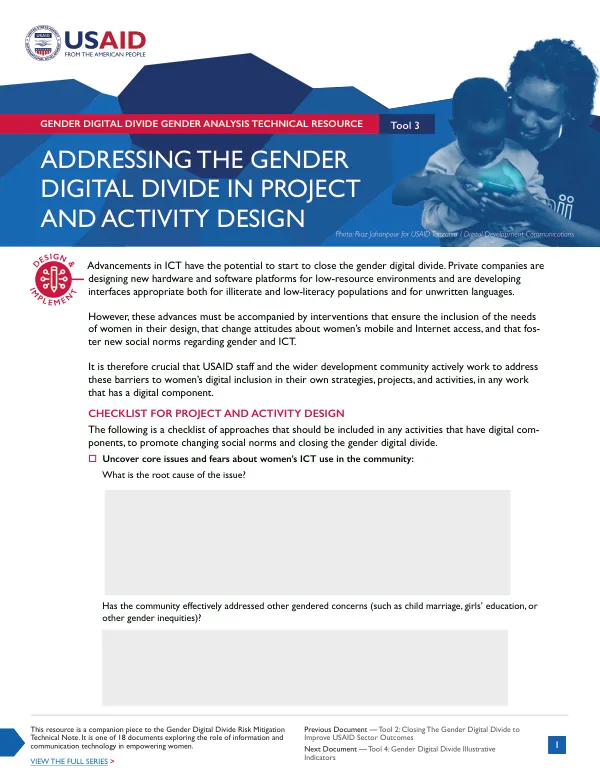
Advancements in information and communication technology (ICT) have the potential to close the gender digital divide.
2021 · 5 pages
Sign in to readA free account is required to download.
Abstract
Private companies are designing new hardware and software platforms for low-resource environments and developing interfaces suitable for illiterate and low-literacy populations and unwritten languages. However, these advances must be accompanied by interventions that ensure the inclusion of women's needs in their design, change attitudes about women's mobile and Internet access, and foster new social norms regarding gender and ICT. USAID staff and the wider development community must actively work to address barriers to women's digital inclusion in their own strategies, projects, and activities, particularly in any work that has a digital component. This requires a comprehensive approach that considers the root causes of the issue, such as core issues and fears about women's ICT use in the community, and the effectiveness of the community in addressing other gendered concerns. To promote changing social norms and closing the gender digital divide, activities with digital components should include approaches that uncover core issues and fears about women's ICT use, work directly with community leaders to create compelling cases for women's ICT use, and ensure that programs are designed to consider the safeguarding of women and girls. Additionally, activities should find and support positive deviance, work with women to understand their information needs and aspirations, and tie ICT use to new income-generation opportunities and local concerns. Effective project and activity design should also involve working with well-established gender and development organizations and organizations developing digital services, tools, devices, and applications to ensure that the needs of women and girls are part of the design process. This requires a collaborative approach that involves multiple stakeholders and a deep understanding of the local context and norms. The gender digital divide is a complex issue that requires a comprehensive and multifaceted approach. By working together and incorporating the needs and perspectives of women and girls, it is possible to close the gender digital divide and promote greater digital inclusion and empowerment.
Related documents