USAID
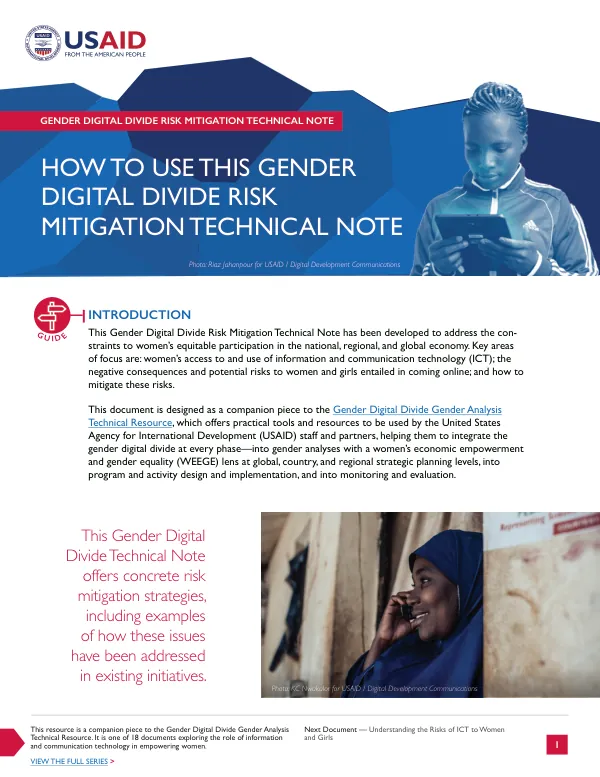
Gender Digital Divide Risk Mitigation Technical Note
The Gender Digital Divide Risk Mitigation Technical Note highlights the importance of addressing the constraints to women's equitable participation in the national, regional, and global economy.
2021 · 8 pages
Sign in to readA free account is required to download.
Abstract
Key areas of focus include women's access to and use of information and communication technology (ICT), the negative consequences and potential risks to women and girls entailed in going online, and how to mitigate these risks. Women's access to ICT is crucial for their economic empowerment and gender equality. ICT enables access to critical health services, opportunities for education, civic participation, entrepreneurship, and access to finance. However, the cost of digital exclusion is increasing, and the gap between the digital "haves' and 'have nots" is a gap in income, opportunity, education, and education. The document emphasizes the need for practical tools and resources to be used by the United States Agency for International Development (USAID) and its partners to integrate the gender digital divide at every phase, from global, country, and country strategic planning levels to program and activity design and monitoring. Key findings and methodologies include: * Women's access to and use of ICT is different from men's, with women facing barriers such as limited access to mobile phones, lack of digital literacy, and limited access to the internet. * The negative consequences and potential risks to women and girls entailed in going online include technology-facilitated gender-based violence, online harassment, and exploitation. * Mitigation strategies include promoting digital literacy, providing digital skills training, and promoting women's access to and use of ICT. Implementation details for projects and programs include: * Farmer training programs to promote sustainable agriculture practices and improve crop yields. * Infrastructure development to improve access to markets and increase market linkage facilitation. Key recommendations include: * Promoting digital literacy and digital literacy training for women and girls. * Providing digital skills training and promoting women's access to and use of ICT. The document concludes that the cost of digital exclusion is increasing, and the gap between the digital "haves' and 'have nots" is a gap in income, opportunity, education, and education. Addressing the gender digital divide is crucial for women's economic empowerment and gender equality.
Related documents
Documents in this collection
 2018
2018USAID DEC
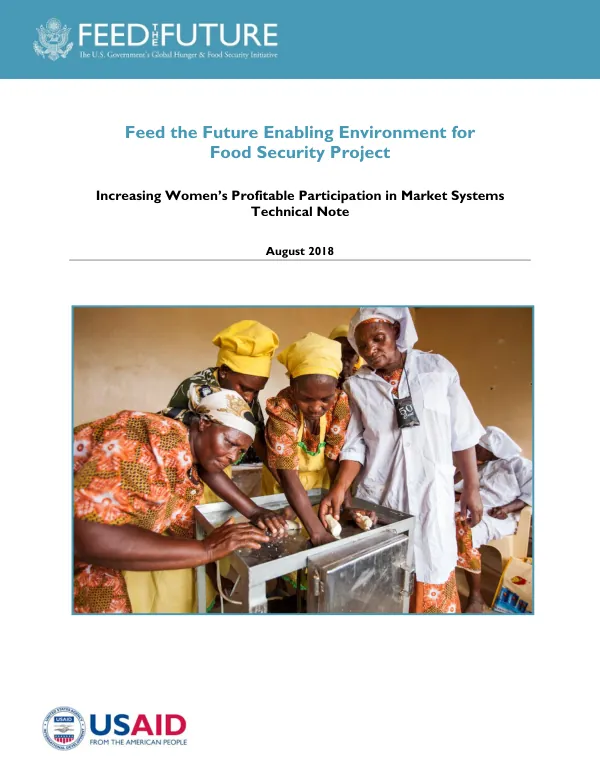
Feed the Future Enabling Environment for Food Security | Increasing Women’s Profitable Participation in Market Systems Technical Note
Open record 2013
2013USAID DEC