J.D.G. COMMUNICATIONS, INC.
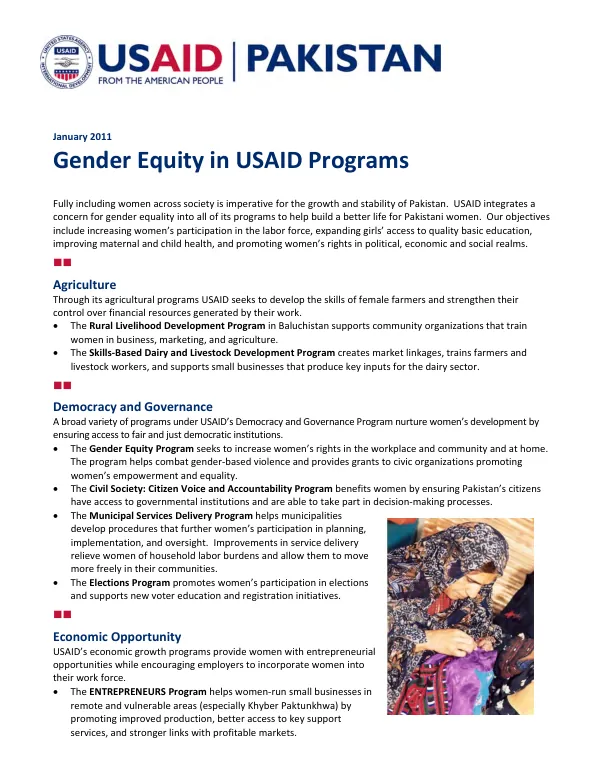
Gender Equity in USAID Programs
The agricultural development initiative in Pakistan is a key component of USAID's overall strategy to promote economic growth and stability in the country.
2011 · 2 pages
Sign in to readA free account is required to download.
Abstract
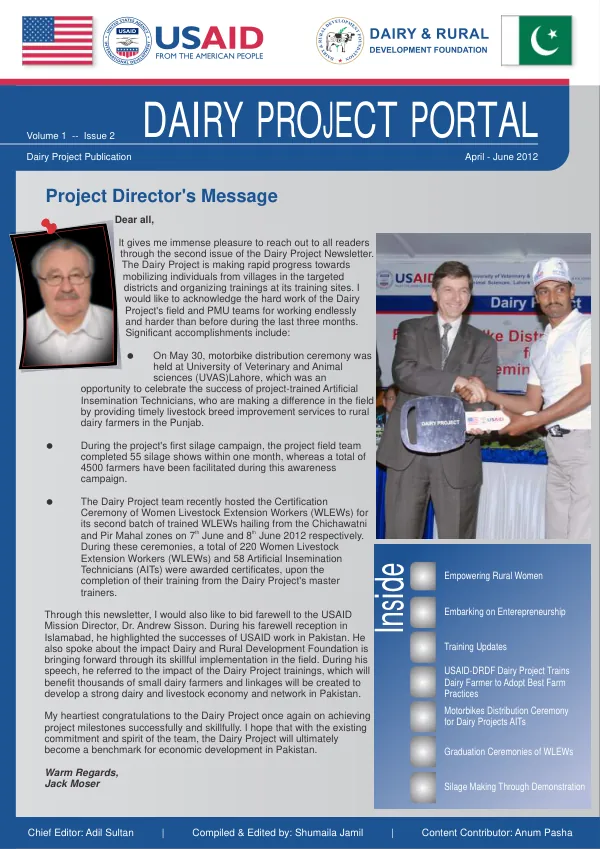
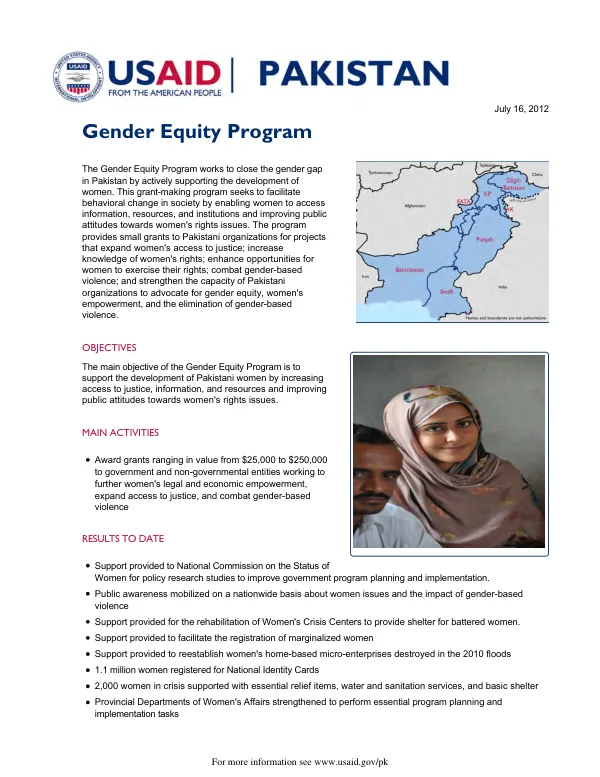
Through its agricultural programs, USAID seeks to develop the skills of female farmers and strengthen their control over financial resources generated by their work. The Rural Livelihood Development Program in Baluchistan supports community organizations that train women in business, marketing, and agriculture, while the Skills-Based Dairy and Livestock Development Program creates market linkages, trains farmers and livestock workers, and supports small businesses that produce key inputs for the dairy sector. In addition to agricultural development, USAID's Democracy and Governance Program also plays a crucial role in promoting women's empowerment in Pakistan. The program seeks to increase women's rights in the workplace and community, and at home, by ensuring access to fair and just democratic institutions. The Gender Equity Program, for example, helps combat gender-based violence and provides grants to civic organizations promoting women's empowerment and equality. The Civil Society: Citizen Voice and Accountability Program benefits women by ensuring Pakistan's citizens have access to governmental institutions and are able to take part in decision-making processes. USAID's Economic Opportunity Program also provides women with entrepreneurial opportunities while encouraging employers to incorporate women into their workforce. The ENTREPRENEURS Program, for instance, helps women-run small businesses in remote and vulnerable areas by promoting improved production, better access to key support services, and stronger links with profitable markets. The Livelihoods Rehabilitation Project helps women in conflict and flood-affected areas get back on their feet with micro-grants of seeds, agricultural tools, sewing machines, hand looms, and other supplies. USAID's Education Program is another critical component of its strategy to promote women's empowerment in Pakistan. The program helps women learn by improving school infrastructure, promoting curricula that reflect gender equality, and creating conditions that encourage families to send their daughters to school and enroll in higher education. The Links to Learning: Education Support to Pakistan Program (Ed-Links) renovates schools to ensure a comfortable learning environment for female students and teachers, and encourages girls to participate in science and technology clubs and U.S. educational exchanges. In the area of energy, USAID's programs benefit women by expanding their access to electricity and promoting capacity-building and gender awareness in Pakistan's energy agencies. High-impact dam, hydropower, and irrigation projects increase electricity supplies in South Waziristan, FATA, and Gilgit-Baltistan, enabling improved health facilities, greater exposure to the outside world through radio and television, and increased vocational training in the use of electric tools and equipment. The new dam infrastructure also safeguards families from the effects of flash floods, and improved downstream irrigation benefits farming households, including many women farmers and traders of agricultural products. Finally, USAID's Health Program provides women with improved health care, especially in the areas of maternal, newborn, and child health, family planning, and infectious disease control. The Family Advance for Life and Health Program (FALAH) raises awareness about how the spacing of births affects maternal and child health, offers training to community workers and health care providers, and distributes kits of essential supplies to Lady Health Workers in flood-affected areas.