PACT
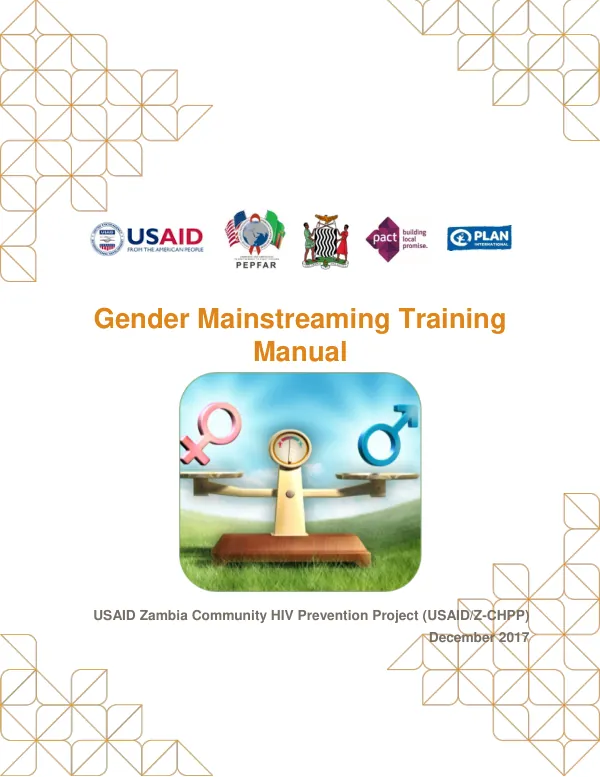
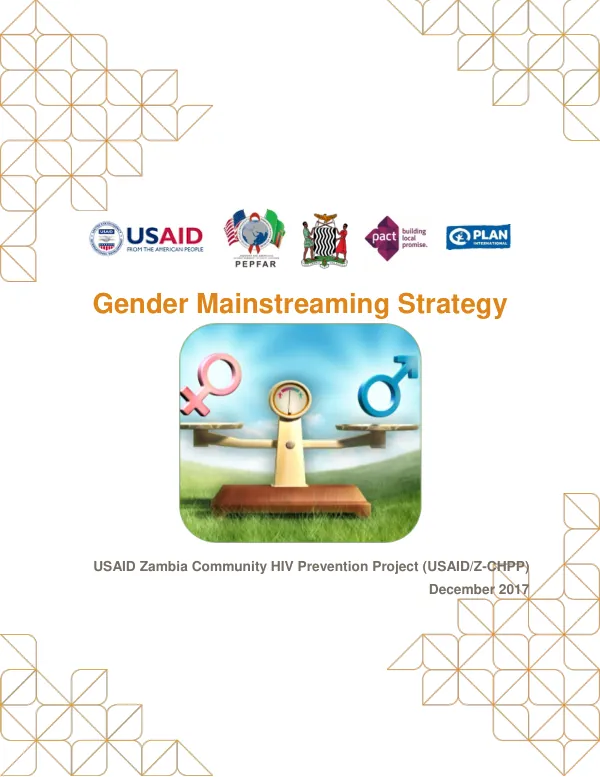
Gender Mainstreaming Guideline for USAID/Z-CHPP
The USAID Zambia Community HIV Prevention Project (USAID/Z-CHPP) aims to address gender equity within the project context.
2017 · 22 pages
Sign in to readA free account is required to download.
Abstract
The project's result areas, indicators, and activities are aligned with the guidelines to promote gender-equitable norms and outcomes. Gender mainstreaming is not considered an end in itself, but rather a means to achieve Human Immunodeficiency Virus (HIV)-specific targets. HIV prevalence in Zambia is higher among women overall (15.1%) compared to men (11.3%). Limited access to information or services, including updated HIV prevention tools and testing, care, and treatment, have been cited as reasons for the higher HIV prevalence rates among women. Women experience a disproportionate burden of both HIV and sexual violence, with 17% of women surveyed reporting having ever experienced sexual violence. Adolescent girls and young women (AGYW) engage in high-risk activities such as unprotected sex, traditional sexual practices, and sex work. Factors contributing to these high-risk activities include gender inequity, traditional and cultural norms, and poverty. Gender inequity reduces women's bargaining power in insisting on the use of condoms, increasing harmful sexual practices, and lack of power in sexual decision making. The project prioritizes gender mainstreaming as an important crosscutting strategy. These guidelines have been developed for USAID/Z-CHPP implementers to facilitate effective analysis and identification of the gender issues in the community and to design appropriate gender-sensitive strategies and activities. The ultimate goal of these guidelines is to approach activities in ways that both advance gender equality and achieve program results. Gender analysis is a critical first step in designing activities that are gender-sensitive. Gender analysis is a procedure that takes a planning team through a series of questions to extract specific information to determine if the project is mindful of gender-based constraints and opportunities in delivering services. The guidelines provide tools for gender mainstreaming in HIV prevention programming, including gender-equitable HIV prevention and vulnerability reduction, HIV testing services and counseling, and sexual gender-based violence. The guidelines also provide tools for monitoring and evaluation, including gender-sensitive indicators and example indicator-tracking questions. The project recognizes that challenging gender norms and inequalities within the broader project framework will help achieve not only HIV results, but also other health and development goals. The project aims to promote equal participation of women and men and to maximize good and equitable health outcomes. Through mainstreaming gender, USAID/Z-CHPP will be better able to achieve HIV-specific targets. The guidelines should be used to promote equal participation of women and men and to maximize good and equitable health outcomes. The project's result areas, indicators, and activities are aligned with the guidelines to promote gender-equitable norms and outcomes. The guidelines provide tools for gender mainstreaming in HIV prevention programming, including gender-equitable HIV prevention and vulnerability reduction, HIV testing services and counseling, and sexual gender-based violence. The project recognizes that challenging gender norms and inequalities within the broader project framework will help achieve not only HIV results, but also other health and development goals. The guidelines should be used to promote equal participation of women and men and to maximize good and equitable health outcomes. Through mainstreaming gender, USAID/Z-CHPP will be better able to achieve HIV-specific targets. The project's approach to gender mainstreaming is guided by the Convention on the Elimination of All Forms of Discrimination against Women (CEDAW) and the Interagency Gender Working Group (IGWG) guidelines. The project's result areas, indicators, and activities are aligned with the guidelines to promote gender-equitable norms and outcomes. The project's approach to gender mainstreaming is guided by the principles of gender equality, equity, and human rights. The project's result areas, indicators, and activities are aligned with the guidelines to promote gender-equitable norms and outcomes. The project's monitoring and evaluation framework includes gender-sensitive indicators and example indicator-tracking questions.
Related documents