USAID
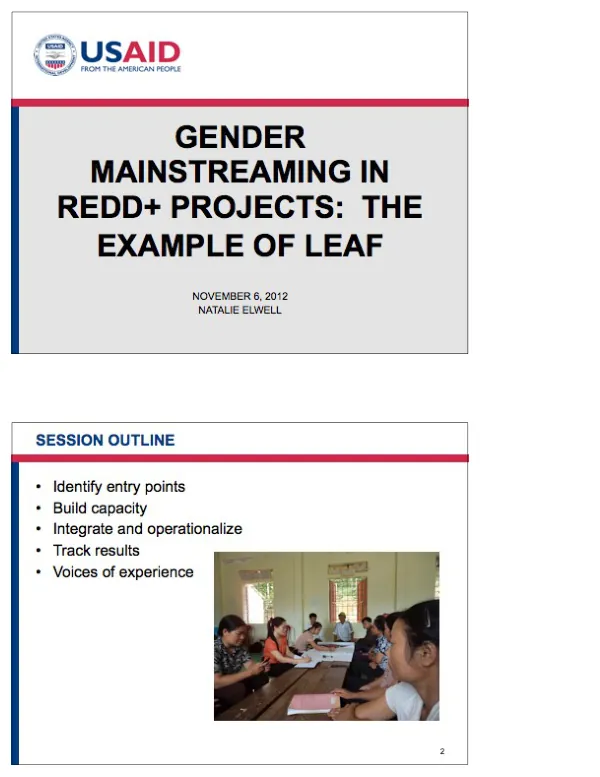
GENDER MAINSTREAMING IN REDD+ PROJECTS: THE EXAMPLE OF LEAF
The REDD+ project, LEAF, aims to integrate gender mainstreaming in its initiatives.
2012 · 4 pages
Sign in to readA free account is required to download.
Abstract
The project began in 2012, with a focus on addressing gender disparities in aspects critical to REDD+: stakeholder engagement, resource rights, governance, and economic and social benefits. A thorough gender analysis was conducted to identify entry points for intervention. The analysis revealed that approaches to forest conservation often neglect the engagement of women, who depend heavily on forest resources. To address this, the project focused on gender disparities in key areas, including stakeholder engagement, resource rights, governance, and economic and social benefits. Assessments were conducted at multiple levels, including international bodies, regional frameworks, national frameworks, sub-national units, institutional levels, and community levels. To build capacity, the project planners received training in February 2011, and a gender specialist, Kalpana Gin, was hired in September 2011 to coordinate gender integration across the project. Ongoing training and mentoring were provided to the team and partners on gender issues and actions relevant to various aspects of the project. The project also raised awareness of gender issues among team members and partners through ongoing training and mentoring. The project integrated gender mainstreaming into its operations by blending it within the project management framework, ensuring accountability with all staff, and developing a gender mainstreaming strategy and checklist. The project also partnered with organizations such as WO CAN and RECOF to promote gender mainstreaming. Outreaching materials, including a planning, monitoring, and evaluation plan, were developed to ensure that gender mainstreaming was integrated into all aspects of the project. To operationalize the project's goals, action points for intervention were established, including strengthening regional platforms and supporting replication. Resource kits, a web page on gender and REDD+, and learning networks focused on gender were developed to provide technical expertise for policy and market enhancement. The project also promoted human and institutional capacity by organizing change for women's inclusion and integrating gender-sensitive REDD+ into university curricula. Sub-national interventions were implemented to demonstrate innovative approaches, and women were effectively engaged in activities and decision-making processes to ensure equitable increases in economic benefits. The project tracked results using illustrative indicators, including measuring the number of organizations with increased capacity to address relevant gender issues within sustainable landscapes programming, tracking changes in relative status, and identifying gaps in gender inclusion at the decision-making level. Implementation efforts were also documented, including challenges and opportunities, as well as lessons learned.