USAID DEC
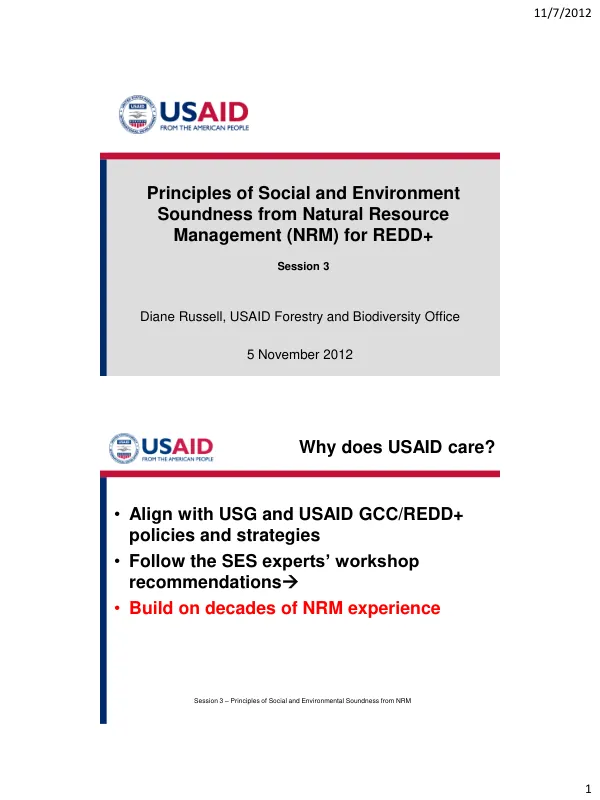
Principles of Social and Environmental Soundness from Natural Resource Management (NRM) for REDD+
Sign inUSAID
Principles of Social and Environmental Soundness from Natural Resource Management (NRM) for REDD+
The concept of systems thinking is crucial in understanding complex social and environmental systems.
2012 · 11 pages
Sign in to readA free account is required to download.
Abstract
It involves analyzing connections and flows among ecological and social variables, sectors, actors, and impacts. This approach helps identify unintended consequences of conventional solutions, such as job training programs creating jobs, but ultimately failing to address the root causes of unemployment. Systems thinking also highlights the importance of understanding system leverage points, which are critical areas where interventions can have a significant impact. Identifying these leverage points requires analyzing national and local power dynamics, stressors, root causes, drivers, and value of the forest. Stakeholder engagement is also essential in mapping key stakeholders, analyzing their roles and incentives, and ensuring legitimacy and representation. Sustainability is a critical principle in natural resource management, encompassing environmental, financial, and economic aspects. Environmental sustainability involves preserving net natural capital and biodiversity, introducing "no-go zones" in critical habitats, and avoiding depletion of natural resources. Financial and economic sustainability involves increasing financial capital available to those sustaining the resource, supporting low emissions pathways, and addressing the foundations of broad-based economic growth.
Connected topics