USAID
Inventory of Tools for REDD+ and AFOLU
The development of tools for monitoring and managing greenhouse gas emissions has become increasingly important in the context of REDD+ and AFOLU initiatives.
6 pages
Sign in to readA free account is required to download.
Abstract
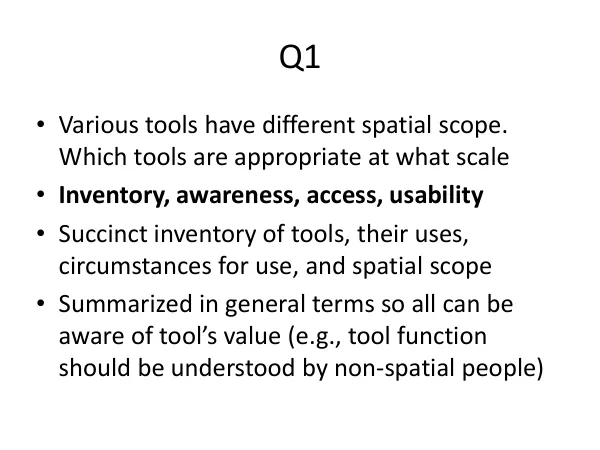
Various tools have different spatial scopes, and understanding which tools are appropriate for specific scales is crucial for effective implementation. An inventory of tools, their uses, circumstances for use, and spatial scope is essential for awareness and usability. The appropriate use of tools depends on the user's level of expertise and the specific requirements of the project. For instance, the Terra Congo tool is used for monitoring forest cover and carbon stocks, while the Global Forest Watch tool provides a platform for tracking forest change. These tools can be used in conjunction with each other to provide a more comprehensive understanding of forest carbon dynamics. Participatory and community-based tools should be synergized with international fixed standards of practices to ensure national buy-in and effective implementation. Linking tools for a more holistic approach to monitoring changes in GHG emissions is also essential. For example, combining land use and carbon data from Terra Congo and Global Forest Watch can provide a carbon content for a polygon, enabling more accurate assessments of forest carbon stocks. Governments need to be able to use these tools themselves as REDD continues into the future. Communities also need to be involved in tools, especially in ground measurements, to ensure that the data collected is accurate and relevant. The level of data precision required for management decisions may not always be the same as that required for international acceptance, and a "good enough" approach may be necessary in some cases. The uneven knowledge associated with the audience (tool designer or tool user) can create challenges in tool implementation. In some cases, it may be necessary to call in specialists and skilled technicians, such as spatial or GIS experts, to ensure that the tools are used effectively. The use of a particular tool may also require a workflow management system to ensure that the data is collected and analyzed correctly. As the focus shifts from REDD+ to AFOLU, the need for adaptable and flexible standards and tools with active learning becomes increasingly important. Expanding the toolkit for AFOLU and adapting tools for a more complete understanding of GHG emissions in a variety of environments is essential. Having an inventory of tools and integrating complementary tools and data for more cross-cutting data exploration is also crucial. Establishing net GHG flux and carbon accounting at a national level for baselines is a critical step in understanding the impact of GHG emissions. This requires the use of tools that can provide accurate and reliable data on forest carbon stocks and emissions. Expanding the toolkit for AFOLU and pulling together land use planning from multiple levels (pilot sites to national land use allocations) is also essential for effective implementation. The United States has a significant role to play in the development and implementation of tools for monitoring and managing GHG emissions. As a signatory to the protocol that replaces Kyoto, the US has a responsibility to step up its involvement in REDD+ and AFOLU initiatives. This includes providing technical and financial support for the development and implementation of tools, as well as engaging in international cooperation and knowledge sharing.
Related documents