INTERNATIONAL SOCIETY FOR FAIR ELECTIONS AND DEMOCRACY
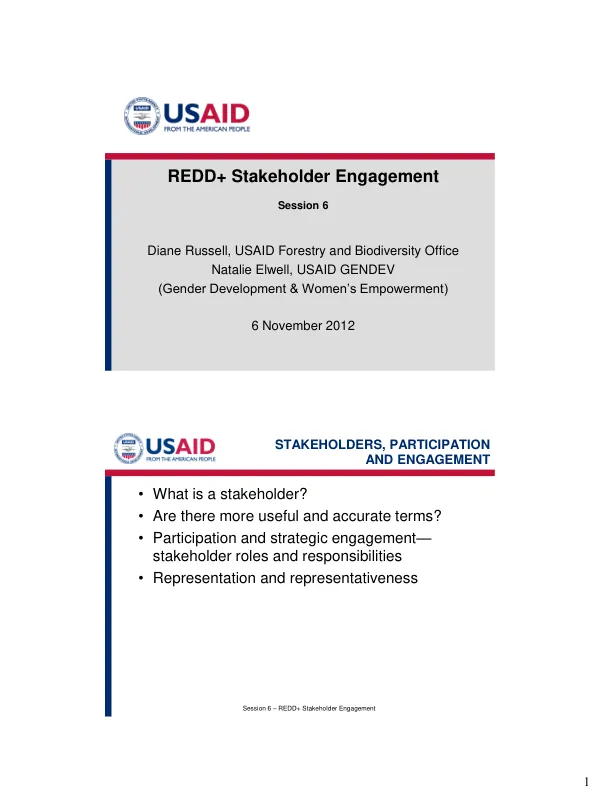
REDD+ Stakeholder Engagement
Stakeholder engagement is a critical component of the REDD+ initiative, which aims to reduce emissions from deforestation and forest degradation.
2012 · 10 pages
Sign in to readA free account is required to download.
Abstract
In the context of REDD+, stakeholders are defined as groups that have a stake or interest in the forest and those that will be affected either positively or negatively by REDD+ activities. These stakeholders include government agencies, formal and informal forest users, private sector entities, indigenous peoples, and other forest-dependent communities. Stakeholder engagement involves influencing decision-making over time, developing ownership for the implementation of solutions, and supporting implementation. It can take place at multiple levels for REDD+, often referred to as "nested" engagement. Other terms used to describe stakeholder engagement include stakeholder participation and stakeholder consultation, but these terms may not accurately convey the level of ownership and involvement required for effective engagement. Stakeholder engagement is essential for REDD+ because it respects human rights, national legal obligations, and sustainability dividends. By engaging stakeholders, REDD+ initiatives can avoid or mitigate negative impacts, reduce conflicts, and promote ownership and accountability. Stakeholder analysis is a crucial step in stakeholder engagement, involving the identification of stakeholder groups, their relative power and relationships, and differences and convergences across and within groups. This analysis can be done using existing data, but it also requires ground-truthing to ensure accuracy. Stakeholder analysis should be done early and consistently during REDD+ readiness preparations to avoid stereotyping and identify areas of consensus and conflict. The private sector plays a significant role in REDD+ stakeholder engagement, with levels of engagement varying across countries and types of companies. However, smallholders without associations, trade unions, agriculture, mining, and infrastructure are underrepresented in stakeholder engagement processes. Recommendations include more balanced analyses of the private sector's role in drivers of deforestation, increased private sector participation in multi-stakeholder processes, and concession moratoriums during readiness planning to build trust with civil society. Free, Prior, and Informed Consent (FPIC) is a critical aspect of stakeholder engagement, particularly for indigenous peoples. FPIC implementation is still nascent, and challenges include consent without manipulation, the right to refuse consent, and consent for voluntarily isolated communities. Recommendations include government and donor commitment and resources, supportive policies, trained neutral facilitators, information quality, adequate time, and grievance resolution processes. Engaging indigenous peoples requires building relationships and trust, sharing information, and building capacity through civil society and government indigenous ministries. Recommendations include better materials, broadening representation, and addressing societal gender differences and differences between men and women of the same stakeholder group. Gender-sensitive stakeholder engagement is essential to ensure that women's voices are heard and valued. Recommendations include inviting women to meetings, ensuring they receive adequate advance notice, preparing them to participate effectively, and organizing meetings at times and places convenient for women. Conducting meetings in a way that allows women to provide input, value their contributions, and cover issues of importance to women is also crucial. Tools and methodologies for participation and engagement include stakeholder mapping, public hearings, open house, listening sessions, world café methods, focus groups, surveys, online dialogue blogs, sustained dialogue, search for common ground, consensus agreement meetings, settlement agreements, and Delphi methodology. These tools can be used to facilitate stakeholder engagement, build consensus, and promote ownership and accountability in REDD+ initiatives.